TRENDING

Saturday, 14 November 2026
----------------------
4 Jumada Al-Thani 1448 AH
A narrow escape from impeachment for Defense Secretary Pete Hegseth highlights deep divisions in Washington, while distant wars in Iran and Latin America continue to exact a heavy toll. These internal political battles increasingly shape global conflicts, with ordinary citizens bearing the consequences.
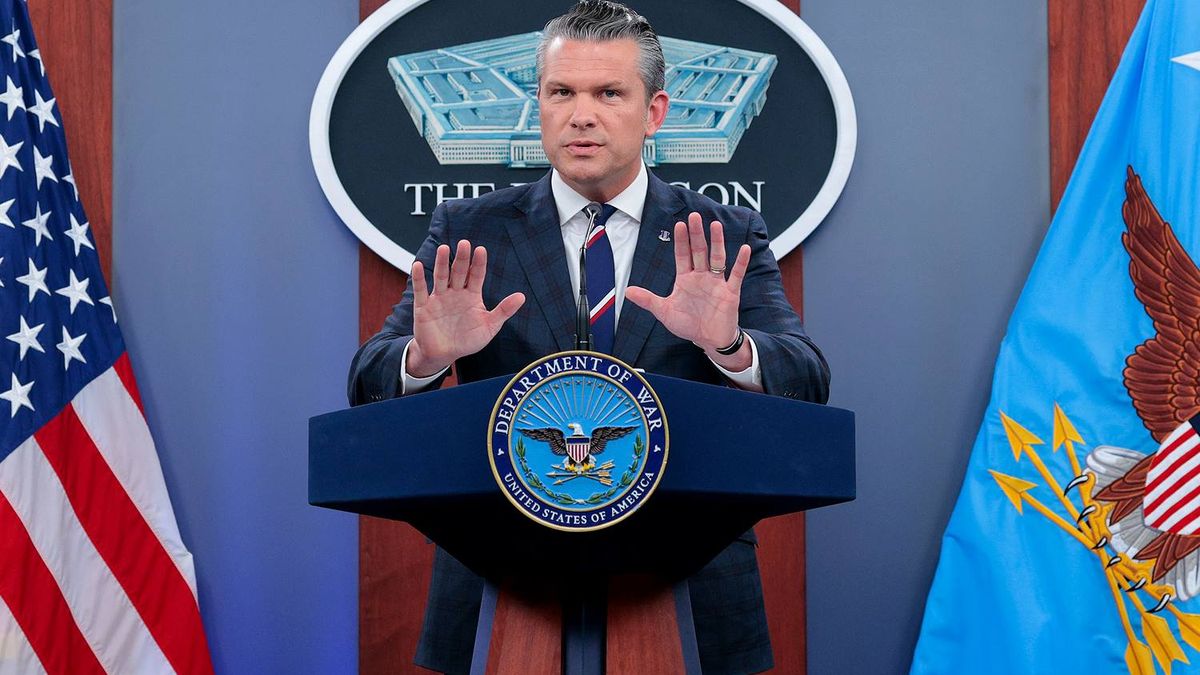
US Defense Secretary Pete Hegseth narrowly avoided impeachment in the House of Representatives, with a Republican-led motion effectively tabling the effort for now. This internal political struggle unfolds amidst ongoing military engagements in Iran and Latin America, which have been cited as key drivers of voter discontent and Republican midterm losses. Simultaneously, diplomatic efforts to resolve the protracted Russia-Ukraine conflict remain largely stalled, despite a breakthrough on prisoner exchanges. In a significant shift, President Donald Trump has reassigned Vice President J.D. Vance from Iran negotiations, declaring an end to the need for a deal and asserting US control over Iranian assets and the Strait of Hormuz. Adding another layer of global turbulence, Nvidia CEO Jensen Huang resigned amid scandal, raising questions about the future of a $4 trillion company critical to the global artificial intelligence race.
Pete Hegseth's political survival hinges almost entirely on the unwavering support of President Trump. Despite bipartisan calls for his resignation and a highly partisan approach to his role – including a public media blitz against Congress – Hegseth has maintained the confidence of the administration's ultimate power broker. This dynamic underscores a fundamental shift in the relationship between the executive and legislative branches, where loyalty to the president can override traditional norms of non-partisan military leadership and congressional oversight. The narrow impeachment vote, aided by absent Democrats, reveals the deep partisan chasm within the US Congress, making it a battleground for political survival rather than unified governance.
The ongoing Iran war and military actions in Latin America are not merely foreign policy endeavors but have become central to domestic political contests. The Republican Party's midterm losses, attributed in part to voter discontent over the economic consequences of the Iran war, demonstrate how the human and financial costs of distant conflicts directly influence electoral outcomes. Trump's declaration that the US no longer needs a deal with Iran, asserting control over its financial assets and a critical maritime chokepoint, represents a maximalist posture designed to project strength and appeal to a specific political base, rather than a strategy aimed at de-escalation or long-term regional stability. This approach centralizes decision-making power within the executive, bypassing traditional diplomatic channels and potentially escalating tensions without broader congressional consensus.
In the Russia-Ukraine conflict, the power mechanics remain locked in a stalemate. The Kremlin's insistence on retaining
Defense Secretary Hegseth's narrow escape from impeachment highlights deep partisan divisions in the US Congress and the executive's reliance on presidential loyalty. It signals increased scrutiny from a new Congress and potential challenges to the Pentagon's budget and operations.
Domestic political battles, such as those surrounding Hegseth's impeachment, can directly influence foreign policy decisions and resource allocation for conflicts like the Iran war. Voter discontent over war costs can shape midterm elections, while executive actions, driven by political considerations, can escalate or de-escalate international tensions without broader consensus.
The primary obstacles to peace in the Russia-Ukraine conflict remain the Kremlin's unwavering insistence on retaining claimed territories and the lack of agreement on a lasting ceasefire. Despite prisoner exchanges, core issues like territorial integrity and sovereignty continue to prevent a major diplomatic breakthrough.
Editor's Note: Analysis is based on a future-dated news report (November 2026), treating the events as current within that fictional timeline.
Source referenced: FOREIGNPOLICY
This brief was synthesized by our Editorial Engine and reviewed by The Ground Narrative team.