TRENDING

Friday, 13 November 2026
----------------------
3 Jumada Al-Thani 1448 AH
Ukraine's recent drone attacks on a Russian warship and port infrastructure in the Baltic Sea mark a significant escalation, occurring concurrently with US-brokered peace talks. This analysis unpacks the strategic implications, human costs, and unspoken narratives of this new front.
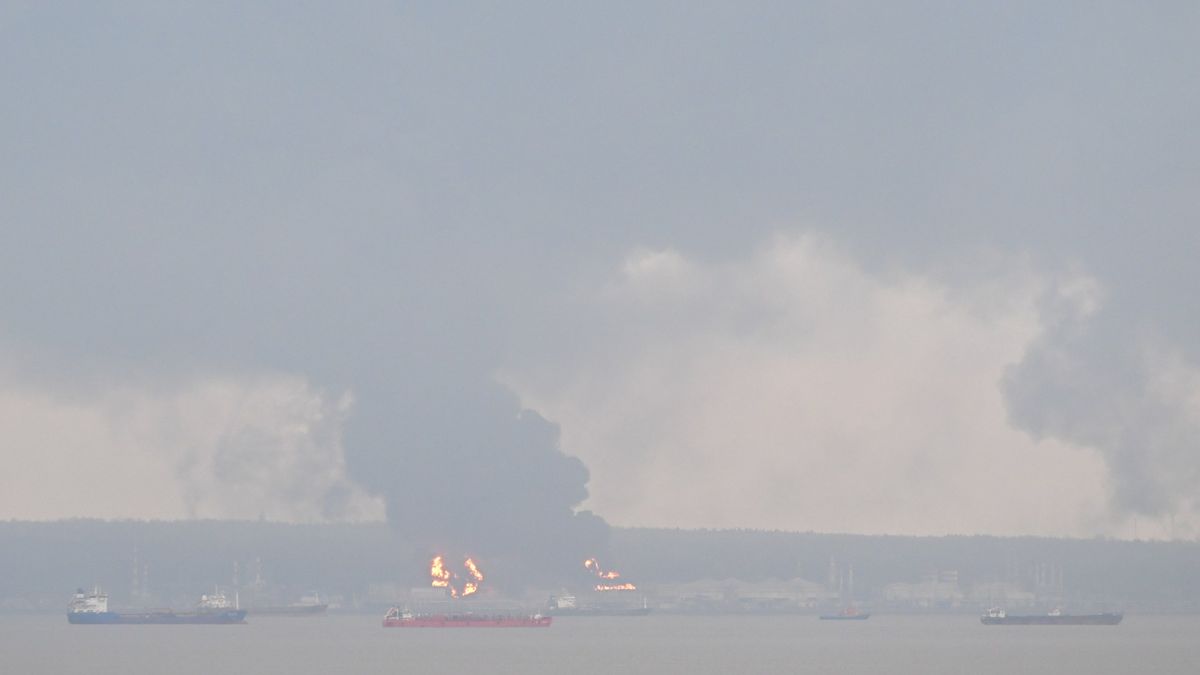
In a notable expansion of the conflict, Ukraine launched a series of drone attacks targeting Russian naval assets and critical port infrastructure in the Baltic Sea region. On November 11, 2026, a Finnish military spokesperson confirmed detecting a strike on a Russian warship in the Gulf of Finland, a narrow arm of the Baltic Sea bordered by Finland and Estonia. Concurrently, drones struck the Ust-Luga port in Russia's Leningrad region, causing a significant fire and damaging five fuel tanks, injuring three workers. These strikes unfolded as Russian and Ukrainian delegations engaged in US-brokered talks in Abu Dhabi, marking their first direct negotiations since February, with no major breakthrough reported beyond a prisoner exchange agreement. The incidents also saw several Ukrainian drones straying into the airspace of Finland and the Baltic states, prompting NATO to scramble warplanes in response.
Ukraine's decision to extend its operational reach into the Baltic Sea region during peace negotiations is a calculated move to reshape the power dynamics of the conflict. By striking targets as far north as St Petersburg's vicinity, Kyiv demonstrates an undeniable capability to project force deep into Russian territory and crucial economic zones, challenging Moscow's perception of its secure rear. This strategy aims to create leverage at the negotiating table, signaling that Ukraine is willing and able to escalate the economic and military costs for Russia even as diplomatic channels are explored. The attack on the Buyan-M-class missile ship, Naro-Fominsk, and the Ust-Luga port, a key export hub for Russian oil and grain, directly impacts Russia's war economy and its ability to sustain operations.
For Russia, the attacks highlight a growing vulnerability, not just on its southern and eastern borders but now in its strategically vital northwestern region. The Baltic Sea is home to Russia's Baltic Fleet and provides critical maritime access for trade, particularly for exports from St Petersburg. The inability to prevent such deep penetrations by Ukrainian drones, despite claims of shooting down numerous targets, undermines Moscow's narrative of control and military superiority. While Russia has remained publicly silent on the warship strike, the damage to infrastructure and the implicit threat to its naval assets in the Baltic put pressure on Putin's administration to respond, even as it engages in talks.
NATO members, particularly Finland and the Baltic states (Estonia, Latvia, Lithuania), find themselves in a delicate position. As new and long-standing frontline states bordering Russia, they are staunch supporters of Ukraine. However, the straying drones into their airspace and the proximity of the attacks to their borders raise immediate concerns about the conflict spilling over. Finland's Defence Minister Antti Hakkanen's public statement, acknowledging the sensitivity of the Gulf of Finland in terms of environmental and civilian shipping safety, underscores the tightrope walk these nations face. They must balance their commitment to Ukraine's defense with the imperative to protect their own citizens and avoid direct military entanglement. NATO's scramble of warplanes is a standard defensive posture, a clear signal of readiness without direct intervention, reflecting the alliance's cautious approach to managing escalation.
The United States, acting as a mediator in the Abu Dhabi talks, navigates its own complex set of power dynamics. On one hand, it seeks a diplomatic resolution to the conflict, which aligns with its broader foreign policy goals of regional stability. On the other hand, its continued military and financial support for Ukraine empowers Kyiv to conduct such strikes, creating a paradox where mediation efforts are undermined by battlefield escalations. The internal political landscape in the US, particularly the influence of figures like Donald Trump who have criticized Ukraine's attacks on Russian energy infrastructure for impacting global oil prices, further complicates the US's unified message and strategic coherence. This internal friction can send mixed signals to both Kyiv and Moscow, potentially impacting the effectiveness of US diplomacy.
While the focus of these Baltic Sea attacks is largely on strategic military and economic targets, the human cost is immediate and tangible, extending beyond the direct casualties of war. The most direct impact was felt at the Ust-Luga port, where three workers were injured during the drone strike. These individuals, likely civilians involved in the port's operations, bear the physical consequences of a conflict that has now reached their workplace, far from the traditional front lines.
For citizens in Estonia, Latvia, and Lithuania, the straying drones and the proximity of the attacks to their borders introduced a new layer of anxiety. Reports of citizens being told to take shelter, even if precautionary, underscore the psychological toll of living under the shadow of a major conflict. The Baltic states, having endured historical periods of Russian domination, are acutely sensitive to any perceived threat to their sovereignty and security. The sight of NATO warplanes scrambling in response to airspace violations, while reassuring of defense, simultaneously heightens the sense of precariousness and the potential for unintended escalation.
Perhaps one of the most significant, yet often overlooked, human costs is the environmental threat posed by attacks on energy infrastructure and shipping in a sensitive region like the Gulf of Finland. Finland's Defence Minister's explicit concern about
Ukraine is extending its operational reach to demonstrate its capability to strike deep into Russian territory and crucial economic zones, aiming to create leverage at the negotiating table during ongoing peace talks. This strategy increases the economic and military costs for Russia.
The primary risks include drones straying into NATO member airspace, raising fears of accidental escalation. There are also significant environmental and civilian shipping safety concerns in the narrow Gulf of Finland, particularly from potential oil spills or damage to maritime infrastructure.
Beyond territorial claims in Ukraine, Russia informally proposed that Finland leave NATO and that the alliance be barred from having military bases in Estonia, Latvia, and Lithuania. Moscow also sought arrangements to guarantee freedom of navigation in the Black and Baltic Seas.
Source referenced: ALJAZEERA
This brief was synthesized by our Editorial Engine and reviewed by The Ground Narrative team.