TRENDING

Friday, 13 November 2026
----------------------
3 Jumada Al-Thani 1448 AH
China and the United States say they are keeping close channels for their leaders' interactions, but the real impact stretches far beyond press releases. This analysis uncovers the power calculus and the communities left to shoulder the consequences.
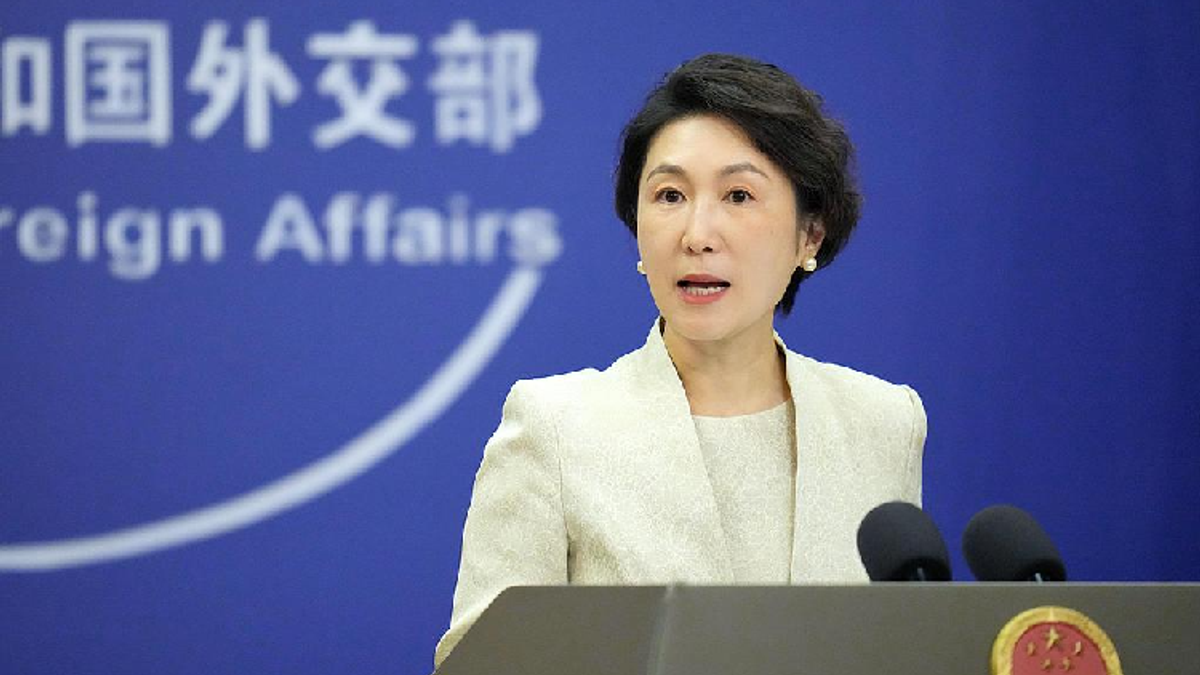
Chinese Foreign Ministry spokesperson Mao Ning told reporters on 12 November 2026 that Beijing and Washington continue “close communication” about interactions between their heads of state. The statement followed a routine press briefing and referenced a “important consensus” reached by the two leaders, promising a relationship built on “respect, fairness and reciprocity.” No concrete policy shifts were announced, but the phrasing signals an attempt to stabilize a bilateral tie that has been volatile for years.
The language of “strategic stability” masks a complex web of incentives. For China, maintaining a diplomatic veneer helps secure its Belt‑and‑Road projects and deflect criticism over trade practices, human‑rights accusations, and military posturing in the South China Sea. A calm narrative also eases domestic pressure on the Communist Party, which must demonstrate that it can manage an external threat without sacrificing growth.
For the United States, the rhetoric serves multiple purposes. First, it reassures congressional hawks that the administration is not abandoning a hard line on issues like Taiwan and cyber‑espionage. Second, it protects American businesses that depend on Chinese supply chains; any escalation would jeopardize semiconductor imports, rare‑earth supplies, and consumer goods. Third, the statement buys political mileage in the 2028 election cycle, allowing candidates to claim diplomatic competence while still promising a firm stance on Chinese aggression.
Alliance math further shapes the calculus. NATO allies watch the dialogue closely, fearing that a US‑China détente could dilute collective resolve on Russian aggression. Conversely, Japan, South Korea, and Australia interpret the language as a test of American commitment to regional security guarantees. Their own defense budgets and procurement plans hinge on whether Washington can balance engagement with deterrence.
Economic trade‑offs are equally pivotal. The United States runs a $400 billion trade deficit with China, and any disruption would reverberate through Midwest farms, Silicon Valley chip fabs, and retail shelves. China, meanwhile, relies on the United States as a market for its high‑tech exports and a source of foreign exchange to fund its sovereign wealth funds. Both sides therefore have a vested interest in keeping communication channels open, even if the underlying rivalry remains unchanged.
In the United States, a slowdown in diplomatic tension often translates into steadier orders for factories that assemble Chinese‑made components. When rhetoric spikes, manufacturers brace for supply‑chain shocks, leading to temporary layoffs and wage uncertainty for thousands of hourly workers in the Midwest and South.
In China, the opposite dynamic plays out. State‑owned enterprises tied to defense and high‑tech sectors receive preferential financing when the government signals a cooperative stance. Yet the same signal can trigger tighter controls on labor activism, as authorities clamp down on any dissent that might be framed as “foreign‑influenced.” Rural migrants working in electronics hubs face longer hours and reduced bargaining power under the pretext of national security.
Student visas and research collaborations are highly sensitive to diplomatic tone. After the 2022 tech curbs, Chinese scholars in the United States saw funding cuts, while American students in Beijing faced increased surveillance. The recent “close communication” pledge could thaw some of those restrictions, but the underlying suspicion means many programs remain underfunded, limiting the career prospects of early‑stage researchers on both continents.
American agribusinesses that ship soybeans, pork, and corn to China depend on stable diplomatic relations. A sudden diplomatic flare‑up can trigger import bans, leaving farmers with surplus stock and plummeting prices. Chinese small‑scale exporters of textiles and consumer electronics similarly watch US statements for hints of tariff reinstatement, adjusting production schedules that affect dozens of workers in coastal factories.
Official statements emphasize “reciprocity” and “fairness,” but they omit the behind‑the‑scenes bargaining over technology transfer and intellectual‑property enforcement. Both capitals are quietly negotiating clauses that could force American firms to share proprietary chip designs with Chinese partners in exchange for market access—a concession that would reshape global innovation ecosystems.
Another hidden layer is the domestic political theater. In China, the Communist Party uses the narrative of “strategic stability” to justify increased surveillance of overseas Chinese communities, framing them as potential vectors of foreign influence. In the United States, the administration downplays the extent to which congressional appropriations for defense are tied to the diplomatic script; lawmakers often leverage the rhetoric to secure funding for new missile defense systems in the Pacific.
A third omission concerns climate cooperation. Both nations have pledged to meet Paris Agreement targets, yet the joint statement makes no mention of coordinated carbon‑reduction projects. Behind closed doors, negotiations over joint renewable‑energy investments are stalled by disputes over technology licensing and the strategic value of rare‑earth minerals.
Readers should monitor three converging signals. First, any shift in the language of future press briefings—especially the introduction of terms like “mutual restraint” or “balanced competition”—could indicate a hardening of positions. Second, trade data from the first quarter of 2027 will reveal whether the diplomatic overture translates into actual tariff adjustments or export‑control relaxations. Third, the upcoming U.S.–China Climate Summit in early 2027 will test whether environmental cooperation can survive the broader strategic rivalry. Tracking these developments will show whether the “close communication” promise remains a diplomatic courtesy or becomes a lever that reshapes everyday lives on both sides of the Pacific.
It signals that diplomatic channels remain open for dialogue on sensitive issues, but it does not guarantee policy changes. The phrase is often used to manage public expectations while negotiations continue behind the scenes.
Stability in talks can keep supply chains running, protecting factory jobs and farm incomes. Conversely, any escalation can trigger sudden layoffs, reduced wages, or tighter export controls that hit workers directly.
Both sides have pledged to meet Paris goals, yet climate projects are stalled by disputes over technology and rare‑earth access. The upcoming climate summit will reveal whether environmental goals can rise above strategic competition.
Source referenced: CGTN
This brief was synthesized by our Editorial Engine and reviewed by The Ground Narrative team.