TRENDING

Saturday, 14 November 2026
----------------------
4 Jumada Al-Thani 1448 AH
A series of car bombings in Russia, including one that killed a military officer and another that injured a former Ukrainian adviser, marks a significant expansion of the conflict beyond the front lines. These attacks challenge Russia's internal security and underscore the brutal, clandestine nature of modern warfare.
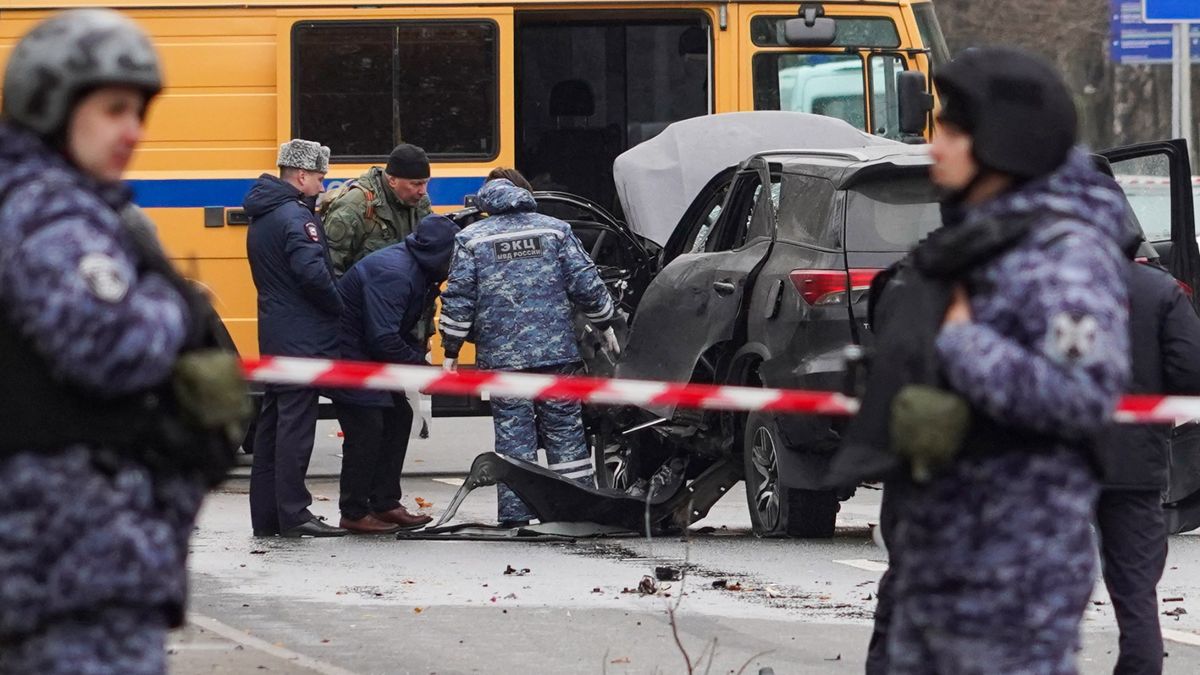
In a stark demonstration of the expanding reach of the conflict, two separate car bombings recently struck targets deep within Russia. The first incident, in St. Petersburg, resulted in the death of a military serviceman when an explosive device detonated in his vehicle. A day later, a similar attack occurred in Moscow, critically injuring Sergei Zavorotnyi, a 72-year-old former adviser to Mykola Azarov, Ukraine's former Moscow-friendly prime minister. Both attacks involved explosive devices reportedly planted under the victims' cars and triggered remotely, pointing to a coordinated and sophisticated operational capability. Russian authorities have swiftly attributed blame to Kyiv, while Ukrainian officials have maintained a notable silence.
These targeted attacks represent a significant shift in the operational dynamics of the conflict, extending the battlefield into the perceived sanctuary of Russia's major cities. For Ukraine, assuming responsibility (or allowing the perception of responsibility) for such operations serves multiple strategic objectives. Firstly, it demonstrates a capacity to strike high-value targets and disrupt the adversary's sense of security, forcing Moscow to divert resources from the front lines to internal counter-intelligence and security measures. This psychological warfare aims to erode public confidence in the state's ability to protect its citizens and assets, potentially fostering dissent or at least unease within the Russian populace. Secondly, targeting individuals with direct or indirect links to the conflict, whether military personnel or those perceived as collaborators with the Russian agenda, sends a chilling message: no one is beyond reach. This tactic, while morally ambiguous, is a classic feature of asymmetrical warfare, where a weaker power seeks to neutralize the advantages of a stronger adversary through unconventional means.
From Russia's perspective, these bombings are framed as acts of terrorism orchestrated by Kyiv, reinforcing the narrative of a defensive war against a rogue state. This narrative serves to rally domestic support, justify further military actions, and potentially legitimize internal crackdowns on perceived dissidents or 'foreign agents.' The attacks also expose vulnerabilities in Russian internal security, a critical challenge for a state that prides itself on its intelligence capabilities and control. The ability of external actors to conduct such operations within its borders undermines the image of a strong, impenetrable state, which is vital for the political survival of the current leadership. The choice of targets—a military officer and a Ukrainian figure critical of Kyiv—suggests a deliberate strategy to hit both the direct machinery of war and the ideological support structures, creating a broader sense of vulnerability across different segments of Russian society. The remote detonation method highlights a level of planning and execution that suggests professional involvement, further complicating Russia's counter-terrorism efforts and raising questions about the extent of underground networks or local sympathizers.
The most immediate and tragic human cost is borne by the individuals directly targeted and their families. A military serviceman is dead, and Sergei Zavorotnyi is critically injured, his life irrevocably altered. Beyond these direct victims, the expansion of the conflict into civilian areas of Russia imposes a profound psychological toll on ordinary citizens. The once distant war, confined to news reports and official pronouncements, now manifests as car bombs on city streets, shattering the illusion of safety and normalcy. This creates a pervasive sense of fear and uncertainty, as citizens realize that the conflict's violence can reach anyone, anywhere, at any time.
The perceived failure of state security to prevent such high-profile attacks can erode public trust in government institutions. While official narratives will blame external forces, the underlying question for many Russians will be why their security apparatus could not prevent these incidents. This can lead to increased anxiety, a chilling effect on public discourse, and a general feeling of vulnerability, which can be more damaging to societal cohesion than direct military losses.
The targeting of Sergei Zavorotnyi, a Ukrainian national living in Russia who was critical of the Ukrainian government, highlights a particularly complex human cost. Many Ukrainians have sought refuge or reside in Russia for various reasons, some actively supporting Moscow's narrative, others simply trying to survive. These individuals, particularly those with past political affiliations or public profiles, now find themselves caught in a dangerous crossfire. They are viewed with suspicion by Kyiv for their presence in Russia and their past associations, and now potentially targeted by elements aligned with Ukraine. This creates an impossible situation for a vulnerable population, where political allegiances, real or perceived, can become a death sentence, regardless of their personal circumstances or motivations for being in Russia.
Perhaps the most insidious human cost is the gradual normalization of political violence. When targeted assassinations become a recurring feature of a conflict, societies on both sides become desensitized. This desensitization can lead to a brutalization of public discourse, where violence is increasingly seen as a legitimate tool for political ends, eroding democratic norms and the rule of law. The long-term consequences of such a shift can be profound, fostering a culture of fear and retribution that outlasts the immediate conflict.
What governments and official statements often omit or downplay in the wake of such events is the intricate web of strategic ambiguity and the profound implications for internal state security. Ukraine's consistent silence on these bombings is a deliberate and potent tactic. By neither confirming nor denying involvement, Kyiv maintains plausible deniability, which is crucial for avoiding direct international condemnation and potential retaliatory escalation from Russia. At the same time, this silence allows the psychological impact of the attacks to resonate fully within Russia. The message is clear: Ukraine *could* be behind it, and that uncertainty amplifies fear and uncertainty far more effectively than an outright claim of responsibility. This strategic ambiguity forces Moscow to grapple with an unseen, elusive enemy within its borders, diverting significant intelligence and security resources away from the front lines.
Russia's official narrative, which immediately blames Kyiv, conveniently sidesteps a critical underlying issue: the apparent failures of its own internal security apparatus. For such operations to be successfully executed in major cities like Moscow and St. Petersburg, it suggests either significant gaps in intelligence gathering, a lack of effective counter-terrorism measures, or the presence of highly capable, clandestine networks operating within Russia. The state's powerful security services, including the FSB, are designed to prevent precisely these kinds of attacks. Their inability to do so, or at least to publicly identify and neutralize the perpetrators swiftly, is a significant blow to their prestige and effectiveness. This omission in Russia's public statements is crucial because acknowledging internal security weaknesses would undermine the image of a strong, controlled state, potentially fueling domestic discontent.
The choice of targets also tells an untold story. While the military officer is a clear wartime target, Sergei Zavorotnyi's profile as a former adviser to a pro-Russian Ukrainian prime minister who fled to Russia, and a journalist critical of the current Ukrainian government, introduces a layer of complexity. Russia frames him as a victim of Ukrainian
A military serviceman was killed in St. Petersburg, and Sergei Zavorotnyi, a former adviser to a pro-Russian Ukrainian prime minister, was critically injured in Moscow. Both incidents involved remotely detonated explosives.
Russian authorities have blamed Kyiv for orchestrating the attacks, framing them as acts of terrorism. This narrative aims to rally domestic support and justify further military actions.
Ukraine's silence is a strategic tactic to maintain plausible deniability, avoiding direct international condemnation while allowing the psychological impact of the attacks to resonate within Russia. This ambiguity amplifies fear and uncertainty.
Source referenced: ALJAZEERA
This brief was synthesized by our Editorial Engine and reviewed by The Ground Narrative team.