TRENDING

Monday, 5 October 2026
----------------------
24 Rabi' Al-Thani 1448 AH
Two powerful earthquakes struck Venezuela, revealing the nation's profound vulnerability to seismic activity at a critical geopolitical juncture. The events underscore the complex interplay between natural disasters and a country's socio-economic resilience.
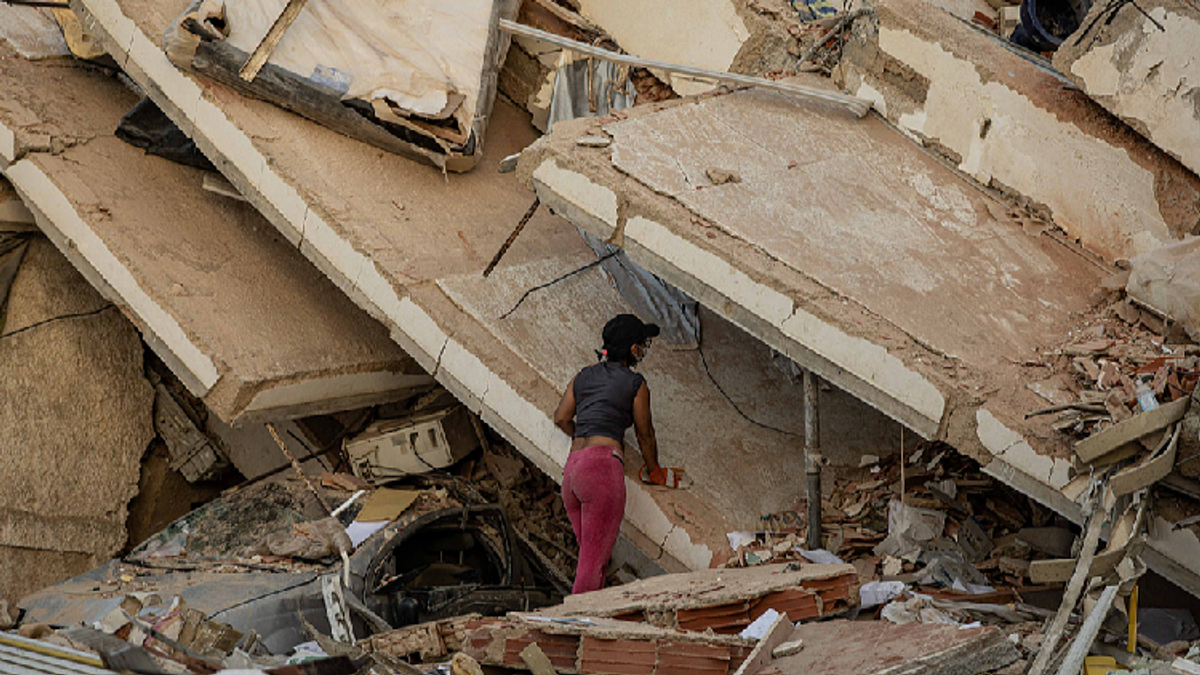
On June 24, 2026, Venezuela experienced two significant earthquakes, registering magnitudes of 7.2 and 7.5, within a minute of each other. The seismic events, centered near Montalbán, sent tremors across the nation, causing considerable damage in areas including La Guaira and the capital, Caracas. This natural disaster has not only highlighted Venezuela's inherent geological vulnerability but also poses a substantial test for a nation already grappling with profound socio-economic and political challenges.
Experts, including Qu Guosheng, former chief engineer of the China Earthquake Emergency Search and Rescue Center, and Sergio Barrientos, director of the National Seismological Center at the University of Chile, have attributed these powerful quakes to the complex interaction between the Caribbean and South American tectonic plates. Venezuela lies directly along the boundary where these two plates converge, with the Caribbean Plate moving approximately two centimeters westward annually against the South American Plate. This constant, grinding movement gradually accumulates immense stress within the Earth's crust.
The first magnitude-7.2 earthquake originated along the Central Range Fault, identified as a thrust strike-slip fault situated at the eastern extremity of the Andes Mountains. The rupture from this initial event propagated northeastward, subsequently triggering movement along the interconnected Boconó-San Sebastián-El Pilar fault system—an east-west trending strike-slip fault zone. This sequential rupture of interconnected fault systems explains the near-simultaneous occurrence of the second, even stronger, magnitude-7.5 quake. Both earthquakes were characterized as shallow and occurred along near-vertical faults, a geological configuration that allows for the release of substantial energy, contributing to the observed significant casualties and property damage.
Historically, Caracas and its surrounding regions have been prone to major seismic activity, with notable earthquakes recorded in 1812, 1900, and 1967. This history underscores that the recent events are not anomalous but rather a recurring manifestation of the region's active tectonic environment. Despite concerns about a potential global increase in seismic activity, experts like Barrientos maintain that these events fall within the normal statistical range for tectonically active zones, particularly those outside the Pacific Ring of Fire.
The immediate aftermath of the earthquakes has been marked by reports of significant casualties and widespread property damage. While specific figures remain unconfirmed, the sheer magnitude and shallow depth of the quakes suggest a substantial humanitarian impact. Infrastructure, including buildings and roads, is likely to have sustained considerable harm, disrupting daily life and potentially hindering emergency response efforts. The need for immediate search and rescue operations, medical aid, and temporary shelter for displaced populations would have been paramount in the hours and days following the tremors.
For Venezuela, a nation already navigating a protracted period of economic crisis, political instability, and international sanctions, these earthquakes represent a severe exacerbation of existing vulnerabilities. The government's capacity to mount an effective and comprehensive disaster response is likely to be severely tested. Years of underinvestment in infrastructure, coupled with a struggling economy, may impede rapid recovery and reconstruction efforts. The damage to critical infrastructure could further strain supply chains, impact essential services, and potentially disrupt key economic activities, even if not directly related to the oil sector.
Furthermore, a major natural disaster often necessitates international assistance. Venezuela's complex diplomatic landscape, characterized by strained relations with several Western nations and reliance on allies like China and Russia, could influence the nature and speed of external aid. The crisis could either open avenues for humanitarian diplomacy or highlight the challenges of coordinating international relief efforts in a politically charged environment. The long-term recovery will demand significant resources, potentially diverting funds from other critical national priorities and further entrenching the country's economic woes.
The recurring nature of major earthquakes in Venezuela underscores the critical importance of robust disaster preparedness and resilient infrastructure. For a nation situated on such an active plate boundary, stringent building codes, comprehensive urban planning, and well-drilled emergency response protocols are not merely advisable but essential for public safety and national stability. The recent quakes serve as a stark reminder of the continuous need for investment in seismic research, early warning systems, and public education to mitigate future risks. The challenge for Venezuela will be to integrate these long-term resilience strategies into its broader national development agenda, even amidst pressing immediate crises.
In conclusion, the dual earthquakes in Venezuela are more than just a geological phenomenon; they are a profound geopolitical event that tests the resilience of a nation already under immense pressure. The response to this disaster, both domestically and internationally, will have significant implications for Venezuela's recovery trajectory and its standing in the global community.
Source referenced: CGTN
This brief was synthesized by our Editorial Engine and reviewed by The Ground Narrative team.


