TRENDING

Monday, 5 October 2026
----------------------
24 Rabi' Al-Thani 1448 AH
The Vatican has formally declared the ultraconservative Society of St Pius X (SSPX) to be in schism, excommunicating its members after the group defied papal authority by ordaining four bishops without approval. This decisive action underscores the Roman Catholic Church's commitment to central authority and doctrinal unity, while highlighting persistent ideological rifts within its global communion.
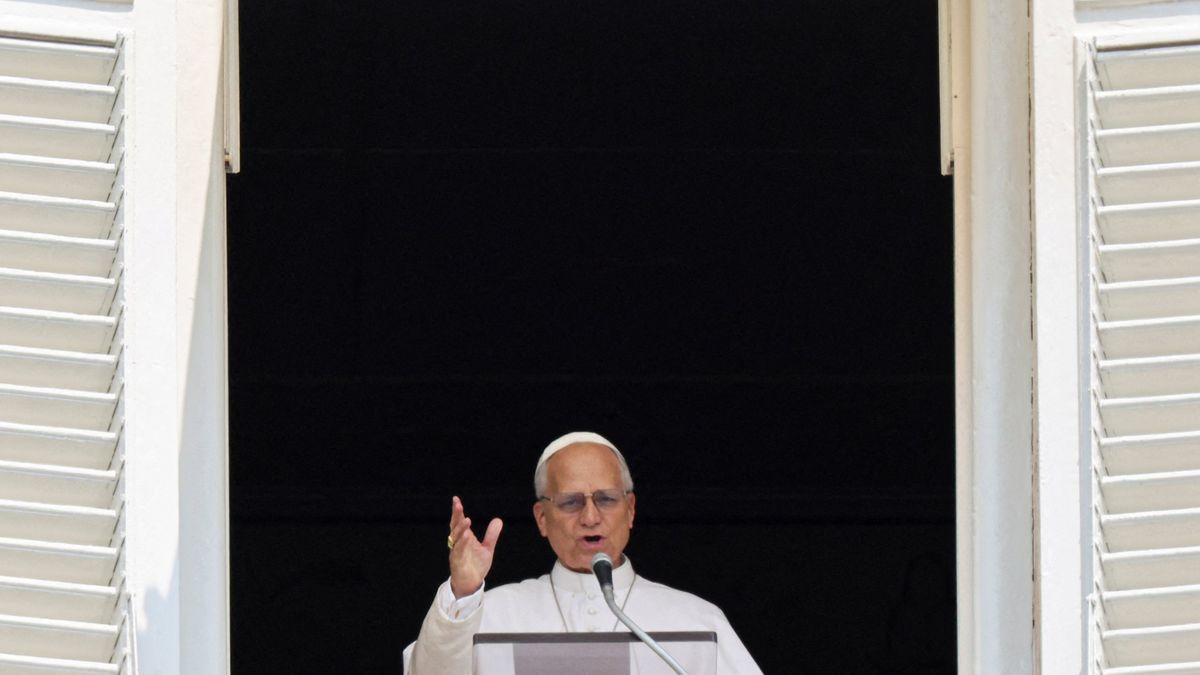
The Roman Catholic Church, a global institution with 1.4 billion adherents, has taken a decisive step to assert its central authority, formally declaring the ultraconservative Society of St Pius X (SSPX) to be in schism. This declaration, issued by the Dicastery for the Doctrine of the Faith on Thursday, July 2, 2026, follows the SSPX's defiance of Pope Leo XIV's direct plea not to proceed with the unauthorized ordination of four new bishops in Switzerland on Wednesday. The Vatican's decree not only excommunicates the two bishops who led the ordinations and the four priests involved but extends this severe penalty to all priests of the SSPX and all Catholics who formally adhere to the group. This move underscores the Vatican's unwavering commitment to maintaining doctrinal unity and the hierarchical structure of the Church, particularly the exclusive right of the Pope to authorize episcopal consecrations, a tradition central to the concept of apostolic succession.
The immediate trigger for this schism was the SSPX's decision to consecrate bishops without papal mandate. According to Catholic doctrine, the consecration of bishops is a matter of profound theological and institutional significance, directly linking the Church's leadership to the original apostles and, by extension, to Jesus Christ. Unauthorized ordinations are considered an act of extreme gravity, automatically incurring excommunication for those involved. Pope Leo XIV had personally appealed to the SSPX, warning that “to tear the seamless garment of Christ is a sin of extreme gravity” and urging them to “turn back.” The Vatican Secretary of State, Pietro Parolin, expressed “deep sorrow,” emphasizing that such an act “deeply wounds the unity of the Church.” The SSPX, however, justified its actions by citing “exceptional circumstances,” a long-standing argument rooted in their rejection of what they perceive as deviations from tradition within the wider Church.
The Society of St Pius X, founded in 1970 by Archbishop Marcel Lefebvre, emerged as a direct response to the Second Vatican Council (Vatican II) of the 1960s. This council introduced significant reforms aimed at modernizing the Church, fostering ecumenism, and adapting to the contemporary world. The SSPX and its followers, however, view these reforms as a betrayal of traditional Catholic teachings and practices. Their opposition spans liturgical changes (particularly the shift from the Latin Mass), theological interpretations, and the Church's engagement with other religions. This ideological chasm has been a persistent source of tension between the SSPX and the Holy See for decades.
Previous attempts at reconciliation have been fraught with difficulty. The SSPX's initial excommunications in 1988, following similar unauthorized episcopal ordinations by Archbishop Lefebvre, were partially lifted in 2009 by Pope Benedict XVI in an effort to heal the rift. However, these efforts ultimately failed to achieve full communion, as the SSPX continued to demand a full retraction of Vatican II teachings, a condition the Vatican could not accept. The current decree represents a hardening of the Vatican's stance, indicating that the patience for dialogue without submission to papal authority has reached its limit. By declaring all formal adherents in schism, the Vatican is sending a clear message about the boundaries of dissent within the Church.
While primarily an internal ecclesiastical matter, a schism within the Roman Catholic Church carries significant geopolitical and institutional implications. The Vatican is not merely a religious institution but also a sovereign state with a unique diplomatic presence and considerable soft power on the global stage. The unity and cohesion of the Catholic Church are vital to its ability to act as a unified moral voice and diplomatic actor in international affairs. Internal divisions, particularly a formal schism, can dilute this influence, potentially weakening its advocacy on issues ranging from human rights and peace to poverty and climate change.
Globally, the SSPX claims approximately 600,000 followers, a relatively small fraction of the 1.4 billion Catholics, but its presence is felt in various countries, often appealing to conservative segments of the faithful. The declaration of schism means that sacraments performed by SSPX priests, including marriages and confessions, are now deemed illicit and invalid by the Vatican, creating confusion and pastoral challenges for adherents worldwide. This could lead to further fragmentation within local Catholic communities, potentially exacerbating existing social and political divides in nations where the Church plays a significant role. For instance, in countries with strong Catholic political parties or influential religious lobbies, such internal church disputes could subtly influence public discourse and political alignments, particularly concerning social and moral issues.
The Vatican's firm action underscores its determination to safeguard the integrity of its doctrine and the authority of the papacy. For the SSPX, this declaration solidifies its status as a separate entity, operating outside the communion of the Roman Catholic Church. The “exceptional circumstances” argument used by the SSPX highlights a fundamental disagreement over the legitimacy of the post-Vatican II Church itself, making reconciliation a formidable challenge.
The long-term consequences of this schism remain to be fully seen. It could lead to a more defined and perhaps more isolated ultraconservative Catholic movement, or it could inspire other disaffected traditionalist groups to either align with the SSPX or pursue their own independent paths. For the Vatican, the challenge will be to manage the fallout, provide clear guidance to the faithful, and continue to navigate the complex balance between tradition and modernity, unity and diversity, within its vast global communion. This event serves as a stark reminder of the enduring power struggles and ideological fault lines that can shape even the most ancient and globally influential institutions.
Source referenced: ALJAZEERA
This brief was synthesized by our Editorial Engine and reviewed by The Ground Narrative team.