TRENDING

Monday, 5 October 2026
----------------------
24 Rabi' Al-Thani 1448 AH
The Israeli military's crackdown on settlers in the West Bank village of Qusra has brought to the fore the long-simmering tensions between Israeli settlers and Palestinian residents. As the situation continues to unfold, it's essential to examine the power dynamics at play and the human cost of the conflict. The recent events have also sparked a rare rebuke from U.S. Ambassador Mike Huckabee, who denounced the settlers' actions as 'thuggish behavior'.
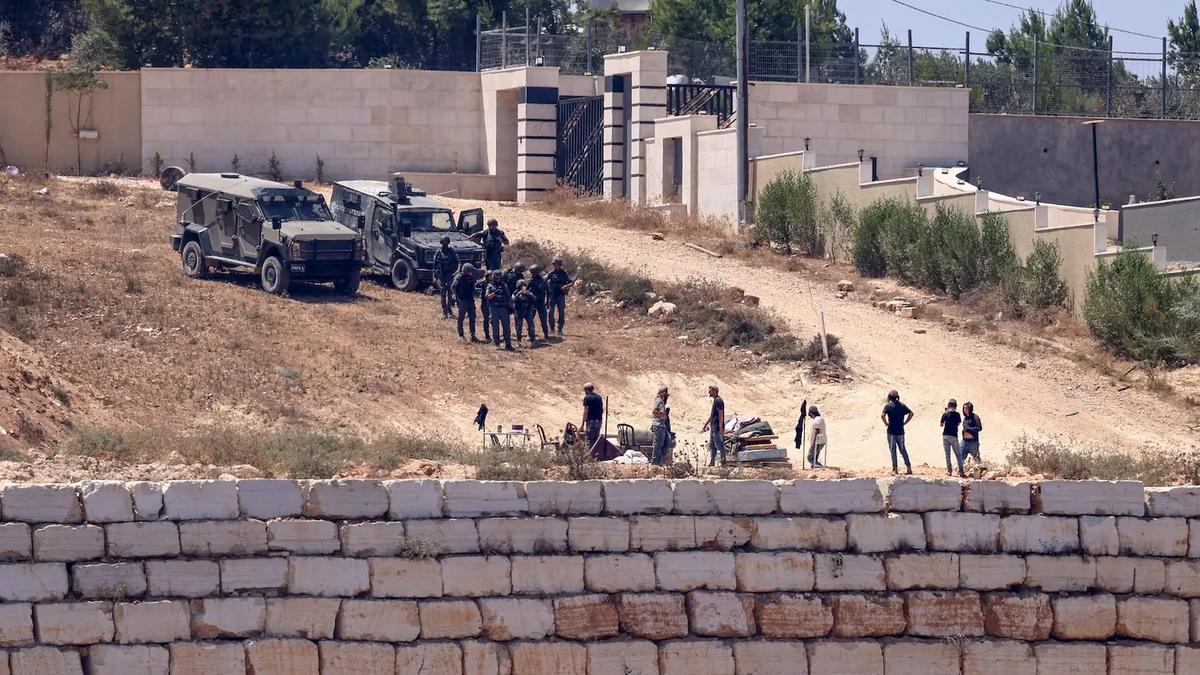
The Israel Defense Forces (IDF) dismantled 'illegal outposts' set up by Israeli settlers in the West Bank village of Qusra, following a tense standoff that trapped two Palestinian families and five visiting Italian nationals inside their homes. The settlers had cut off water and electricity to the houses and blockaded the roads, prompting the IDF to intervene.
The underlying power dynamics at play in the West Bank are complex and multifaceted. The Israeli government's continued support for settler expansion has emboldened extremist groups, who often act with impunity. The U.S. government's decision to revoke sanctions on violent settler groups has also contributed to the escalation of tensions. Meanwhile, the Palestinian Authority's limited control over Area B, where Qusra is located, has created a power vacuum that settlers have exploited.
The human cost of the conflict is stark. Palestinian residents of Qusra, like the American citizen who owns one of the besieged homes, are caught in the middle of the settler- IDF standoff. The psychological toll of living under constant threat of violence and displacement is immense. The recent events have also highlighted the plight of Palestinian families, who are often forced to live in isolated areas, cut off from basic services and amenities.
What is often downplayed in the media narrative is the role of the Israeli government in enabling settler violence. By providing support and resources to settler groups, the government has created an environment in which extremists feel emboldened to act. The U.S. government's complicity in this process, through its decision to revoke sanctions on violent settler groups, is also often overlooked. Furthermore, the international community's failure to hold Israel accountable for its actions in the West Bank has allowed the situation to escalate.
As the situation in Qusra continues to unfold, it's essential to watch for several key developments. The IDF's ability to maintain control over the area and prevent further settler violence will be crucial. The U.S. government's response to the situation, particularly in light of Ambassador Huckabee's rare rebuke, will also be closely watched. Additionally, the Palestinian Authority's efforts to assert its control over Area B and protect its residents will be critical in determining the outcome of the conflict.
Editor's Note: The situation in Qusra is fluid and subject to change. The analysis provided is based on current events and may be updated as more information becomes available.
Source referenced: FOREIGNPOLICY
This brief was synthesized by our Editorial Engine and reviewed by The Ground Narrative team.


