TRENDING

Friday, 16 October 2026
----------------------
5 Jumada Al-Awwal 1448 AH
President Donald Trump announced an additional 5,000 US troops will deploy to Poland, reversing a recent cancellation and following a withdrawal from Germany, signaling a transactional shift in US foreign policy and raising questions about NATO's future cohesion.
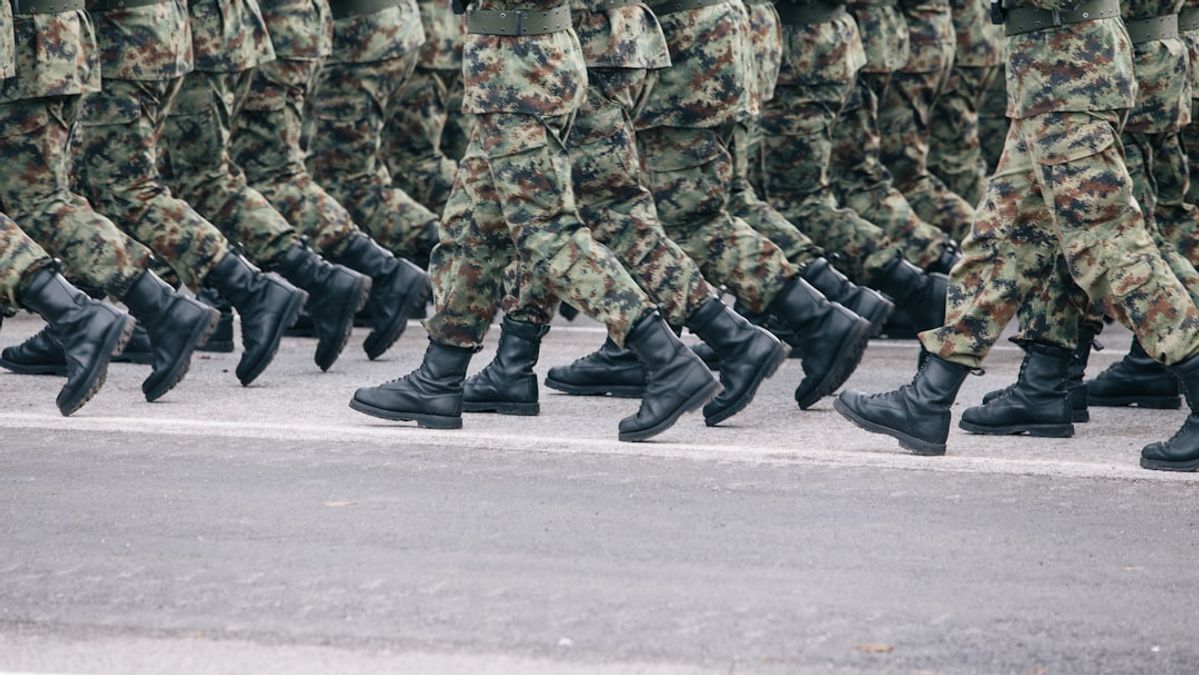
President Donald Trump's recent announcement to deploy an additional 5,000 US troops to Poland marks a significant, albeit complex, shift in the United States' military posture in Europe. This decision, communicated via Truth Social, comes just a week after the Pentagon had abruptly cancelled a planned deployment of 4,000 troops to the same country. The move is further contextualized by the earlier withdrawal of 5,000 US troops from Germany, highlighting a broader re-evaluation of American military presence on the continent under the 'America First' agenda.
The decision to bolster forces in Poland appears to be deeply rooted in the personal and political relationship between President Trump and Polish President Karol Nawrocki. Trump explicitly cited this relationship as the basis for the deployment, having previously endorsed Nawrocki during his presidential election campaign. President Nawrocki has consistently expressed strong support for Trump, even suggesting that he is the only world leader capable of resolving the conflict in Ukraine and deterring Russian aggression. For Poland, an increased US military presence serves as a critical deterrent against potential Russian expansionism, reinforcing its security on NATO's eastern flank.
This move, however, contrasts sharply with the recent reduction of US forces in Germany. The withdrawal of 5,000 troops from Germany earlier this month stemmed from a public disagreement between President Trump and German Chancellor Friedrich Merz, particularly concerning policy towards Iran. Trump had criticized Merz over comments regarding Iranian negotiations and has consistently pressured NATO allies, including Germany, to increase their defense spending and align with US foreign policy objectives, such as pressuring Iran over the Strait of Hormuz. The ambiguity surrounding whether the troops destined for Poland are part of those withdrawn from Germany or a separate deployment further complicates the strategic picture.
The fluctuating troop deployments underscore the transactional nature of US foreign policy under the current administration, which prioritizes bilateral relationships and perceived loyalty over traditional alliance structures. While the deployment to Poland could be seen as strengthening a key ally on NATO's eastern border, the broader context of troop reductions in Europe and the public disagreements with other NATO members raise significant concerns about the alliance's overall cohesion and collective defense capabilities.
US Secretary of State Marco Rubio is expected to address these 'burden-sharing' issues at an upcoming NATO foreign ministers' summit in Sweden. Reports of potential reductions in total US troop numbers available for NATO defense in the event of an attack have fueled anxieties among allies. President Trump's consistent criticism of NATO members for not meeting defense spending targets or supporting US foreign policy initiatives, such as those concerning Iran, has created an environment of uncertainty within the alliance. This approach risks undermining the principle of collective security, potentially sending mixed signals to adversaries like Russia, despite the reinforcement of Poland.
The geopolitical ramifications of these shifts are substantial. For Eastern European nations, particularly those bordering Russia, a robust US military presence is paramount for deterrence. Poland's strategic importance as a frontline state has grown, and the increased US commitment could be perceived as a direct response to regional security concerns. Conversely, the reduction of forces in Germany, historically the largest US military footprint in Europe, could weaken the overall European defense architecture and place greater pressure on Germany to enhance its own military capabilities and regional leadership.
Critics, including some Republican lawmakers, have warned that withdrawing troops from Germany sends a 'wrong message' to Russia, potentially emboldening Moscow. The current US strategy appears to be a recalibration, shifting resources to allies perceived as more aligned with Washington's immediate interests, rather than a wholesale abandonment of European security. However, the lack of clear, consistent communication and the highly personalized nature of these decisions introduce an element of unpredictability that could destabilize transatlantic relations and the broader international security landscape. The long-term impact on NATO's unity and its ability to present a united front against common threats remains a critical emerging concern.
Source referenced: BBC
This brief was synthesized by our Editorial Engine and reviewed by The Ground Narrative team.