TRENDING

Monday, 5 October 2026
----------------------
24 Rabi' Al-Thani 1448 AH
The U.S. Supreme Court has rejected a significant challenge to birthright citizenship, a cornerstone of former President Trump's anti-immigration agenda, leading to strong reactions from his political base. This decision reaffirms a long-standing constitutional principle and carries substantial implications for U.S. immigration policy and domestic political dynamics.
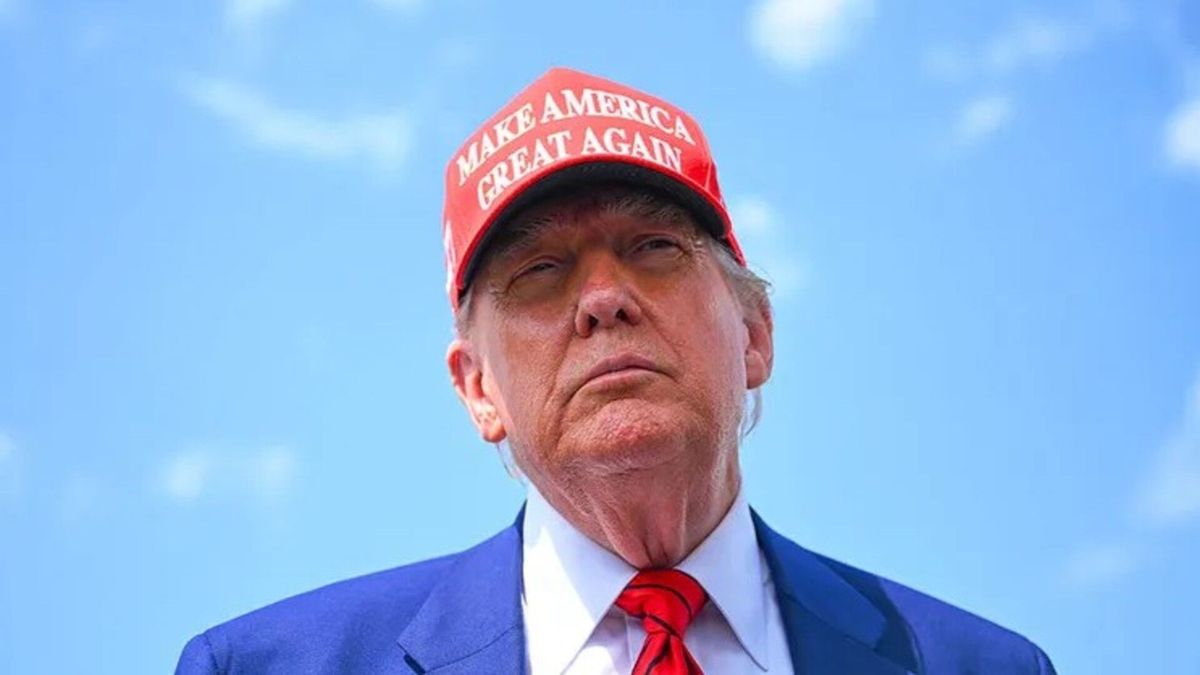
The United States Supreme Court has issued a pivotal ruling, rejecting a significant legal challenge aimed at curtailing birthright citizenship for the children of some immigrants. This decision, announced on July 1, 2026, marks a substantial setback for former President Donald Trump's anti-immigration platform, which had sought to redefine a core aspect of American nationality. The ruling has ignited a strong reaction within the "MAGA" (Make America Great Again) movement, underscoring the deep ideological divisions surrounding immigration in the U.S.
At the heart of the legal battle was the interpretation of the 14th Amendment to the U.S. Constitution, specifically its Citizenship Clause, which states: "All persons born or naturalized in the United States, and and subject to the jurisdiction thereof, are citizens of the United States and of the State wherein they reside." For over a century, this clause has been widely understood to grant automatic citizenship to nearly everyone born on U.S. soil, regardless of their parents' immigration status. This interpretation was solidified by the Supreme Court's 1898 decision in *United States v. Wong Kim Ark*.
Former President Trump and his allies had argued for a narrower interpretation, contending that the children of undocumented immigrants or certain non-citizens should not automatically qualify for birthright citizenship. This policy objective was a cornerstone of his broader efforts to reduce both legal and illegal immigration, appealing directly to a base concerned about border security and national identity. The Supreme Court's rejection of this bid effectively upholds the long-standing precedent, affirming the traditional understanding of the 14th Amendment. While the specific details of the Court's reasoning are yet to be fully dissected, the outcome signals a judicial reluctance to overturn established constitutional interpretations on such a fundamental matter.
The immediate aftermath of the ruling has been characterized by intense political fallout. For the "MAGA" movement and its supporters, the decision represents a significant defeat for a policy they viewed as essential to national sovereignty and immigration control. This "meltdown," as described by some observers, highlights the deep frustration among those who advocate for more restrictive immigration policies and perceive the judiciary as an impediment to their agenda. The ruling is likely to further energize the immigration debate, potentially becoming a rallying cry for future political campaigns and legislative efforts, even if a constitutional amendment to alter birthright citizenship remains an exceedingly difficult proposition.
Conversely, for immigrant rights advocates, civil liberties groups, and a broad spectrum of the Democratic Party, the Supreme Court's decision is a major victory. It is seen as a reaffirmation of fundamental constitutional principles, a safeguard against statelessness, and a defense of the U.S.'s historical identity as a nation built by immigrants. The ruling provides a degree of stability and certainty for millions of families, preventing the creation of a potentially marginalized underclass of children born in the U.S. but denied citizenship.
Beyond domestic politics, the Supreme Court's decision carries notable geopolitical implications. The United States' immigration policies and its adherence to constitutional norms are closely watched by the international community. By upholding birthright citizenship, the U.S. reaffirms its alignment with many other nations that practice *jus soli* (right of soil) citizenship, reinforcing its image as a country that generally adheres to international human rights standards regarding nationality and statelessness.
A reversal of birthright citizenship would have sent a powerful signal globally, potentially undermining the U.S.'s soft power and its standing as a beacon of democratic values and opportunity. Such a move could have been interpreted as a step towards a more insular and nationalistic posture, potentially straining diplomatic relations with countries whose citizens frequently immigrate to the U.S. The decision, therefore, helps to mitigate potential international criticism and maintains a degree of consistency in the U.S.'s approach to nationality, even amidst ongoing debates about border enforcement and immigration levels.
Economically, maintaining birthright citizenship avoids the potential creation of a large, legally ambiguous population within U.S. borders. A class of individuals born in the U.S. but without citizenship could lead to significant social welfare challenges, administrative complexities, and a potential drain on public resources, as well as ethical concerns regarding their integration and rights. The Court's decision thus prevents a scenario that could have long-term economic and social costs.
The U.S. Supreme Court's rejection of the challenge to birthright citizenship is a landmark legal and political event. It underscores the enduring strength of the 14th Amendment's Citizenship Clause and the judiciary's role in interpreting and upholding the Constitution. While it represents a significant defeat for a key tenet of the Trump-era immigration agenda and has provoked strong reactions from his political base, it simultaneously offers reassurance to immigrant communities and those who champion constitutional continuity. The ruling reaffirms a core aspect of American identity and has implications not only for domestic political stability but also for the United States' international image and its commitment to established legal principles. While this specific battle over birthright citizenship may be settled for now, the broader political tensions surrounding immigration policy in the U.S. are likely to persist, shaping future electoral contests and legislative debates.
Source referenced: ALJAZEERA
This brief was synthesized by our Editorial Engine and reviewed by The Ground Narrative team.