TRENDING

Tuesday, 6 October 2026
----------------------
25 Rabi' Al-Thani 1448 AH
The confirmation of the new US Attorney General passed with minimal assurances, signaling a profound shift in the Department of Justice's independence. This analysis explores how a critical institutional firewall, built after Watergate, is being dismantled, transforming the AG's role from public servant to presidential instrument.
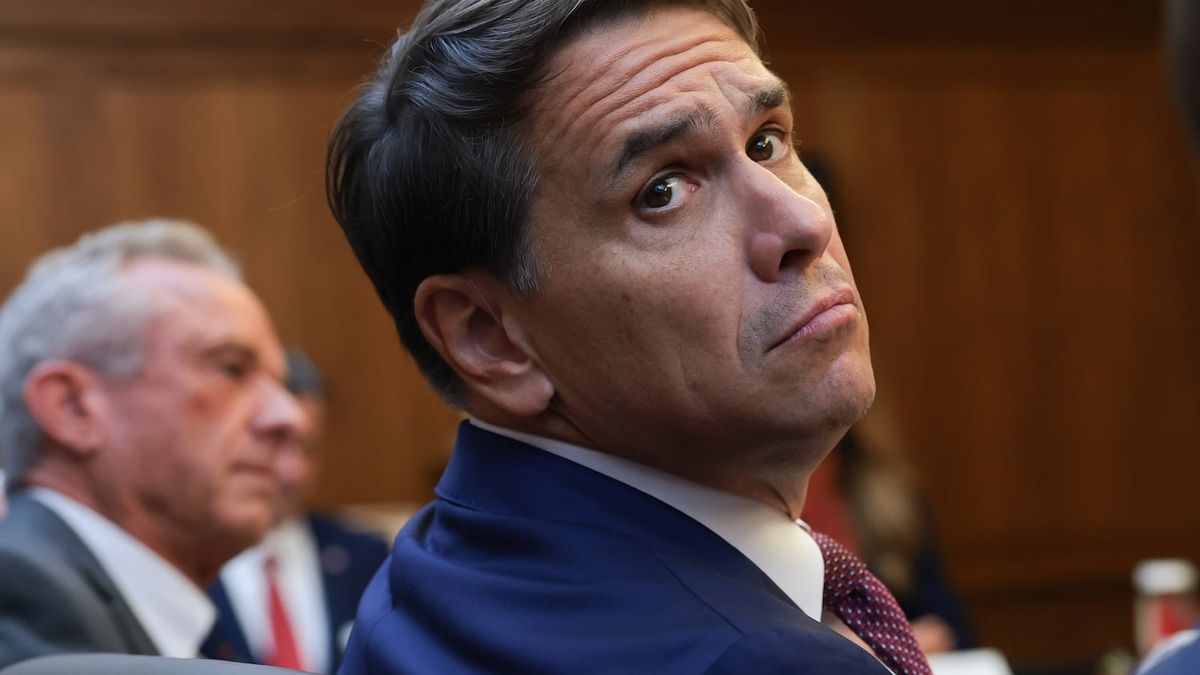
Todd Blanche has been confirmed as the United States Attorney General, a process that revealed a significant shift in the accepted norms surrounding the Department of Justice's independence. During his Senate Judiciary Committee hearings, concerns were raised by Senators Tom Tillis and John Cornyn regarding the President's proposed $1.8 billion "anti-weaponization fund" and provisions shielding members of the Trump family from IRS audits. Blanche ultimately offered carefully worded assurances that the fund was "not moving forward" and provided a "binding written document" on the audit provision, which were deemed sufficient by the senators to secure his confirmation.
This confirmation underscores a profound redefinition of the Attorney General's role and the Department of Justice's autonomy. Historically, the AG has been understood as the chief law enforcement officer, bound by the Constitution and the impartial application of law, not as a direct instrument of presidential will. Blanche's prior public statement, "I'm his lawyer" (later corrected to "was"), encapsulates this shift, signaling a perception of the AG as personal counsel rather than an independent institutional head.
The legislative branch's role in maintaining checks and balances appears significantly weakened. The minimal assurances accepted by senators, particularly those not facing immediate re-election pressures, suggest a prioritization of political alignment over the preservation of institutional firewalls. This stands in stark contrast to the "Saturday Night Massacre" of 1973, when Attorney General Elliot Richardson resigned rather than comply with President Nixon's order to fire Special Prosecutor Archibald Cox. Richardson's act established a critical precedent for DOJ independence, a precedent now openly challenged and largely unaddressed by the very body meant to safeguard it. The power dynamic has tilted heavily towards the executive, with the legislative branch appearing to cede ground on a fundamental principle of governance.
The most significant human cost of this erosion of the Department of Justice's independence is the ordinary citizen's trust in the rule of law. When the nation's top law enforcement officer is perceived as an extension of presidential power, rather than an impartial arbiter of justice, the public's faith in the fairness and equal application of the law inevitably diminishes. This perception can lead to a two-tiered justice system: one for those aligned with power, and another for everyone else.
The concept of an "anti-weaponization fund" itself, even if "not moving forward" for now, introduces the chilling idea that federal resources could be used to target perceived political opponents, creating a climate of fear and chilling free expression. Conversely, shielding specific individuals from IRS audits implies that certain powerful actors are above the scrutiny applied to average taxpayers. These actions, or the willingness to entertain them, directly impact the sense of equity and justice that underpins a stable society, making citizens vulnerable to the whims of political power rather than protected by a consistent legal framework.
While the immediate focus during Blanche's confirmation hearings was on the "anti-weaponization fund" and IRS audits, the truly untold story is the silence surrounding the fundamental independence of the Department of Justice. The debate largely skirted the core issue of whether the AG would serve the President or the Constitution, effectively downplaying the historical lessons of Watergate and the "Saturday Night Massacre." Governments and official statements often frame these discussions as mere procedural hurdles or policy disagreements, rather than acknowledging the deeper, systemic shift in the balance of power.
What is being omitted is the acknowledgment that the "Overton window"—the range of ideas tolerated in public discourse—has shifted dramatically. What would have been a national scandal in 1973, leading to resignations and widespread outrage, is now navigated with vague assurances and minimal legislative pushback. The powerful are downplaying the long-term institutional damage, framing it as a political victory or a necessary consolidation of executive authority, rather than a potential threat to democratic norms and the integrity of justice. The real concern is not just the specifics of a fund or an audit, but the precedent being set for future administrations to wield the DOJ as a partisan tool.
Readers should closely watch the Department of Justice's actions under Attorney General Blanche. Specifically, observe how the DOJ handles investigations involving politically sensitive figures or issues, particularly those touching upon the executive branch or its allies. Any directives or public statements from the President regarding ongoing or potential investigations will be critical indicators of the true extent of the AG's independence.
Furthermore, pay attention to any future legislative attempts to either reassert or further erode the DOJ's autonomy. The response, or lack thereof, from Congress to any perceived politicization of justice will signal the continued health of the checks and balances system. Ultimately, the long-term impact on public trust in federal institutions and the perceived fairness of the legal system will be the most telling measure of this shift's consequences.
Source referenced: FOREIGNPOLICY
This brief was synthesized by our Editorial Engine and reviewed by The Ground Narrative team.