TRENDING

Monday, 19 October 2026
----------------------
8 Jumada Al-Awwal 1448 AH
The US military has confirmed its tenth consecutive night of strikes against Iran, targeting key military infrastructure. This sustained campaign signals a significant escalation and the resumption of hostilities following a brief diplomatic understanding.
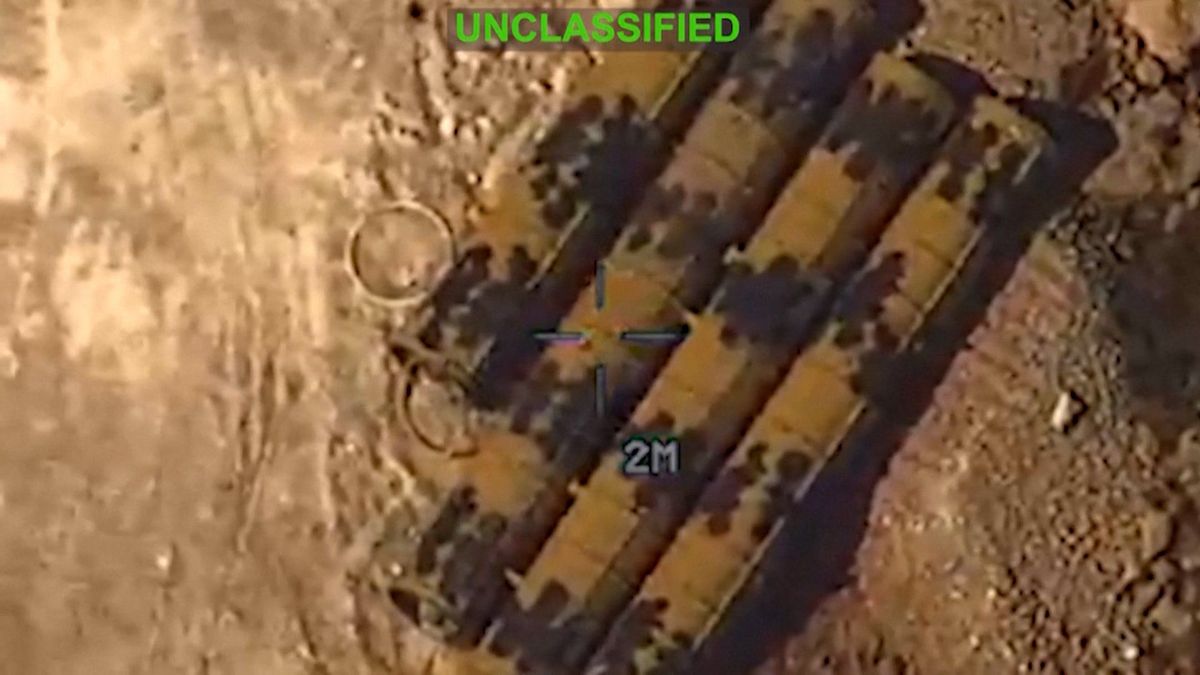
On July 21, 2026, the United States Central Command (CENTCOM) released footage confirming its tenth consecutive night of military strikes against targets within Iran. This sustained campaign represents a significant escalation in the ongoing tensions between Washington and Tehran, marking a clear resumption of military hostilities. The targets of these strikes, as specified by CENTCOM, included critical command centers, maritime capabilities, missile and drone launch sites, and air defense systems, indicating a strategic effort to degrade Iran's military infrastructure and operational capacity.
The continuous nature of these strikes, spanning over a week and a half, underscores a deliberate and systematic approach by the US military. Unlike isolated retaliatory actions, a ten-night bombing campaign suggests a broader strategic objective aimed at achieving specific military or political outcomes. The selection of targets points to an intent to diminish Iran's ability to project power, defend its airspace, and potentially disrupt its regional proxy networks, which often rely on these capabilities.
Crucially, this latest round of strikes occurs within a broader context of renewed conflict. Related reporting from the same source indicates that a 'war on Iran' has resumed just 30 days after a Memorandum of Understanding (MoU) was in place. This detail is paramount, transforming the current strikes from mere punitive actions into a re-engagement in a previously paused conflict. The breakdown of the MoU, the specifics of which are not detailed in the provided information, signifies a profound failure of diplomatic efforts to de-escalate or resolve underlying disputes between the two nations.
The resumption of hostilities after a diplomatic pause suggests that the core issues driving the conflict remain unresolved, or that new provocations have emerged that shattered the fragile agreement. The 'why' behind this resumption is likely multifaceted, potentially involving perceived Iranian breaches of the MoU, continued regional destabilization activities attributed to Tehran, or a strategic decision by the US to reassert its military posture in the region. Without specific details on the MoU's terms or its failure, the precise triggers remain subject to analysis, but the outcome is unequivocally a return to active military engagement.
This escalation carries profound geopolitical implications for the Middle East and beyond. The targeting of Iran's military assets could be intended to deter further actions, reduce its capacity to threaten shipping lanes in the Persian Gulf, or limit its support for non-state actors in countries like Iraq, Syria, Lebanon, and Yemen. However, such actions also risk provoking a direct and potentially wider response from Iran, which possesses significant asymmetric warfare capabilities and a network of regional allies.
Regional stability, already precarious, is now under increased threat. Neighboring states, particularly those with close ties to either the US or Iran, will be closely monitoring developments, bracing for potential spillover effects. The Strait of Hormuz, a critical chokepoint for global oil supplies, remains a flashpoint, and any disruption there could have immediate and severe consequences for the global economy. The involvement of other global powers, such as Russia and China, who have their own strategic interests in the region and relationships with Iran, adds another layer of complexity to the unfolding situation.
The failure of the recent MoU and the subsequent resumption of military operations highlight the deep-seated mistrust and intractable nature of the US-Iran relationship. The current trajectory suggests a preference for military pressure over diplomatic engagement, at least in the immediate term. The long-term consequences could include a further entrenchment of hostile positions, increased militarization of the region, and a heightened risk of miscalculation leading to a full-scale regional conflict.
For the international community, the challenge lies in finding a viable path to de-escalation. The current situation demands careful diplomatic maneuvering to prevent a wider conflagration, protect global economic interests, and address the underlying security concerns that continue to fuel this protracted rivalry. The tenth consecutive night of strikes is not merely a military report; it is a stark indicator of a renewed and dangerous chapter in US-Iran relations, with far-reaching implications for global peace and security.
Editor's Note: The specific triggers for the breakdown of the Memorandum of Understanding and the immediate resumption of hostilities are not detailed in the provided raw article, requiring inference based on the 'war resumes' context.
Source referenced: ALJAZEERA
This brief was synthesized by our Editorial Engine and reviewed by The Ground Narrative team.