TRENDING

Monday, 19 October 2026
----------------------
8 Jumada Al-Awwal 1448 AH
The 1983 Social Security Amendments saved the program from imminent collapse but sowed structural flaws that echo today. Understanding the power play behind the deal reveals who truly benefits and who bears the hidden costs.
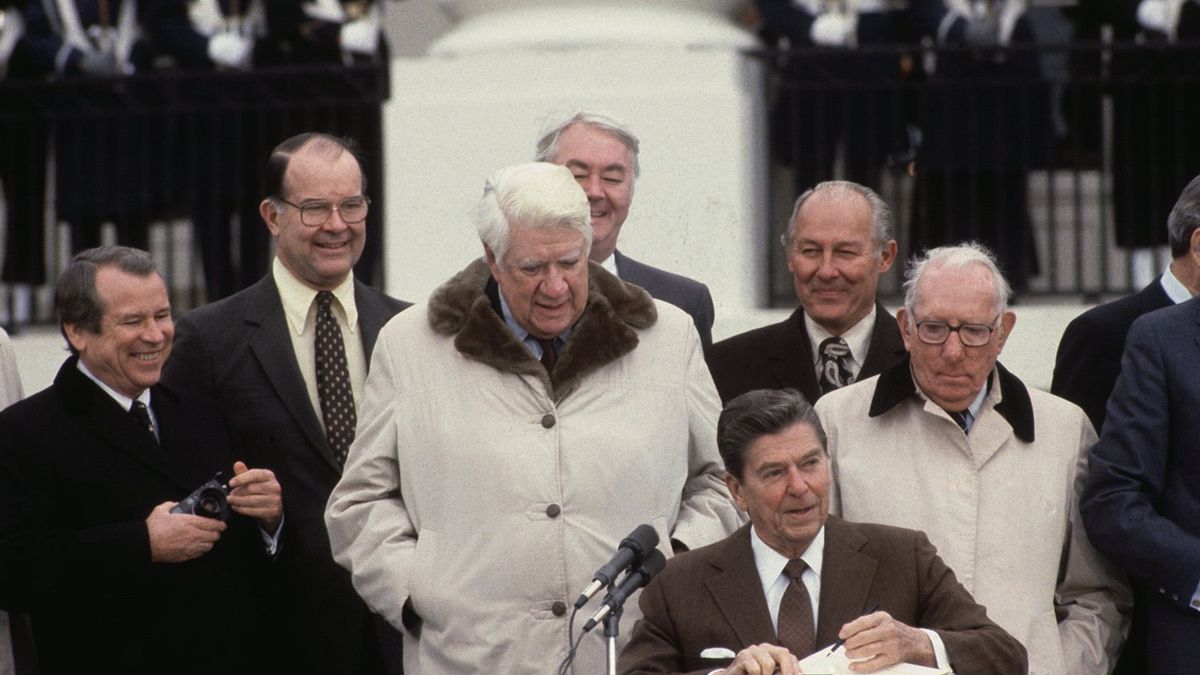
In early 1983, Congress passed a sweeping set of amendments that raised payroll taxes, delayed cost‑of‑living adjustments, and introduced partial taxation of benefits for higher earners. The legislation, signed by President Ronald Reagan, was billed as a rescue for a program whose trust fund was projected to run out of cash by the early 2030s. The deal halted an imminent fiscal breach but also locked in a pay‑as‑you‑go structure that now underpins the current crisis.
The 1983 compromise was less a pure fiscal fix than a political bargain shaped by three intersecting forces. First, elected officials faced a stark survival calculus: any hint of cutting benefits risked a wave of voter backlash, especially among seniors who turned out in record numbers for the 1982 midterms. Second, the bipartisan National Commission on Social Security Reform, chaired by economist Alan Greenspan, supplied a veneer of technocratic legitimacy that allowed lawmakers to claim they were following expert advice rather than partisan whim. Third, the amendments shifted more of the financing burden onto employers and the self‑employed, groups with strong lobbying clout in Washington. By raising the payroll tax rate and expanding coverage to previously exempt occupations, the bill secured the backing of business interests that preferred a modest tax increase over a wholesale dismantling of the program. The political math was simple: a modest, broadly distributed tax hike was more palatable than a headline‑grabbing benefit cut, and it kept the Social Security brand intact for future electoral cycles.
While the 1983 law prevented an abrupt benefit freeze, it introduced a slower erosion of purchasing power. Delayed cost‑of‑living adjustments meant that inflation‑hit seniors saw their real income shrink, a trend that compounds for those on fixed budgets. The partial taxation of benefits for higher earners also created a two‑tier system where wealthier retirees faced a higher effective tax rate, but the poorest still relied on unchanged nominal checks that lost value over time.
The expanded payroll tax base meant that every new entrant into the labor market paid a slightly higher rate than their parents did. For low‑wage workers, the additional deduction represented a meaningful slice of already thin take‑home pay, reducing disposable income and limiting upward mobility. The self‑employed, many of whom run small family businesses, also faced a new tax obligation that cut into profit margins.
Municipalities and school districts that supplement employee retirement with local pension plans found their budgeting assumptions upended. The federal tax increase reduced the net earnings of their workers, forcing local governments to either raise taxes or cut services to maintain pension solvency. The ripple effect landed on public schools, emergency services, and infrastructure projects that rely on stable local tax bases.
The 1983 amendments paved the way for the Treasury to invest a larger share of the Social Security trust fund in government securities, effectively turning the program into a massive domestic lender. This arrangement benefitted the broader financial system by providing a reliable source of low‑risk assets, yet official narratives rarely highlight how the stability of the bond market became intertwined with retirees' futures.
While the public story emphasized bipartisan compromise, behind closed doors a coalition of business groups, insurance carriers, and payroll processors lobbied intensively for the tax‑increase structure. Their goal was to avoid more radical reforms—such as privatization or means‑testing—that could have introduced market volatility into retirement security. The lobbying effort is seldom mentioned in mainstream retrospectives, which tend to focus on the personalities of Reagan and O’Neill.
Politicians have long framed Social Security as untouchable, a claim that shields the program from substantive debate. The 1983 deal showed that the rail can be moved, but only when the cost of inaction—political fallout, media frenzy, and looming fiscal collapse—outweighs the risk of a controlled adjustment. By treating the program as a political taboo, lawmakers have avoided confronting deeper structural issues, such as the demographic shift toward an older population and the stagnation of wage growth.
The next decade will test whether the 1983 framework can survive the twin pressures of an aging baby‑boom cohort and a labor market that increasingly favors gig work and contract employment. Key indicators to monitor include: (1) proposals to raise the full retirement age beyond 67, (2) legislative pushes to broaden the taxable wage base to include non‑traditional earnings, and (3) any movement toward partial privatization that would re‑introduce market risk. Watching how Congress navigates these debates—especially in election years—will reveal whether the safety net remains a political promise or becomes a fiscal liability.
Stakeholders ranging from senior advocacy groups to small‑business associations will continue to shape the narrative, but the underlying power dynamics—tax revenue needs, electoral calculus, and the financial sector’s appetite for stable government bonds—will remain the decisive forces.
For ordinary Americans, the real question is not whether the program survives, but how its evolving design will affect the day‑to‑day reality of retirement, healthcare, and intergenerational equity.
The 1983 law raised payroll tax rates, expanded coverage to more workers, delayed cost‑of‑living adjustments, and introduced a partial tax on benefits for higher‑income retirees.
It locked in a pay‑as‑you‑go financing model that now strains under demographic shifts, meaning today's retirees face slower benefit growth while younger workers shoulder higher taxes.
Lawmakers are debating raising the full retirement age, expanding the taxable wage base to include gig‑economy earnings, and, in some circles, exploring limited privatization to reduce fiscal pressure.
Source referenced: FOREIGNPOLICY
This brief was synthesized by our Editorial Engine and reviewed by The Ground Narrative team.