TRENDING

Tuesday, 20 October 2026
----------------------
9 Jumada Al-Awwal 1448 AH
US Defense Secretary Pete Hegseth has requested an additional $67 billion in urgent funding for the ongoing military campaign against Iran, bringing the total cost to over $100 billion. The request, made before the Senate, has drawn significant criticism from both Democratic and Republican lawmakers.
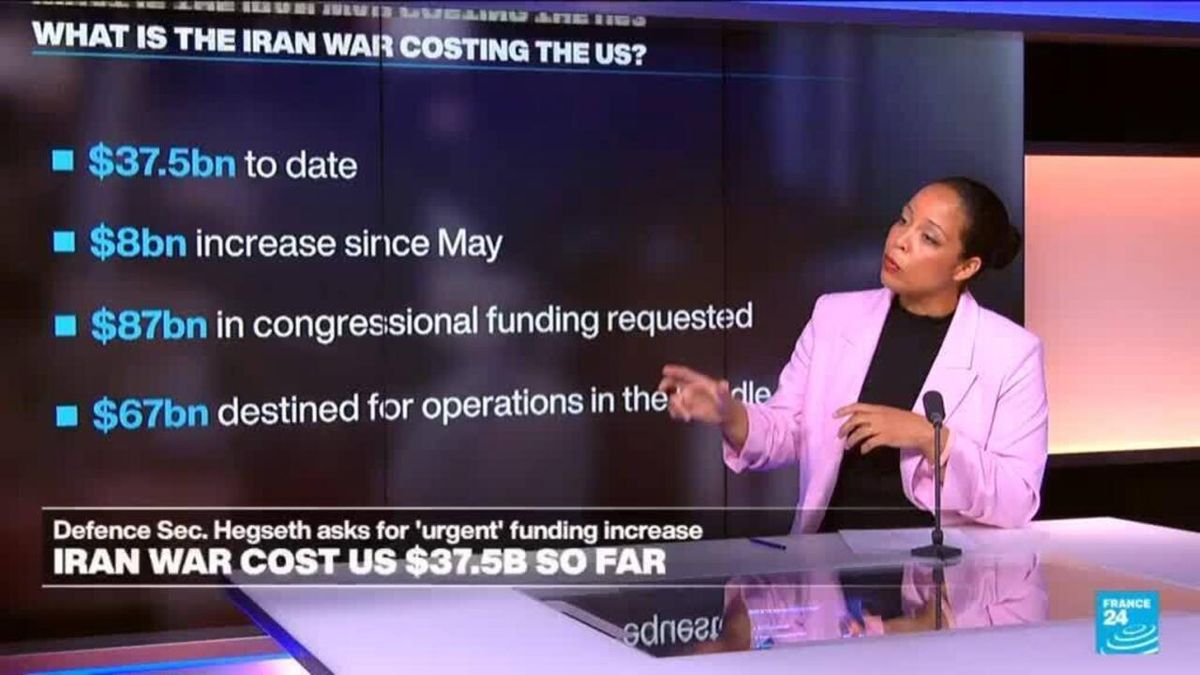
On July 22, 2026, US Defense Secretary Pete Hegseth appeared before the Senate to advocate for an urgent increase in funding for the ongoing American military campaign against Iran. The Secretary revealed that the conflict has already incurred a cost of $37.5 billion and requested an additional $67 billion, pushing the total expenditure past the $100 billion mark. This substantial financial demand has ignited a contentious debate within the US Congress, drawing criticism from both Democratic and Republican legislators, underscoring the domestic political challenges of sustaining such a significant military engagement.
The request for increased funding comes amidst a period of heightened tensions and active military exchanges between the United States and Iran. Reports indicate that the US is contemplating strikes on Iran's 'Pickaxe Mountain,' believed to be a critical nuclear enrichment site. This potential targeting of a nuclear facility signifies a profound escalation in the conflict, moving beyond conventional engagements to directly confront Iran's nuclear program. Such a move carries immense geopolitical risks, including the potential for a wider regional conflagration and severe international repercussions, particularly concerning nuclear non-proliferation efforts and global energy security.
The broader Middle East remains deeply affected by the US-Iran confrontation. The conflict's ripple effects are evident in the diplomatic and security landscape of neighboring states. Recent developments include efforts to establish 'safe zones' in southern Lebanon, a trial undertaken by Israel and Lebanon as part of a broader deal, likely aimed at de-escalating border tensions or managing the spillover from the larger regional conflict. Concurrently, Lebanon's President has reportedly urged US President Donald Trump to maintain support for the Lebanese army, a move that could be interpreted as an attempt to bolster regional stability or to position Lebanon strategically amidst the shifting power dynamics, potentially as a counter-containment measure against Iranian influence.
The involvement of key regional and international figures, such as Israel's Prime Minister Benjamin Netanyahu and Iran's Mojtaba Khamenei, underscores the multi-faceted nature of this geopolitical struggle. Their respective nations' security interests and strategic objectives are inextricably linked to the trajectory of the US-Iran conflict, influencing decisions on military posture, diplomatic overtures, and regional alliances. The ongoing 'cycle of enhanced risk,' characterized by reciprocal strikes between the US and Iran, highlights the precarious balance of power and the constant threat of miscalculation leading to further escalation.
The substantial financial commitment requested by Secretary Hegseth signals a long-term, high-intensity military engagement that will inevitably strain US resources and test its strategic resolve. The bipartisan criticism in the Senate reflects growing concerns over the war's objectives, its sustainability, and its broader impact on American foreign policy priorities. A prolonged conflict with Iran, particularly one involving strikes on nuclear facilities, could destabilize global oil markets, disrupt vital shipping lanes, and potentially draw in other major powers, leading to a more complex and unpredictable international security environment.
From a geopolitical perspective, the conflict represents a critical juncture in the struggle for influence in the Middle East. The outcome will not only redefine the regional balance of power but also have significant implications for global energy security, nuclear proliferation, and the future of international diplomacy. The international community watches closely as the US navigates the complexities of this costly and strategically perilous campaign, with the potential for widespread consequences extending far beyond the immediate theater of conflict.
Source referenced: FRANCE24
This brief was synthesized by our Editorial Engine and reviewed by The Ground Narrative team.


