TRENDING

Monday, 5 October 2026
----------------------
24 Rabi' Al-Thani 1448 AH
A recent exchange of military strikes between Iran and the United States has severely jeopardized a newly signed peace memorandum, raising alarms over regional stability and the critical Strait of Hormuz. Both nations accuse each other of violating the ceasefire, intensifying a volatile geopolitical standoff.
On Sunday, June 28, 2026, Iran and the United States engaged in a direct exchange of military strikes, casting a significant shadow over a peace memorandum of understanding (MoU) signed less than two weeks prior. This escalation, occurring across the Persian Gulf region, signals a dangerous deterioration in relations and poses a substantial threat to an already fragile regional security landscape.
Iran's Islamic Revolutionary Guard Corps (IRGC) announced that its forces launched ballistic missiles and drones targeting U.S. military facilities in Kuwait and Bahrain. Specifically, the IRGC claimed to have struck eight key infrastructure facilities at the Ali Al Salem Air Base in Kuwait and the U.S. Fifth Fleet in Bahrain. This action, according to the IRGC, was a direct retaliation for earlier U.S. strikes against five Iranian coastal posts. Tehran further asserted that the U.S. attacks were conducted under the pretext of responding to an IRGC Navy "confrontation with a violating ship."
In response, the U.S. Central Command (CENTCOM) confirmed it had conducted "additional strikes against multiple targets in Iran." CENTCOM stated these operations were a direct response to an earlier Iranian drone attack on a Panama-flagged tanker transiting near the Strait of Hormuz, emphasizing a commitment to counter "continued Iranian aggression against commercial shipping." U.S. military aircraft reportedly targeted Iranian military surveillance infrastructure, communication systems, air defense sites, drone storage facilities, and minelayer capabilities. These clashes followed similar incidents on Saturday, June 27, when CENTCOM claimed airstrikes against Iran's southern coasts, met by IRGC retaliatory strikes on U.S. military positions in West Asia.
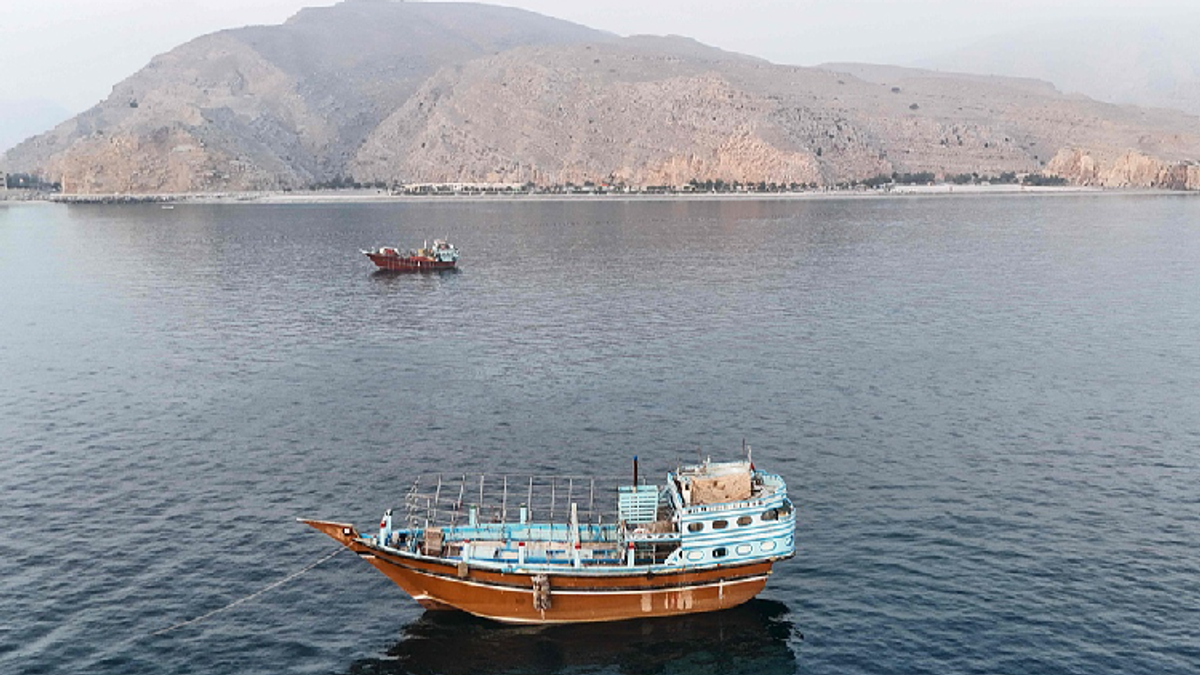
A central element of this escalating tension is the Strait of Hormuz, a vital maritime chokepoint through which a significant portion of the world's oil supply passes. Iran's IRGC explicitly warned that vessels seeking unauthorized passage through the Strait would face a more forceful response than in the past. Furthermore, Iran asserted its responsibility for managing maritime traffic in the Strait under the terms of the peace MoU, a claim likely to be contested by international maritime law and other regional powers. The U.S. focus on protecting commercial shipping underscores the global economic implications of any disruption in this critical waterway.
Both sides accused each other of violating the peace MoU, which was signed on June 17, 2026, with the aim of ending conflict across the region, including in Lebanon. Iran warned that continued violations would lead to the complete cessation of all diplomatic processes, highlighting the precarious state of ongoing negotiations aimed at reaching a final agreement.
The strikes had immediate repercussions for regional allies. Kuwait's Ministry of Foreign Affairs strongly condemned the Iranian attacks, describing them as a "flagrant violation" of its sovereignty and a direct threat to its security and stability. Kuwaiti Armed Forces reported intercepting two ballistic missiles, with no casualties. Similarly, Bahrain's Interior Ministry reported damage to a residential building in Muharraq Governorate from an Iranian attack, also without casualties. These incidents underscore the vulnerability of U.S. allies in the Gulf and the broader regional destabilization caused by direct U.S.-Iran military exchanges.
Amidst the military escalation, diplomatic efforts continued, albeit under immense strain. Iranian Foreign Minister Seyed Abbas Araghchi visited Baghdad on Sunday to meet with his Iraqi counterpart, Fuad Hussein. During their discussions, Hussein called for disputes to be resolved through dialogue, emphasizing Iraq's good relations with both Tehran and Washington and its willingness to mediate. Araghchi briefed Hussein on the progress of negotiations with the U.S. and reiterated Iran's stance on the Strait of Hormuz. The meeting also touched upon coordinating arrangements for the funeral ceremonies of Iran's late Supreme Leader Ali Khamenei, indicating ongoing internal transitions within Iran that could influence its foreign policy trajectory.
The exchange of strikes represents a significant setback for de-escalation efforts in the Middle East. The immediate violation of a recently signed peace MoU suggests a deep-seated mistrust and a readiness for military confrontation that overshadows diplomatic overtures. The strategic motivations behind these actions appear to be a mix of retaliation, deterrence, and a struggle for influence and control, particularly over critical maritime routes like the Strait of Hormuz.
For the United States, the strikes underscore the challenges of maintaining regional security and protecting its interests and allies against an assertive Iran. For Iran, these actions project strength and a willingness to challenge U.S. presence and influence, particularly in response to perceived infringements on its sovereignty or maritime claims. The risk of miscalculation remains high, with the potential for these localized exchanges to spiral into a broader regional conflict, impacting global energy markets and international stability. The future of the U.S.-Iran relationship, and by extension, the security of the Persian Gulf, hinges precariously on whether diplomatic channels can regain traction amidst the ongoing military posturing.
Source referenced: CGTN
This brief was synthesized by our Editorial Engine and reviewed by The Ground Narrative team.


