TRENDING

Sunday, 25 October 2026
----------------------
14 Jumada Al-Awwal 1448 AH
The US launches new 'self-defense' strikes on Iran over an alleged Apache helicopter crash, escalating tensions between the two nations. This development comes amidst a backdrop of global instability, with rising conflicts and drone incursions threatening regional stability.
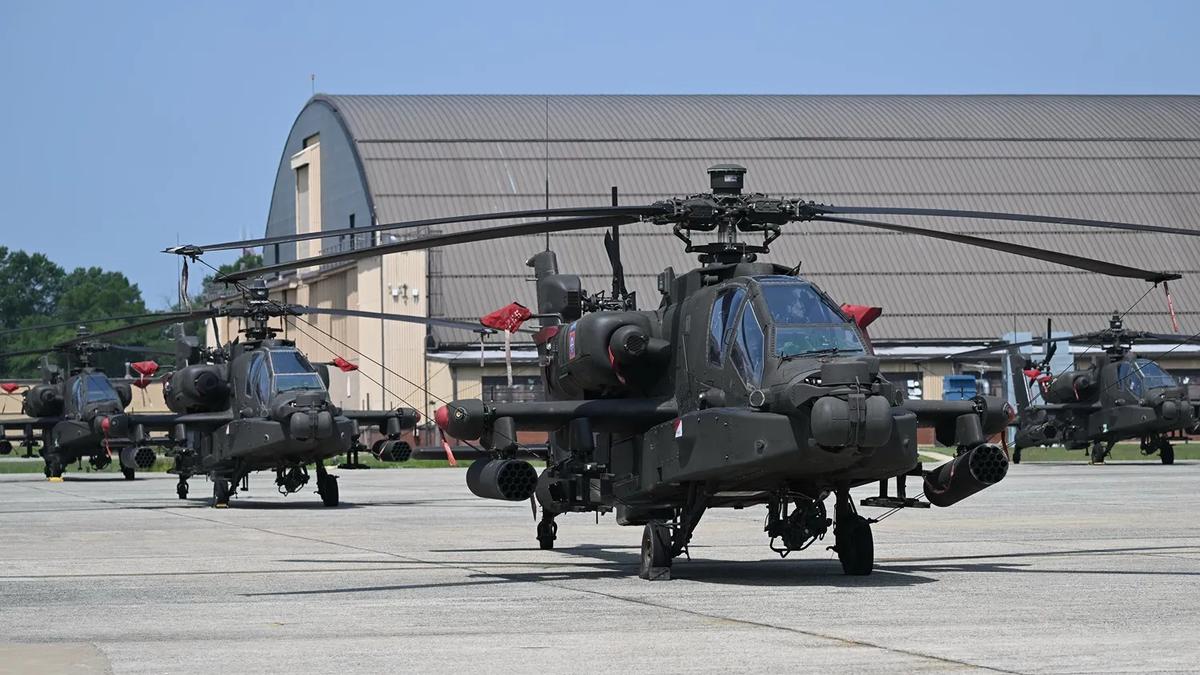
The recent US-Iran conflict has taken a significant turn with the launch of new 'self-defense' strikes on Iran by the US military. This move follows an alleged Iranian attack on a US Army Apache helicopter near the Strait of Hormuz, which resulted in the helicopter's crash. The incident has sparked a chain reaction of events, with both nations trading accusations and warnings.
The US-Iran conflict has its roots in the 1979 Iranian Revolution, which led to the establishment of an Islamic republic. Since then, the two nations have been locked in a cycle of hostility, with the US imposing economic sanctions and Iran developing its nuclear program. The current conflict is a manifestation of these deep-seated tensions, with both nations seeking to assert their dominance in the region.
The escalation of tensions between the US and Iran has significant regional implications. The conflict has the potential to draw in other nations, including Israel and Saudi Arabia, which have their own interests in the region. The situation is further complicated by the presence of Iranian proxies in Lebanon and Syria, which could lead to a wider conflict.
The US-Iran conflict is not an isolated incident. The world is witnessing a rise in global instability, with conflicts and drone incursions becoming increasingly common. The recent study by the Uppsala Conflict Data Program highlights the alarming trend of rising conflicts, with 2025 recording the highest number of wars since World War II.
The suspension of Karim Khan, the chief prosecutor of the International Criminal Court (ICC), has raised concerns about the court's ability to investigate and prosecute war crimes. The allegations of sexual misconduct against Khan have sparked a debate about the ICC's credibility and its ability to hold powerful nations accountable.
The US-Iran conflict is a symptom of a larger problem - the decline of the liberal world order and the rise of great power competition. The escalation of tensions between the US and Iran has significant regional and global implications, and it is essential to address the underlying causes of this conflict to prevent further instability.
Editor's Note: The analysis is based on publicly available information and may not reflect the full complexity of the situation. Further research and analysis are necessary to fully understand the implications of this conflict.
Source referenced: FOREIGNPOLICY
This brief was synthesized by our Editorial Engine and reviewed by The Ground Narrative team.