TRENDING

Sunday, 25 October 2026
----------------------
14 Jumada Al-Awwal 1448 AH
The U.S. Supreme Court recently upheld birthright citizenship under the 14th Amendment, striking down a 2021 executive order by former President Trump. This decision reaffirms a century-old legal precedent, yet the contentious debate over immigration policy and constitutional interpretation continues to shape American politics.
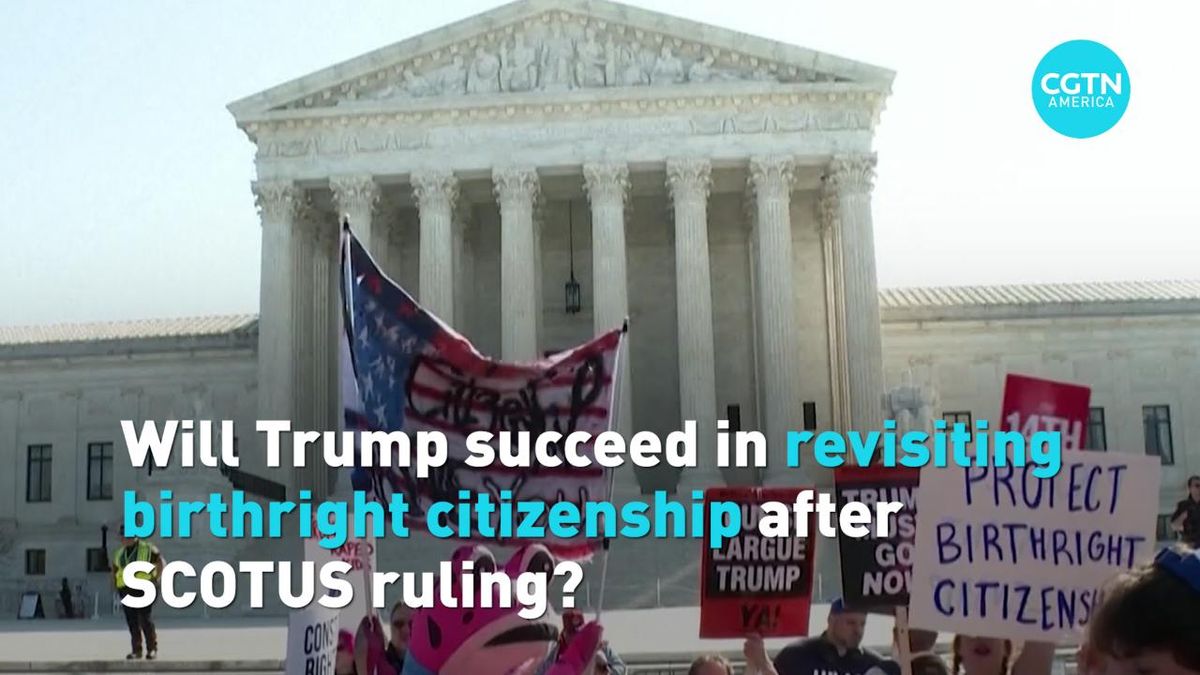
The United States Supreme Court recently delivered a significant ruling, affirming the principle of birthright citizenship as enshrined in the 14th Amendment of the U.S. Constitution. This decision, rendered in June 2026, directly struck down an executive order signed by former President Donald Trump in 2021, which had sought to limit citizenship for children born in the U.S. to undocumented immigrants. While the ruling reinforces a long-standing legal precedent, it also highlights the persistent and deeply divisive nature of immigration policy in American political discourse.
At the heart of this legal battle is the 14th Amendment, ratified in 1868, which states, "All persons born or naturalized in the United States and subject to the jurisdiction thereof, are citizens of the United States and of the State wherein they reside." This clause has been consistently interpreted by the Supreme Court to grant citizenship to virtually anyone born on U.S. soil, regardless of their parents' immigration status. The foundational precedent for this interpretation was established in the **1898 case of *United States v. Wong Kim Ark***, which affirmed birthright citizenship for the U.S.-born child of Chinese immigrants. This historical context underscores the deep roots of the principle, which has stood for over 150 years as a cornerstone of American identity and constitutional law.
Former President Trump's executive order, issued on his first day back in office in 2021, aimed to challenge this interpretation, arguing that it incentivizes "birth tourism" and undermines national sovereignty. His administration contended that the phrase "subject to the jurisdiction thereof" should exclude children of undocumented immigrants, a position that legal experts widely viewed as a radical departure from established jurisprudence. The Supreme Court's recent decision, however, firmly rejected this reinterpretation, upholding the traditional understanding of the 14th Amendment.
The debate surrounding birthright citizenship is a microcosm of the broader political and social divisions over immigration in the United States. For former President Trump and his supporters, limiting birthright citizenship is a key component of a more restrictive immigration agenda, framed as necessary for border security and national integrity. The argument often centers on the perceived strain on public resources and the notion that current laws encourage illegal immigration.
Conversely, immigration advocates, including recipients of the Deferred Action for Childhood Arrivals (DACA) program, celebrated the Supreme Court's decision as a victory for human rights and constitutional principles. They argue that birthright citizenship is a fundamental right that prevents the creation of a permanent underclass and promotes social integration. The ruling provides a sense of stability and belonging for millions of individuals and families who might otherwise face an uncertain legal future, reinforcing the idea of the U.S. as a nation built on the promise of opportunity for all born within its borders.
Following the Supreme Court's ruling, former President Trump has indicated his intention to ask the court to revisit the case. However, legal experts widely consider this an unlikely path to success. The Supreme Court rarely reconsiders its own recent decisions, especially those affirming long-standing constitutional interpretations. A more direct, albeit equally challenging, route to altering birthright citizenship would be through a constitutional amendment, which would require a two-thirds vote in both the House and Senate, followed by ratification by three-fourths of the states. Given the current political climate and the deep partisan divide on immigration, Congress has shown little appetite for such a monumental legislative undertaking.
The Supreme Court's affirmation of birthright citizenship carries significant implications, both domestically and for the United States' global standing. Domestically, it reinforces the stability of constitutional governance and the judiciary's role as the ultimate arbiter of legal interpretation, limiting the executive branch's ability to unilaterally redefine fundamental rights. This stability is crucial for maintaining the rule of law and public confidence in democratic institutions.
On the immigration policy landscape, while the ruling maintains the status quo, the persistent debate underscores the deep societal divisions within the U.S. regarding national identity, citizenship, and the treatment of immigrants. This ongoing contention will undoubtedly continue to be a potent issue in future political contests, influencing party platforms, electoral strategies, and voter mobilization. The outcome of such debates directly impacts the lives of millions of individuals and shapes the demographic and social fabric of the nation.
From a geopolitical perspective, the U.S.'s approach to citizenship and immigration policy influences its soft power and moral authority on the global stage. A commitment to inclusive constitutional principles and human rights, as reaffirmed by this ruling, can bolster the U.S.'s image as a beacon of democracy and opportunity. Conversely, attempts to restrict such rights can be viewed critically by international partners and human rights organizations, potentially eroding trust and influence. Furthermore, U.S. immigration policies have direct implications for its relations with neighboring countries, particularly those in Latin America, whose citizens are often at the center of these debates, affecting diplomatic ties and regional stability.
In conclusion, the Supreme Court's decision to uphold birthright citizenship under the 14th Amendment is a powerful reaffirmation of a core constitutional principle that has defined American identity for over a century. While it provides legal clarity and stability for millions, it does not resolve the underlying political and social tensions surrounding immigration. The debate will continue to be a defining feature of American politics, shaping its domestic policy, constitutional discourse, and its role in the international community. The enduring challenge for the U.S. remains how to balance its constitutional heritage with evolving societal views on immigration and national belonging. This ruling ensures that, for now, the constitutional bedrock of birthright citizenship remains firmly in place.
Source referenced: CGTN
This brief was synthesized by our Editorial Engine and reviewed by The Ground Narrative team.