TRENDING

Friday, 16 October 2026
----------------------
5 Jumada Al-Awwal 1448 AH
US Defense Secretary Pete Hegseth affirmed Washington's unwavering commitment to the Indo-Pacific at the Shangri-La Dialogue, even as he pressed allies to significantly boost their defense spending. His remarks navigated the complex balance of global obligations, regional security, and a nuanced approach to China.
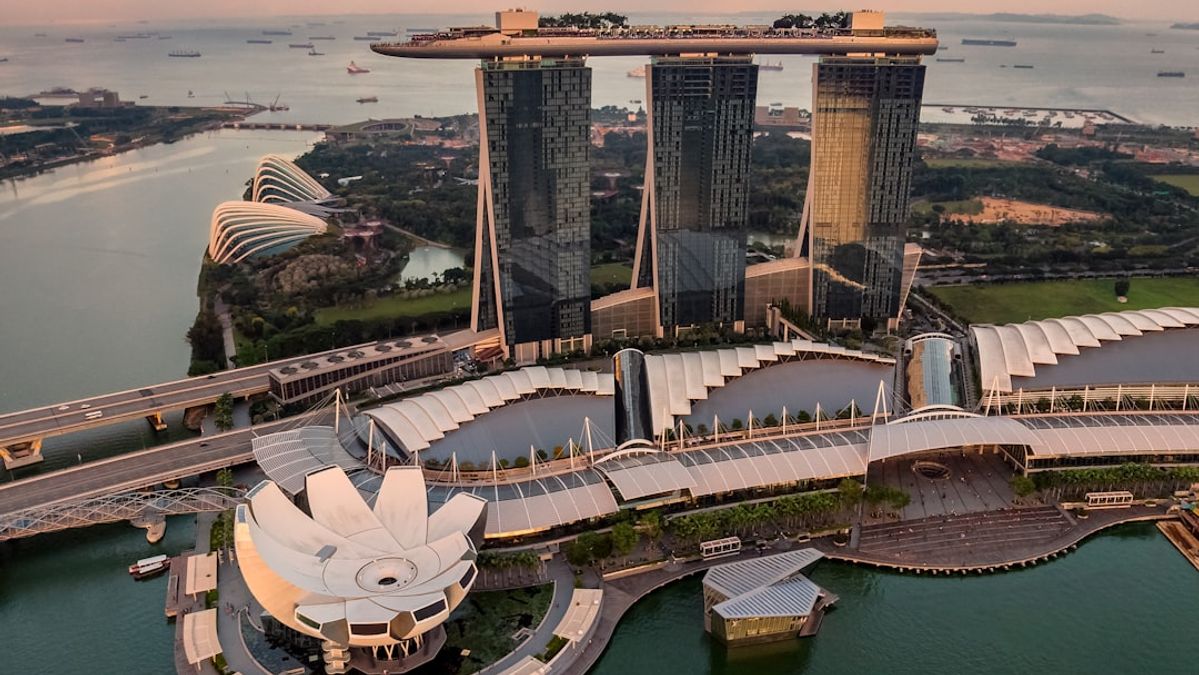
At the recent Shangri-La Dialogue in Singapore, US Defense Secretary Pete Hegseth delivered a pivotal address aimed at reassuring Asia-Pacific allies of Washington's enduring commitment to the region. The forum, a critical platform for defense and security discussions, served as the backdrop for Hegseth's nuanced message: the United States is not "turning our backs" on Asia, despite its ongoing "global obligations," such as the conflict in Iran. This assertion directly addressed concerns raised by Japan's Defense Minister Shinjiro Koizumi, who highlighted fears that some nations might underestimate US resolve and seek to "drive a wedge" between America and its partners.
Hegseth's reassurances came weeks after a high-level meeting between former US President Donald Trump and Chinese President Xi Jinping in Beijing, which had potentially signaled a shift in US-China dynamics. The US Defense Secretary emphasized a "strong, quiet and clear" approach to the region, advocating for a strategy rooted in "hard power" rather than "empty globalist rhetoric about the rules-based international order." He explicitly stated, "Rules are great, but if you can't back them up with hard power, the rules are not worth the paper they are written on," calling for "more ships and more subs" over "more conferences."
A central theme of Hegseth's speech was the US's capacity to manage multiple strategic theaters simultaneously. He insisted that the US could fulfill its global responsibilities, such as preventing Iran from acquiring nuclear weapons, while maintaining a robust presence and engagement in the Pacific. However, this assertion faced scrutiny, particularly regarding the recent suspension of a $14 billion arms package to Taiwan, which was reportedly diverted to conserve munitions for the Iran conflict. While Hegseth sought to "decouple the two" issues, insisting on the US's strong munitions stockpile, the incident inevitably raised questions among allies about the reliability and prioritization of US arms deliveries, especially for critical partners like Taiwan facing direct threats.
This situation underscores a significant geopolitical challenge for the United States: balancing its strategic interests and commitments across various global flashpoints. The perception of resource diversion or delayed support can erode trust and encourage regional actors to reassess their security postures, potentially leading to increased self-reliance or even alignment shifts.
Alongside reassurance, Hegseth delivered a firm call for greater burden-sharing from Asian allies. Reiterating a demand from the previous year, he urged partners to increase their defense spending, setting a target of 3.5% of their GDP. He lauded countries like South Korea, Japan, Australia, and the Philippines for their recent increases in military expenditure and cooperation with the US, while pointedly criticizing "freeloaders," specifically naming New Zealand. This emphasis on allied contributions reflects a long-standing US desire to distribute the costs and responsibilities of regional security more equitably, enhancing collective deterrence against potential adversaries.
Notably, Hegseth adopted a softer tone on China compared to his previous year's address, where he had accused Beijing of posing an "imminent threat" to Taiwan. This year, while acknowledging "rightful alarm regarding China's historic military buildup," he stressed that the US and its allies "do not seek constant escalation" and instead desire a "genuinely stable equilibrium" in which no single state, including China, can impose its hegemony. This shift suggests a strategic recalibration, possibly influenced by recent high-level US-China diplomatic engagements, aiming to manage competition with Beijing through "measured and deliberate strength" rather than "needless confrontation." China's decision to send a lower-level delegation to the Shangri-La Dialogue for the second consecutive year could be interpreted as either a snub to the forum or a deliberate move to avoid direct public confrontation with the US.
Hegseth's address at the Shangri-La Dialogue provides critical insights into the US's evolving Indo-Pacific strategy. It signals a continued commitment to the region, underpinned by a renewed emphasis on hard power and military deterrence. The call for increased allied defense spending and the criticism of "freeloaders" indicate a push for greater collective responsibility and a more robust regional security architecture. The nuanced approach to China, balancing concerns over military expansion with a desire for stability, suggests a strategy of competitive coexistence rather than outright confrontation.
However, the perceived tension between global obligations and regional commitments, particularly highlighted by the Taiwan arms package issue, remains a significant challenge. Allies will closely watch how the US navigates these competing demands, as their confidence in Washington's reliability directly impacts regional stability and the broader balance of power in the Indo-Pacific. The future trajectory of security in Asia will depend on the extent to which US allies embrace greater defense responsibilities and how effectively Washington can project both strength and diplomatic acumen in managing its complex relationships with both partners and rivals.
Source referenced: BBC
This brief was synthesized by our Editorial Engine and reviewed by The Ground Narrative team.


