TRENDING

Tuesday, 27 October 2026
----------------------
16 Jumada Al-Awwal 1448 AH
The US is considering airstrikes against JNIM in Mali, but experts warn of the risks of escalation and radicalization, highlighting the need for a comprehensive approach that addresses the underlying causes of the conflict.
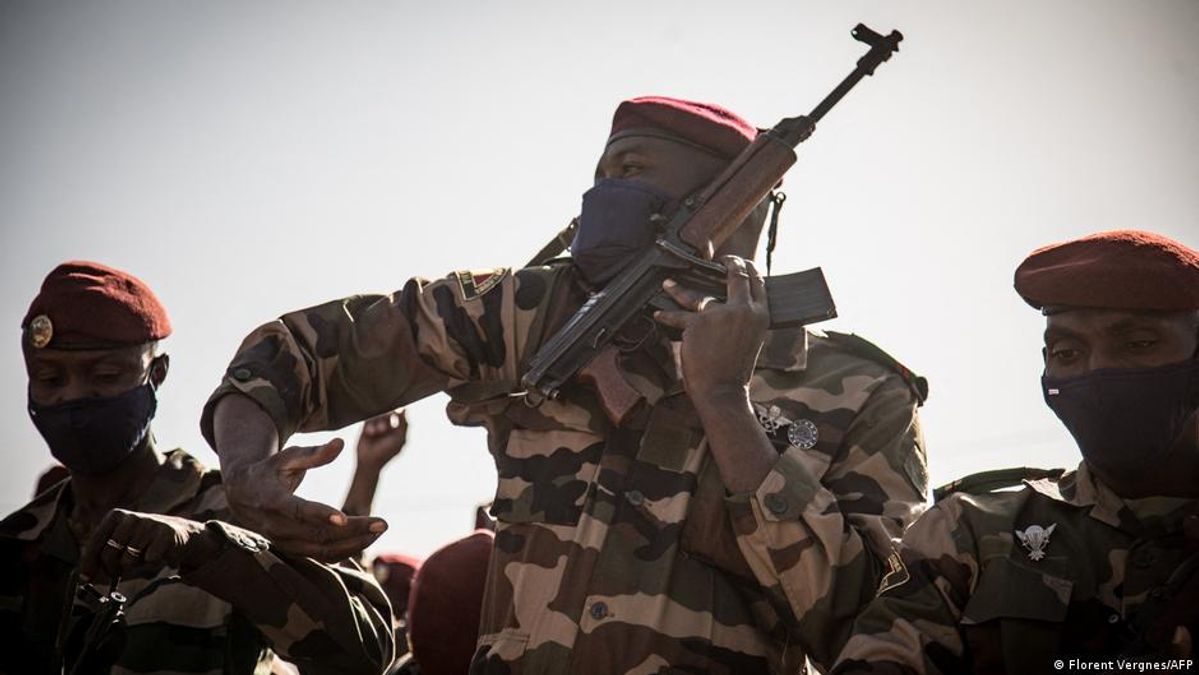
The Sahel region has been plagued by a growing jihadist insurgency, particularly in Mali, where the al-Qaeda-linked Jama'at Nusrat al-Islam wal-Muslimin (JNIM) has expanded its influence. Founded in 2017, JNIM has developed into the most powerful jihadist force in the Sahel, with a clear objective of establishing an Islamist order and displacing state structures and Western influence.
The US is considering airstrikes against JNIM, but this move is not just about counterterrorism. It would also be a signal that the United States wants to remain capable of acting as a security actor in the region. For Mali's leaders, this would raise questions about how to navigate between the interests of external powers without losing their own political autonomy.
Experts warn that US airstrikes could lead to escalation and radicalization, as JNIM could retaliate against Western interests in the region. The underlying causes of the conflict, such as poverty, weak institutions, and ethnic tensions, would remain unresolved. Moreover, retaliation against Western interests in the region could follow.
The conflict in Mali cannot be permanently resolved through military means alone. In some regions, people experience the state only through corrupt security forces, while schools, healthcare, and functioning courts are absent. JNIM exploits existing dissatisfaction, and counterterrorism efforts must also include state-building, good governance, and economic development.
Russia has significantly expanded its influence in Mali, Burkina Faso, and Niger in recent years. A US intervention would have geopolitical consequences, as it would be seen as a challenge to Russia's growing influence in the region.
The Malian government has responded cautiously to reports of possible US airstrikes, emphasizing that it is relying on its own security forces and preserving its sovereignty. Public opinion is also divided, with some residents welcoming any solution that brings peace, while others are skeptical of external intervention.
The US's consideration of airstrikes against JNIM in Mali is a complex geopolitical equation. While it may be seen as a necessary measure to counter the growing jihadist insurgency, it also carries significant risks of escalation and radicalization. A comprehensive approach that addresses the underlying causes of the conflict, including state-building, good governance, and economic development, is essential to resolving the crisis in Mali.
Editor's Note: The analysis is based on expert opinions and available data, but the outcome of a US intervention is uncertain and may depend on various factors.
Source referenced: DW
This brief was synthesized by our Editorial Engine and reviewed by The Ground Narrative team.