TRENDING

Monday, 5 October 2026
----------------------
24 Rabi' Al-Thani 1448 AH
UN Secretary-General Antonio Guterres has appealed for $100 million to avert a catastrophic funding shortfall for UNRWA, warning that millions of Palestinian refugees face dire consequences. The crisis is exacerbated by donor cuts, notably from the U.S., following Israeli allegations against staff, and ongoing operational restrictions.
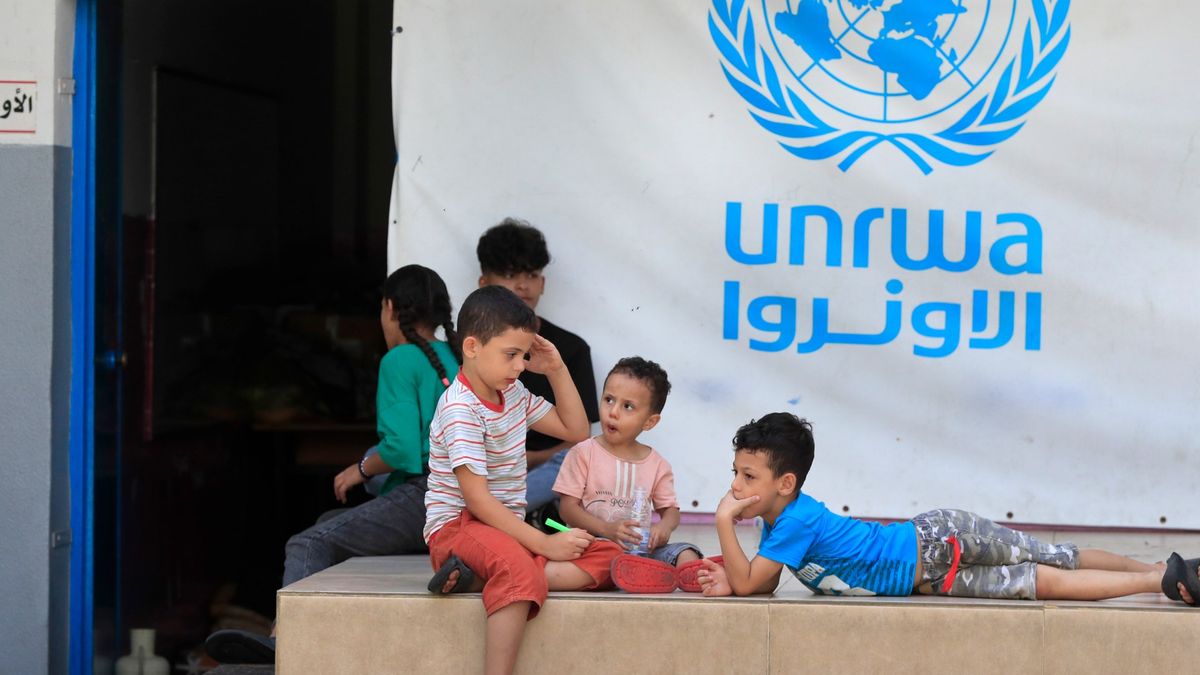
TheThe United Nations Relief and Works Agency for Palestine Refugees in the Near East (UNRWA) is grappling with a critical $100 million funding shortfall, a situation that UN Secretary-General Antonio Guterres warns places the safety and welfare of millions of Palestinian refugees in jeopardy. Speaking at a donor conference on Tuesday, July 1, 2026, Guterres underscored the agency's increasingly precarious position, attributing it to both the significant financial deficit and sweeping operational restrictions imposed by Israel across the occupied Palestinian territory.
Established by the UN General Assembly (UNGA) in 1949, UNRWA's mandate is to provide essential services to Palestinians displaced during the founding of Israel. Today, the agency serves approximately 2.6 million registered Palestinian refugees across Gaza, the occupied West Bank and East Jerusalem, Lebanon, Jordan, and Syria. Its comprehensive services include aid distribution, schooling, healthcare, social services, and shelter, making it a vital lifeline for a vulnerable population.
The current funding crisis escalated significantly in January 2024 when the United States, historically UNRWA's largest donor, suspended its contributions. This decision followed allegations from Israel, which claimed that a small number of UNRWA staff members were involved in the October 7, 2023, attack by Hamas on southern Israel. While a subsequent investigation by the UN's Office of Internal Oversight Services found that nine of the 19 accused staff members "may have been involved," it found either no evidence or insufficient evidence against the remaining ten. Despite these findings, the initial allegations triggered a wave of donor withdrawals, severely impacting UNRWA's financial stability.
Secretary-General Guterres highlighted that the agency has taken decisive steps to implement reforms and update its policies on external and political activities in response to Israel's accusations. However, he lamented what he described as persistent efforts to undermine UNRWA through "disinformation, smear campaigns, legislative actions, operational restrictions, diplomatic roadblocks and more." These actions, he argued, not only threaten the well-being of millions of Palestinians but also endanger the agency's staff, noting that 390 UNRWA personnel have been killed in Gaza since October 2023.
The potential collapse or severe curtailment of UNRWA's operations carries profound geopolitical implications for the Middle East. Guterres explicitly referred to UNRWA as a "stabilizing force in an age of instability." The agency's services are critical in preventing further humanitarian catastrophe, particularly in Gaza, where living conditions are described as "utterly appalling," and amidst ongoing violence by Israeli settlers in the occupied West Bank and Israeli attacks on Lebanon, where many Palestinian refugees have sought refuge.
Should UNRWA be forced to scale back further due to insufficient funding, the consequences could be dire. The withdrawal of essential services could exacerbate existing humanitarian crises, potentially leading to increased unrest, radicalization, and further displacement within host countries like Lebanon, Jordan, and Syria. These nations already bear significant burdens from large refugee populations, and a destabilized UNRWA could strain their resources and social cohesion to breaking point.
Furthermore, the politicization of humanitarian aid and the sustained pressure on UNRWA raise fundamental questions about international law and the protection of aid workers in conflict zones. Turkiye's permanent representative to the UN, Ahmet Yildiz, echoed Guterres's concerns, stating that UNRWA faces unprecedented political attacks and obstruction. Yildiz, according to Anadolu, suggested that Israel's actions constitute "blatant violations of international law" and are designed "to deprive Palestinian refugees of their right to return to their land." This perspective underscores the deep-seated political dimensions of the crisis, linking the agency's fate directly to the broader Israeli-Palestinian conflict and the unresolved issue of Palestinian refugees' future.
The UNGA renewed UNRWA's mandate just six months prior with overwhelming member support, signaling the international community's recognition of its indispensable role. Yet, without urgent financial backing from member states, the agency's ability to fulfill this mandate is severely jeopardized. The outcome of the donor conference, with results expected to be announced on Wednesday, will be critical in determining the immediate future of UNRWA and, by extension, the fate of millions of Palestinian refugees dependent on its services. The crisis highlights the delicate balance between humanitarian imperatives, geopolitical pressures, and the enduring challenges of one of the world's longest-running refugee situations.
Source referenced: ALJAZEERA
This brief was synthesized by our Editorial Engine and reviewed by The Ground Narrative team.