TRENDING

Sunday, 25 October 2026
----------------------
14 Jumada Al-Awwal 1448 AH
UNESCO's recent designation of Sebastia as a World Heritage site and its placement on the 'in danger' list has ignited a fresh diplomatic and territorial dispute between Palestinian authorities and Israel over control of ancient sites in the occupied West Bank. This move underscores the ongoing conflict over land, history, and international recognition in a highly contested region.
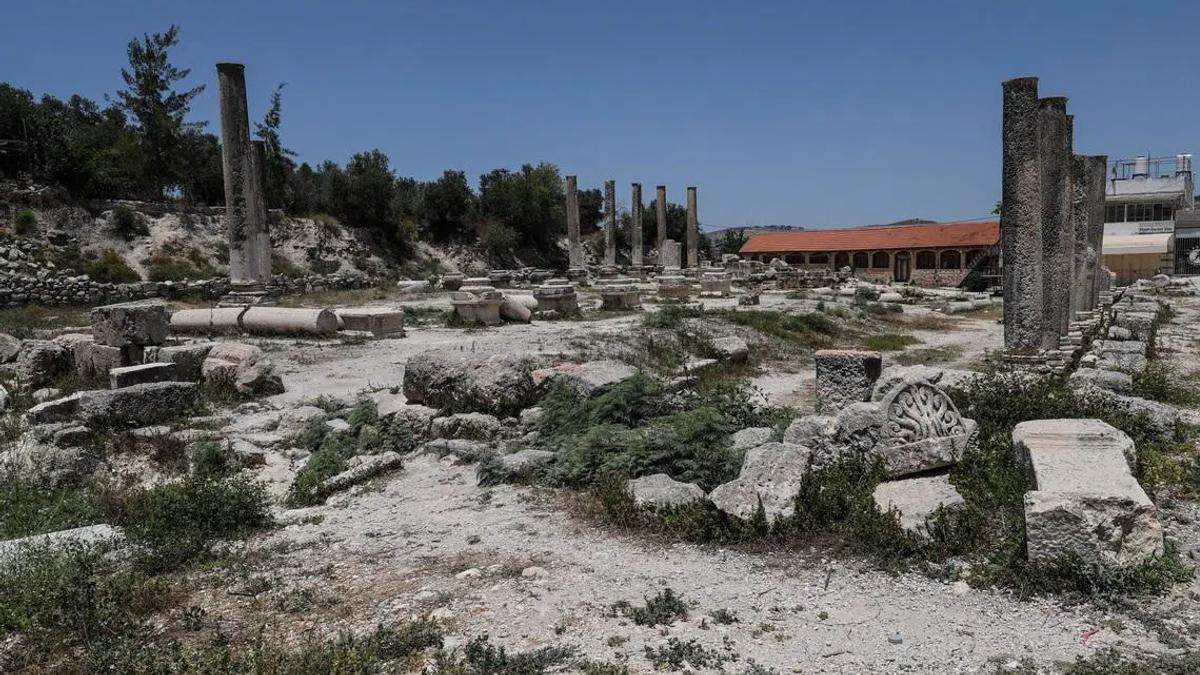
The United Nations Educational, Scientific and Cultural Organization (UNESCO) has recently added the ancient village of Sebastia, located in the Israeli-occupied West Bank, to its prestigious World Heritage List and simultaneously placed it on the List of World Heritage in Danger. This decision, announced on July 25, 2026, has been met with starkly contrasting reactions from Palestinian officials and the Israeli government, highlighting the deeply entrenched geopolitical and historical contest over the territory.
Sebastia, situated in the northern West Bank near Nablus, holds immense historical and archaeological value, representing a layered tapestry of civilizations. According to UNESCO, its remnants date back to at least the 9th-century BC, when it served as the capital of the Israelite kingdom. Subsequent periods saw the influence of Hellenistic, Roman, Byzantine, Islamic, Crusader, and Ottoman eras, leaving behind a rich archaeological landscape of Roman columns, ancient walls, and an amphitheater. The site is also traditionally revered as the burial place of John the Baptist, adding a significant religious dimension to its cultural importance.
Palestinian officials have warmly welcomed UNESCO's designation, viewing it as a crucial step to safeguard Sebastia from what they describe as Israeli encroachment. Nizar Kayed, the village deputy mayor, explicitly stated hopes that the decision would enable the preservation of Sebastia, directly linking it to an Israeli plan, announced in late 2025, to seize approximately 1,800 dunams (445 acres) of land at the site. Palestinian authorities contend that this land seizure is part of a broader Israeli strategy to expand settlements in the area and assert control over West Bank territory. They anticipate that the UNESCO recognition will galvanize international support against these Israeli measures.
Conversely, Israel has vehemently condemned UNESCO's decision, with Foreign Minister Gideon Saar labeling it a political move. Saar asserted that the designation is part of a Palestinian effort to obscure Jewish ties to the land, stating unequivocally that "No vote in an international organization can change history." From the Israeli perspective, the land seizure plan is framed as a development initiative, aimed at enhancing the area, rather than an act of expansion or confiscation.
The dispute over Sebastia is a microcosm of the larger Israeli-Palestinian conflict, where cultural heritage sites become battlegrounds for competing historical narratives and claims to sovereignty. The UNESCO designation, particularly its 'in danger' status, implicitly challenges Israeli actions in occupied territories under international law, even as Israel rejects the premise of such international oversight.
Adding another layer of complexity is a proposed Israeli bill, currently awaiting legislative action, that seeks to extend Israeli civil control over ancient sites throughout the West Bank. If enacted, this legislation would effectively strip the Western-backed Palestinian Authority (PA) of its oversight responsibilities for these sites. Under the 1990s Oslo peace accords, the PA was granted limited self-rule in parts of the West Bank, territory captured by Israel in the 1967 war. The proposed bill, therefore, represents a significant potential erosion of the PA's authority and a unilateral alteration of the status quo established by the accords, further complicating any prospects for a two-state solution.
This episode underscores the critical role of international organizations like UNESCO in the Israeli-Palestinian conflict. For Palestinians, these bodies offer a vital diplomatic avenue to seek international recognition and protection for their cultural heritage and territorial claims, particularly in the absence of a comprehensive peace agreement. For Israel, such designations are often perceived as biased and politicized attempts to delegitimize its historical connections to the land and its presence in the West Bank.
Ultimately, the UNESCO designation of Sebastia is more than a cultural recognition; it is a significant geopolitical development that intensifies the ongoing struggle for control, narrative, and international legitimacy in the West Bank. It highlights how ancient stones and historical layers continue to shape contemporary political realities and fuel diplomatic tensions in one of the world's most contested regions.
Source referenced: STRAITSTIMES
This brief was synthesized by our Editorial Engine and reviewed by The Ground Narrative team.