TRENDING

Monday, 5 October 2026
----------------------
24 Rabi' Al-Thani 1448 AH
As front lines freeze, Russia and Ukraine escalate long-range attacks on civilian infrastructure and logistics, driving civilian casualties to new highs and blurring the lines of conflict. This shift reveals a grim strategy of attrition, where the human cost extends far beyond the battlefield.
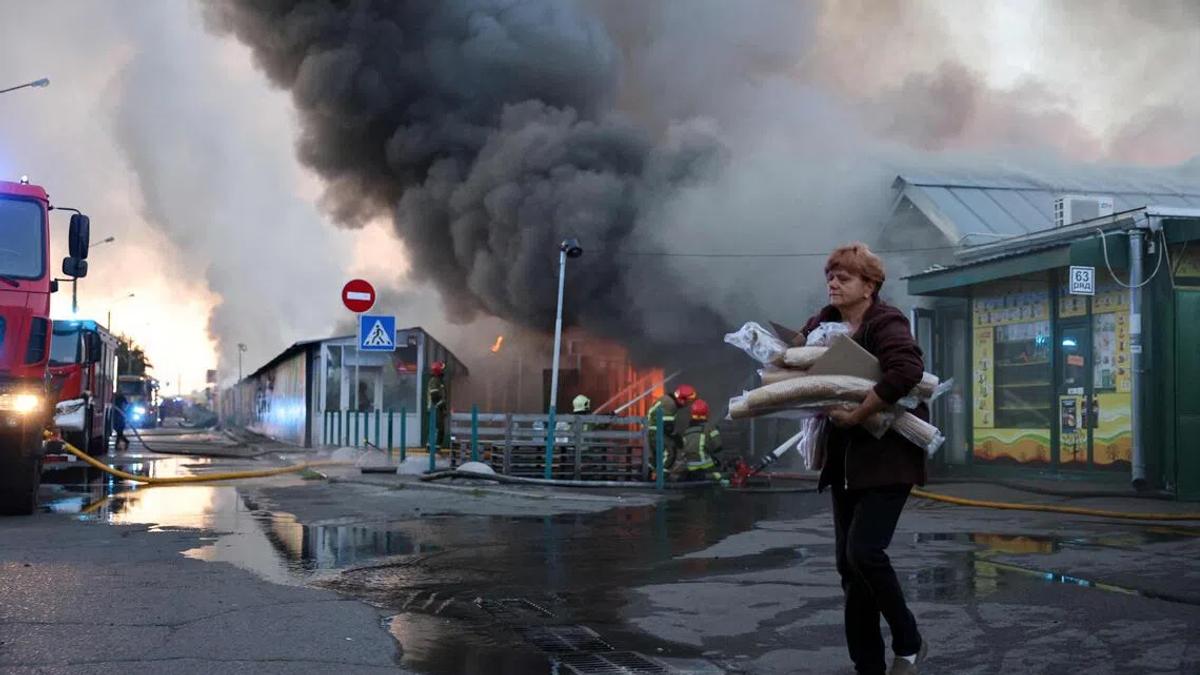
Recent drone and missile strikes across Russia and Ukraine have resulted in at least 16 civilian deaths, marking a significant escalation in long-range attacks on non-military targets. Key incidents included the destruction of a popular outdoor book market in Kyiv, damage to Ukraine's ArcelorMittal steel plant in Kryvyi Rih, and deadly impacts on residential areas in Russia's Rostov region. These attacks underscore a shift in tactics as both sides increasingly target each other's civilian infrastructure and logistics far behind traditional front lines.
With ground combat largely stalemated, both Russia and Ukraine are intensifying a war of attrition aimed at degrading the other's capacity to sustain the conflict. For Ukraine, the strategy involves striking deep into Russian territory, targeting logistics hubs like Wildberries warehouses and oil refineries. This aims to disrupt Russia's war economy, create domestic pressure, and demonstrate Kyiv's ability to retaliate, forcing Moscow to divert resources to homeland defense. President Zelensky's calls for more air defense support highlight Ukraine's critical dependence on external military aid, a dependence complicated by global geopolitical shifts, such as the stated diversion of US air defense supplies to other conflicts.
On Russia's side, the focus is on overwhelming Ukraine's air defenses with barrages of drones and hard-to-intercept ballistic missiles. These attacks target vital civilian infrastructure, industrial facilities like the Kryvyi Rih steel plant, and even cultural sites. The intent is to break civilian morale, cripple Ukraine's economic output, and pressure Kyiv into concessions by making the cost of war unbearable. The alleged increase in missile and troop supplies from North Korea underscores Russia's efforts to sustain its offensive capabilities despite sanctions and battlefield losses, revealing the complex web of international alliances and dependencies fueling the conflict. The spillover of drone incursions into NATO airspace, leading to intercepts by Romanian and Latvian forces, further illustrates the inherent risks of this long-range warfare, testing the alliance's vigilance and response protocols.
The most immediate and devastating consequence of this shift in tactics falls squarely on ordinary citizens. The recent strikes, which killed at least 16 people, contribute to a civilian death toll that the United Nations reports as the highest since the initial months of the war in 2022 – 437 in Ukraine and 79 in Russia in July alone. These are not soldiers on a battlefield but residents in their homes, workers in their factories, and vendors at their markets. The destruction of Kyiv's outdoor book market, a cherished cultural landmark, exemplifies the broader assault on civilian life and heritage, leaving booksellers like Dmytro Semenukha to mourn not just lost inventory but a community space.
Beyond direct casualties, the economic ripple effects are profound. The partial halt of operations at ArcelorMittal's steel plant in Kryvyi Rih threatens livelihoods and disrupts a critical sector of Ukraine's economy, with potential global supply chain implications. For those living near the borders of the conflict, such as in Romania and Latvia, the constant threat of drone incursions creates a pervasive sense of anxiety and insecurity, demanding military responses and disrupting normal life. This expanded battlefield, where civilian areas become legitimate targets in a war of attrition, ensures that the human cost is distributed widely, far from the front lines, impacting daily life, economic stability, and psychological well-being for millions.
Powerful actors on both sides consistently frame these long-range strikes as successful military operations, often downplaying the extensive civilian toll and the strategic ambiguity of targeting non-military infrastructure. While Ukraine justifies attacks on Russian logistics as undermining a "war economy," this definition increasingly blurs the lines between military and civilian targets, making everything from warehouses to power grids fair game. Russia, in turn, presents its strikes on Ukrainian cities as necessary military actions, deflecting from the terror inflicted on the civilian population and the destruction of essential services.
What is often omitted from official statements is the deeper systemic cost of this protracted stalemate. The global implications of damaged industrial capacity, like a major steel plant, extend beyond the immediate conflict zone, affecting international markets and supply chains, yet the narrative remains localized. Furthermore, the proliferation of relatively low-cost drone technology, now a dominant feature of this conflict, is setting a dangerous precedent for future warfare, where national borders become porous and civilian areas are routinely exposed to aerial threats. The underlying reality is that this war of attrition, devoid of significant territorial gains, is becoming a test of endurance for civilian populations, a grim reality that governments are keen to present as strategic necessity rather than a tragic consequence of stalled diplomacy and escalating violence.
The immediate future will hinge on several critical factors. Observers should closely watch whether Western allies can or will significantly increase air defense provisions to Ukraine, especially given the stated diversions of resources to other global hotspots. A failure to do so could leave Ukrainian cities even more vulnerable to Russia's intensified barrages. Conversely, any further confirmed evidence of North Korean military aid to Russia will signal a deepening of Moscow's reliance on pariah states and could prompt stronger international condemnation or sanctions.
The definition of "legitimate" targets will also be a crucial indicator. Will both sides further expand their targeting parameters, potentially striking critical national infrastructure in neighboring countries or escalating cyber warfare against civilian systems? Finally, the domestic impact of rising civilian casualties and economic disruption in both Russia and Ukraine will be vital. How long can public support be maintained when the war's direct consequences are increasingly felt in homes and communities far from the front lines? The answers to these questions will determine the trajectory of a conflict increasingly defined by its human cost and its expanding reach.
Source referenced: STRAITSTIMES
This brief was synthesized by our Editorial Engine and reviewed by The Ground Narrative team.


