TRENDING

Monday, 19 October 2026
----------------------
8 Jumada Al-Awwal 1448 AH
Ukraine's President Volodymyr Zelensky is grappling with a significant political crisis as public protests demand the reinstatement of a popular defense minister and the dismissal of the military chief of staff. This internal instability poses critical challenges to national unity and the ongoing war effort against Russia.

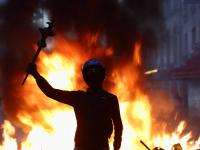
Ukraine is currently facing a deepening political crisis that threatens to undermine its internal stability and potentially impact its ongoing defense against Russian aggression. The crisis centers around widespread public protests demanding the reinstatement of the recently dismissed Defence Minister, Mykhailo Fedorov, and the removal of the military's chief of staff, General Oleksandr Syrsky. This internal turmoil places significant pressure on President Volodymyr Zelensky, challenging his authority and decision-making at a critical juncture for the nation.
The immediate catalyst for the current unrest was President Zelensky's decision last week to remove Mykhailo Fedorov from his post as Defence Minister. The official reason cited for Fedorov's dismissal was a "clash between the two men," suggesting internal disagreements or power struggles within the highest echelons of Ukrainian leadership. Fedorov, however, appears to have garnered significant public support, making his removal a contentious issue that has fueled public discontent.
Simultaneously, the protests have brought to the forefront the deep unpopularity of General Oleksandr Syrsky, the current military chief of staff. While General Syrsky is credited with playing a crucial role in halting the Russian advance on Kyiv in 2022, his subsequent tenure has been marred by a reputation for brutality and allegations of unnecessarily wasting lives. Furthermore, reports from correspondent Gulliver Cragg indicate that Syrsky is also accused of tolerance for corruption within the military. These accusations, particularly concerning corruption, are highly damaging to public trust and military morale, especially in a nation fighting for its survival.
The unfolding political crisis carries significant geopolitical and strategic implications for Ukraine. First and foremost, internal instability directly threatens national unity, which is paramount for a country engaged in a protracted war. Divisions within the government and widespread public dissatisfaction can distract from the primary objective of defending the nation, potentially diverting resources and attention away from the front lines.
From a military perspective, the public's distrust in the chief of staff, coupled with allegations of brutality and corruption, can severely impact troop morale and recruitment efforts. Effective military leadership relies not only on strategic acumen but also on the confidence and loyalty of its personnel and the broader populace. A perceived lack of accountability or ethical conduct at the top can erode this vital trust, potentially weakening the military's overall effectiveness and cohesion.
Internationally, Ukraine's allies are likely observing these developments with concern. A stable and unified Ukraine is a more reliable and effective partner, making it easier for international donors and military aid providers to justify their continued support. Persistent internal political strife could lead to questions about Ukraine's governance capacity and its ability to effectively utilize foreign assistance, potentially impacting the flow of crucial military and financial aid.
Moreover, Russia could seek to exploit this internal discord for its own strategic advantage. Propaganda efforts might amplify the narrative of a divided and corrupt Ukrainian leadership, aiming to further demoralize the population and sow distrust among international partners. Such internal vulnerabilities could be perceived by Moscow as an opportunity to intensify military pressure or undermine Ukraine's diplomatic standing.
President Zelensky now faces a critical test of his leadership. His decisions regarding Fedorov and Syrsky have ignited a significant public backlash, culminating in protests that are "digging in" and demanding specific actions by Friday. Navigating this crisis requires a delicate balance between maintaining military effectiveness, addressing public grievances, and preserving political stability. The manner in which Zelensky responds will not only determine the immediate future of his administration but also have profound long-term consequences for Ukraine's resilience and its trajectory as a democratic nation at war. The challenge lies in demonstrating accountability and responsiveness to public concerns while ensuring that the nation's defense capabilities remain uncompromised.
Ultimately, the crisis underscores the complex challenges of wartime governance, where the demands of national security must be balanced with democratic principles and public trust. The resolution of this internal political struggle will be a key determinant of Ukraine's ability to sustain its fight and maintain the support of its people and international allies.
Source referenced: FRANCE24
This brief was synthesized by our Editorial Engine and reviewed by The Ground Narrative team.