TRENDING

Saturday, 19 September 2026
----------------------
8 Rabi' Al-Thani 1448 AH
The US has approved a $2.7 billion air defense package for Ukraine, signaling continued military support. This deal reveals complex funding mechanisms and shifts the financial burden to European allies and Ukraine's future resources.
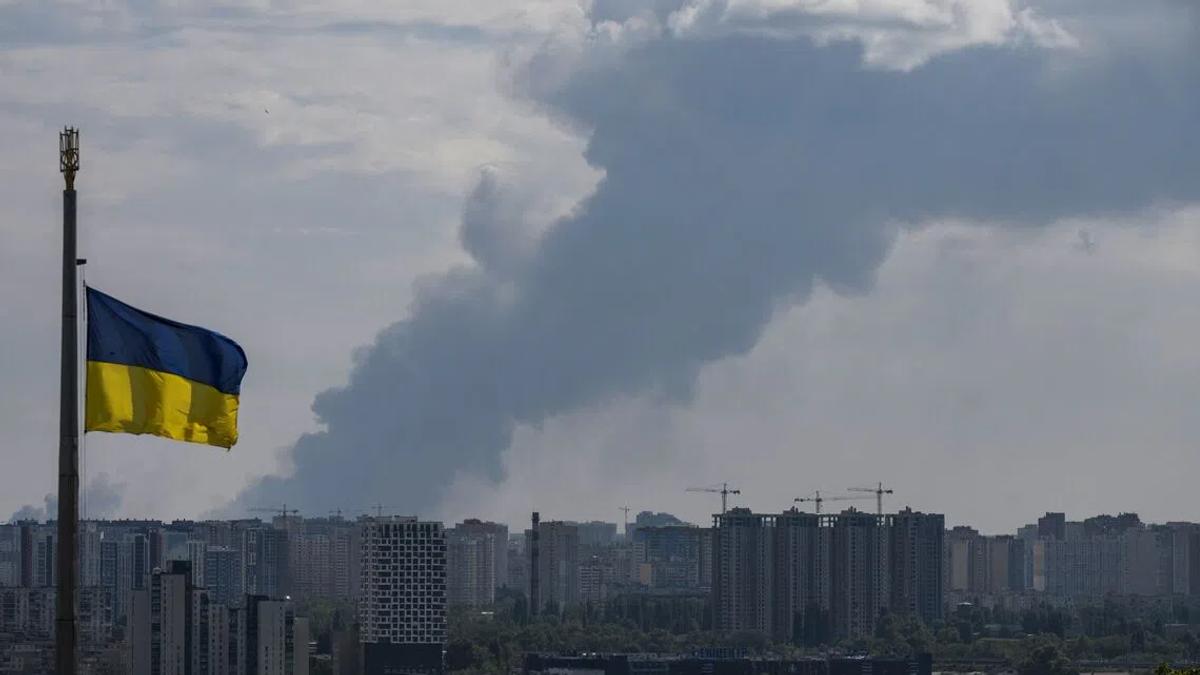
The US State Department has greenlit a potential $2.7 billion military sale to Ukraine, focused on crucial air defense development upgrades. This package includes S-300 clone missiles, advanced laser-guided rockets, and counter-drone systems, designed to bolster Ukraine's ability to protect its airspace against ongoing aggression. The financing structure for this significant deal involves a blend of European contributions and US Foreign Military Financing (FMF), with the latter being channeled through the Ukraine Reconstruction Investment Fund.
This approval, coming 20 months into President Trump's term, underscores a persistent reality: despite political rhetoric, the mechanics of war demand continuous supply lines and financial commitments. The power dynamic here is multifaceted. First, the US maintains its role as a primary arms supplier, leveraging its military-industrial complex and technological superiority. However, the funding mechanism signals a deliberate shift in burden-sharing. By channeling US FMF as a "capital contribution" to the Ukraine Reconstruction Investment Fund, and explicitly mentioning European contributions, Washington is effectively externalizing a significant portion of the immediate financial cost. This move aligns with President Trump's earlier demands for European allies to "pay back" the US for military aid, reflecting a transactional approach to alliances. For Ukraine, this deal is critical for its immediate survival, but it also ties its future reconstruction to current military expenditures, creating a long-term financial obligation that may influence its post-war economic landscape. The inclusion of "S-300 clone missiles" also hints at a strategy to provide compatible systems that can be integrated more easily with existing Ukrainian defenses, while potentially reducing reliance on direct transfers of older, dwindling Soviet-era stocks.
While air defense systems are designed to protect lives, the financial architecture behind this deal carries its own human cost, albeit one that is less immediately visible. The Ukrainian populace, already enduring the direct violence of war, will ultimately bear the weight of these long-term financial commitments. Funds directed towards the Ukraine Reconstruction Investment Fund, while ostensibly for future rebuilding, are now being partially diverted to finance current military purchases. This means that resources that could have been earmarked for immediate humanitarian aid, critical infrastructure repair, or social services will instead be tied up in military procurement. For European taxpayers, their contributions, whether direct or indirect, represent a continued strain on national budgets, potentially impacting domestic spending priorities. The cycle of military aid, while necessary for defense, creates a complex web of financial dependencies and obligations that will shape the lives of ordinary citizens in Ukraine and across Europe for years to come, long after the last missile is fired.
What official statements downplay is the intricate interplay between military aid, reconstruction, and future economic leverage. The establishment of the US-Ukraine Reconstruction Investment Fund, initially linked to a "minerals deal," suggests a deeper strategic interest beyond immediate defense. By funneling FMF through this fund, the US is not just providing aid; it's embedding itself in Ukraine's long-term economic recovery, potentially securing preferential access or influence over future resource development and reconstruction contracts. This "aid" is not purely altruistic; it's a strategic investment that intertwines military support with economic influence. Furthermore, the narrative of "European contributions" obscures the differing capacities and willingness of various European nations to shoulder this financial burden, potentially creating internal strains within NATO and the EU. The long-term implications of Ukraine's mounting debt, even if partially offset by grants, are also largely unaddressed, as the focus remains on immediate military necessity rather than the sustainability of its post-war economy.
The immediate focus will be on the congressional review of this sale; while approval is likely, any significant dissent could signal shifting political winds in Washington. Beyond that, observers should closely monitor the practical implementation of the funding mechanism: how quickly European contributions materialize, and the specific projects or sectors the Ukraine Reconstruction Investment Fund prioritizes. The effectiveness of these new air defense systems on the battlefield will also be a critical indicator of their value. Longer term, watch for how Ukraine manages its reconstruction debt and whether the "minerals deal" and related investments translate into tangible economic benefits for the Ukrainian people, or primarily for foreign corporations. The balance of power within the Western alliance regarding financial responsibility for Ukraine will also continue to evolve, shaping future aid packages and potentially influencing the war's trajectory.
Source referenced: STRAITSTIMES
This brief was synthesized by our Editorial Engine and reviewed by The Ground Narrative team.