TRENDING

Saturday, 19 September 2026
----------------------
8 Rabi' Al-Thani 1448 AH
North Korea dismissed an IAEA resolution condemning its nuclear program, accusing the watchdog of double standards while the regime tightens ties with Russia and prepares for potential talks with the United States.
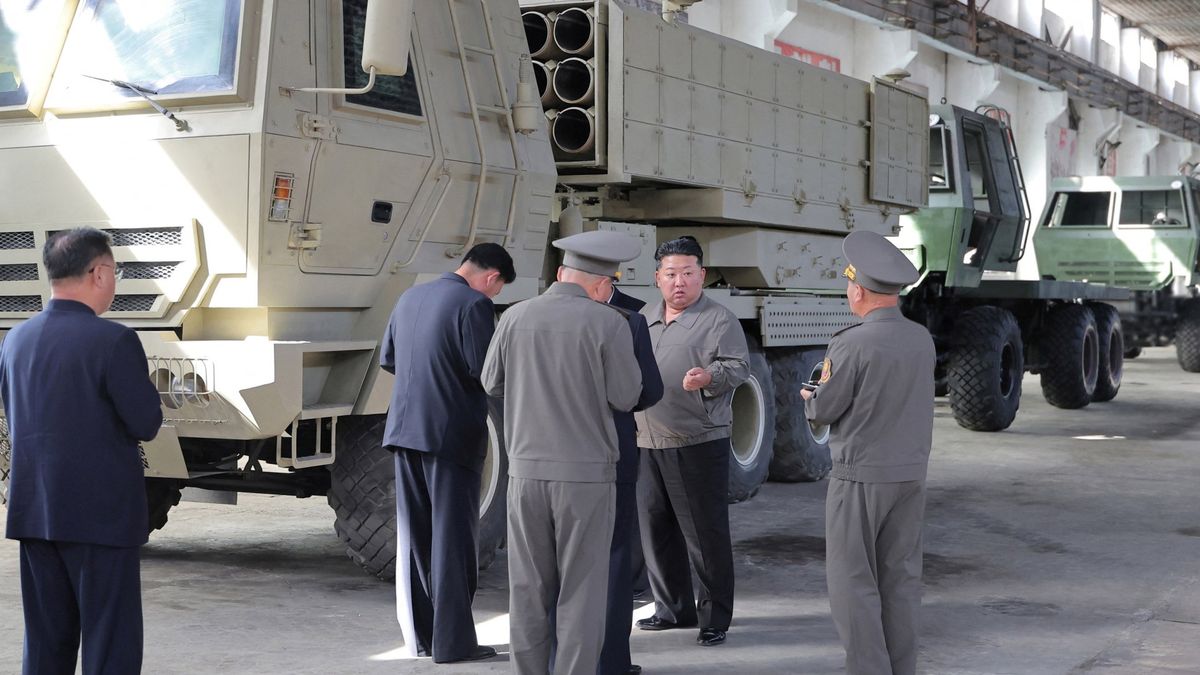
North Korea’s Foreign Ministry rejected a resolution adopted by the International Atomic Energy Agency (IAEA) that criticised Pyongyang’s nuclear weapons programme. In a KCNA‑distributed statement, officials declared the country’s status as a nuclear power "irreversible" and accused the agency of bias, pointing to U.S. and South Korean submarine plans as evidence of a double standard. The same week, Kim Jong Un toured munitions factories and delivered a lecture on modernising ideological warfare, while South Korean President Lee Jae Myung signalled Seoul’s willingness to facilitate dialogue after former U.S. President Donald Trump announced his intent to meet the North Korean leader later this year.
The dismissal serves several intertwined objectives. First, it reinforces the regime’s domestic narrative of self‑reliance (juche) and deterrence, essential for Kim’s political survival in a system where any sign of weakness could trigger elite dissent or popular unrest. Second, the rhetoric of "double standards" seeks to delegitimize the IAEA’s authority, buying diplomatic breathing room while the DPRK continues to expand its arsenal with Russian technical assistance secured under the 2024 mutual‑defence treaty. Russia benefits from a nuclear‑armed ally that can complicate U.S. calculations in East Asia and provide a propaganda foil against NATO.
Third, the timing aligns with renewed overtures from Washington. Donald Trump’s expressed desire to meet Kim creates a potential bargaining chip: the DPRK can leverage its nuclear credibility to extract concessions—sanctions relief, food aid, or security guarantees—without formally abandoning its weapons programme. South Korea’s willingness to act as a conduit further embeds the peninsula in a broader U.S.–China rivalry, where each side hopes to shape the outcome to its strategic advantage.
Finally, the IAEA resolution, drafted largely by Western states, carries limited enforcement power. By publicly rejecting it, Pyongyang signals that any future compliance will be negotiated on its terms, preserving leverage in any multilateral talks.
The human cost of this standoff is borne by ordinary North Koreans, who already endure chronic food insecurity, limited medical care, and a tightly controlled information environment. Continued investment in nuclear and conventional weapons diverts scarce resources away from agriculture, public health, and infrastructure. International sanctions, tightened in response to the IAEA’s findings, exacerbate shortages of essential goods, forcing many families to rely on informal markets or risky cross‑border smuggling.
In the broader region, South Korean coastal communities face heightened anxiety over the possibility of a nuclear‑armed neighbour expanding its delivery systems, including submarine‑launched missiles. The prospect of renewed U.S.–North Korea talks also fuels uncertainty for Chinese border provinces, where economic ties could be disrupted by renewed sanctions or a shift in Beijing’s strategic calculus.
While official statements focus on the IAEA’s alleged bias, they omit a deeper strategic calculation: the DPRK’s use of the nuclear issue as a diplomatic currency to extract economic concessions from both the United States and China. By portraying the IAEA as a tool of Western hegemony, Pyongyang positions itself as a sovereign actor capable of negotiating on equal footing, even as it leans heavily on Russian military support.
Equally underplayed is the impact of Russian involvement on the regional balance of power. Moscow’s assistance not only upgrades North Korea’s arsenal but also embeds the regime in Russia’s broader effort to counter NATO’s influence in the Indo‑Pacific. This linkage is rarely highlighted in Western media, which tends to treat Pyongyang’s nuclear ambitions as an isolated problem rather than a node in a larger great‑power contest.
Watch for three converging signals. First, any formal invitation from the United States or South Korea for a high‑level summit will test whether Kim can translate nuclear deterrence into tangible economic relief. Second, the IAEA’s next board meeting could produce a follow‑up resolution; Pyongyang’s response will reveal whether diplomatic pressure is escalating or being recalibrated. Third, Russian military shipments—especially delivery of advanced missile components—will likely surface in satellite imagery, offering a concrete gauge of how deep the defence partnership has become.
If talks materialise, the agenda will revolve around sanctions relief versus verification mechanisms, a classic trade‑off that could either open a narrow diplomatic corridor or reinforce the status quo of mutual suspicion. Conversely, a hardening of U.S. rhetoric or a new round of sanctions could push Pyongyang closer to Moscow, further entrenching the peninsula in a bipolar security framework.
The coming months will therefore determine whether North Korea’s defiant dismissal remains a rhetorical flourish or becomes a stepping stone toward a reshaped regional order.
Editor's Note: Analysis based on publicly available statements and satellite reports; exact details of Russian military aid remain unverified.
Source referenced: ALJAZEERA
This brief was synthesized by our Editorial Engine and reviewed by The Ground Narrative team.


