TRENDING

Saturday, 19 September 2026
----------------------
8 Rabi' Al-Thani 1448 AH
South Korean President Lee Jae‑Myung rejected any troop deployment to the Strait of Hormuz, citing a long‑standing non‑intervention stance. The decision balances alliance expectations, oil security, and domestic political pressures.
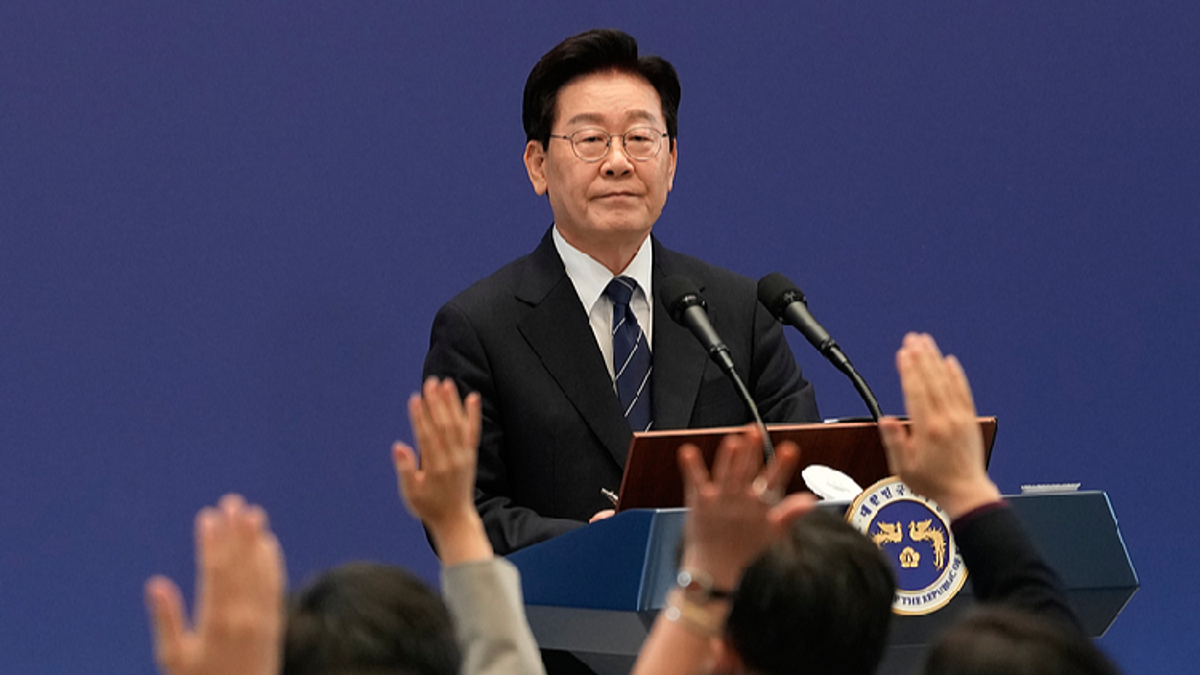
South Korean President Lee Jae‑Myung announced on September 18, 2026 that Seoul will not deploy troops to engage in any conflict in the Strait of Hormuz. While affirming the right to protect commercial vessels and citizens, he emphasized that no military assets will be sent to support or intervene in a war.
Lee’s statement sits at the intersection of three powerful currents. First, the United States, South Korea’s primary security guarantor, has been urging allies to share the burden of safeguarding the oil‑rich chokepoint that supplies roughly a third of global energy imports. Washington’s push is driven by a desire to deter Iranian aggression and to keep the global oil market stable after a series of missile strikes on tankers.
Second, South Korea’s economic calculus is tightly bound to the flow of oil through the Hormuz corridor. The nation imports over 70% of its crude, and any disruption would spike domestic fuel prices, erode export competitiveness, and strain household budgets already hit by lingering pandemic‑era inflation.
Third, domestic politics shape Lee’s calculus. The president faces a fragmented coalition and a rising anti‑U.S. sentiment among younger voters wary of being drawn into distant conflicts. By publicly ruling out a deployment, Lee signals independence to his base while still keeping the door open for limited naval escorts that can be framed as “protective” rather than “combat” operations.
These incentives create a delicate balancing act: maintain alliance credibility, safeguard energy supplies, and avoid a political backlash at home.
The human cost of a potential deployment would fall far beyond the battlefield. South Korean ship crews, many of whom are migrant workers from Southeast Asia, would face heightened risk of attack or detention if caught in a naval clash. Families in Busan and Incheon, whose livelihoods depend on the shipping industry, would confront job insecurity and rising insurance premiums.
In the Gulf, Iranian fishermen and coastal communities already suffer from the economic fallout of sanctions and naval drills. An expanded foreign naval presence could further restrict their access to traditional fishing grounds, exacerbating food insecurity.
Finally, South Korean consumers would feel the pinch through higher gasoline prices, a direct transmission of any disruption in Hormuz to the domestic pump. The poorest households, which allocate a larger share of income to energy, would bear the brunt.
While Lee’s remarks stress non‑intervention, they downplay the strategic value the United States places on a Korean naval footprint in the region. Washington views Seoul’s frigates and destroyers as force multipliers that can free up U.S. assets for other theaters, especially as the Pentagon contends with a stretched Pacific‑Indian Ocean command.
China, meanwhile, watches the Hormuz debate closely. A stronger U.S.–Korea naval coordination could threaten Chinese oil shipments that also transit the strait, prompting Beijing to quietly lobby Seoul for a more neutral stance.
Domestically, the president’s clarification that “minimal activities” will continue hints at a possible expansion of existing patrols under the guise of anti‑piracy or humanitarian missions. Such a gray‑zone approach allows Seoul to sidestep the political fallout of a formal deployment while still contributing to the security architecture.
- U.S. naval movements: Watch for announcements of joint exercises with the Republic of Korea Navy in the Arabian Sea, which could signal a de‑facto escalation.
- Iranian signaling: Any increase in missile launches or threats against commercial vessels will test Seoul’s resolve and could force a policy recalibration.
- South Korean elections: Mid‑term polls suggest growing skepticism toward foreign military commitments; a shift in legislative power could tighten constraints on the president’s security options.
- Oil market volatility: Sharp price spikes would pressure Lee to reconsider the “minimal activities” stance, especially if domestic inflation resurges.
- China’s diplomatic outreach: Expect Beijing to offer alternative security guarantees to Gulf states, aiming to dilute the U.S.–Korea partnership in the region.
By tracking these variables, readers can gauge whether Seoul’s verbal restraint translates into lasting non‑engagement or merely a tactical pause in a broader contest for control over the world’s most vital oil artery.
Source referenced: CGTN
This brief was synthesized by our Editorial Engine and reviewed by The Ground Narrative team.