TRENDING

Thursday, 17 September 2026
----------------------
6 Rabi' Al-Thani 1448 AH
Lebanon's return of 37 ancient artifacts to Egypt highlights the ongoing global struggle against illicit cultural trade. This diplomatic victory offers a rare glimpse into the complex power dynamics and human costs behind the plundering of a nation's heritage.
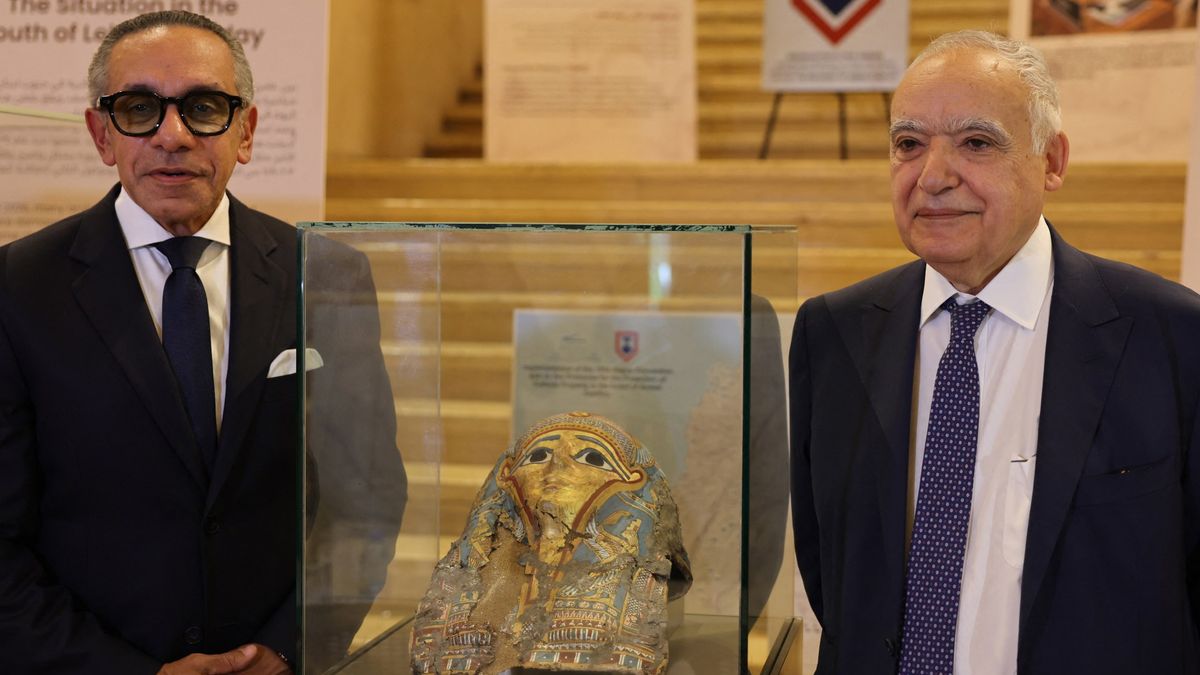
Lebanon recently returned 37 ancient Egyptian artifacts, including masks, statues, and wooden coffins, which had been smuggled out of Egypt six years prior. The handover, celebrated at the National Museum of Beirut, followed years of investigation and cooperation between Lebanese authorities, INTERPOL, and Egypt to verify the items' authenticity and ownership. The artifacts, dating back to the Pharaonic era, were seized from the Port of Beirut in 2020 after being purchased by a Lebanese national without proper documentation.
This repatriation is a small but significant win in the larger, often unseen, battle over cultural heritage. For Egypt, reclaiming these artifacts is a demonstration of its soft power and a strategic assertion of national identity. Its government leverages international conventions, diplomatic pressure, and public awareness campaigns to protect and recover its vast historical wealth, which also underpins a significant tourism economy. The ability to secure such returns reinforces the state's legitimacy and its role as a guardian of a civilization revered globally.
Lebanon's cooperation, particularly amidst its own profound economic and political crises, signals a commitment to international law and a desire to maintain positive diplomatic relations. By adhering to the 1970 UNESCO Convention on the Means of Prohibiting and Preventing the Illicit Import, Export and Transfer of Ownership of Cultural Property, Lebanon burnishes its international standing. However, the underlying power dynamic is also shaped by the immense, shadowy influence of illicit art trafficking networks. These networks exploit economic vulnerabilities in source countries, weak border controls, and the insatiable demand from private collectors and less scrupulous dealers in destination markets. The global art market, often opaque, provides fertile ground for these operations, turning ancient history into a highly profitable commodity.
The most profound cost of cultural plunder is borne by the Egyptian people, particularly those living near archaeological sites. Their heritage, which forms the bedrock of their collective identity, is literally stolen from beneath their feet. Each artifact removed without context represents a lost piece of their story, a gap in historical understanding that can never be fully recovered. Beyond the intangible loss of identity, there are tangible economic consequences: the erosion of tourism potential, which impacts local economies dependent on visitors drawn by Egypt's ancient wonders. Communities that could benefit from responsible tourism development instead contend with the destruction of sites by looters, often driven by desperation and exploited by organized crime. The archaeologists, historians, and conservators also pay a price, as their work is undermined, and precious resources are diverted from research and preservation to security and recovery efforts.
While the return of these 37 artifacts is celebrated, the powerful actors involved—governments, international bodies, and the art market—often downplay the sheer scale of the ongoing plunder. This repatriation represents a tiny fraction of the artifacts illegally extracted from Egypt and other heritage-rich nations globally. The focus on individual returns can obscure the systemic nature of the problem, diverting attention from the vast quantities of unrecovered items still circulating in private collections or stored in undisclosed locations. Crucially, there's less public scrutiny on the demand side of the equation: the wealthy collectors, institutions, and dealers in major art market hubs (like London, New York, and Geneva) who knowingly or unknowingly fuel this illicit trade. Official statements rarely delve into the specific mechanisms that allow these items to enter the legitimate market or the lack of stringent due diligence by some buyers. Furthermore, the underlying socio-economic conditions in source countries that push local populations into looting—often out of sheer poverty—are rarely addressed in diplomatic communiqués, framing the issue purely as a matter of law enforcement rather than a complex challenge rooted in global inequalities.
Watch for continued efforts by Egypt and other nations to strengthen international legal frameworks and bilateral agreements for cultural heritage protection. The effectiveness of Interpol's Art Crime unit and similar specialized law enforcement agencies will be critical. Pay attention to any shifts in major art market regulations, particularly concerning transparency in provenance and stricter penalties for dealers and collectors involved in illicit trade. The role of digital technologies in tracking and authenticating artifacts, as well as in raising public awareness, could also become more prominent. Finally, observe how political stability or instability in regions rich in archaeological sites directly correlates with spikes in looting activity, revealing the deep connection between governance, poverty, and the preservation of shared human history.
Source referenced: ALJAZEERA
This brief was synthesized by our Editorial Engine and reviewed by The Ground Narrative team.


