TRENDING

Friday, 18 September 2026
----------------------
7 Rabi' Al-Thani 1448 AH
A deadly blast at a mosque within a Pakistani police complex underscores the nation's persistent battle against militancy, revealing the deep human cost and complex power dynamics at play. The attack targets both state authority and civilian life, exposing the fragility of peace in the region.
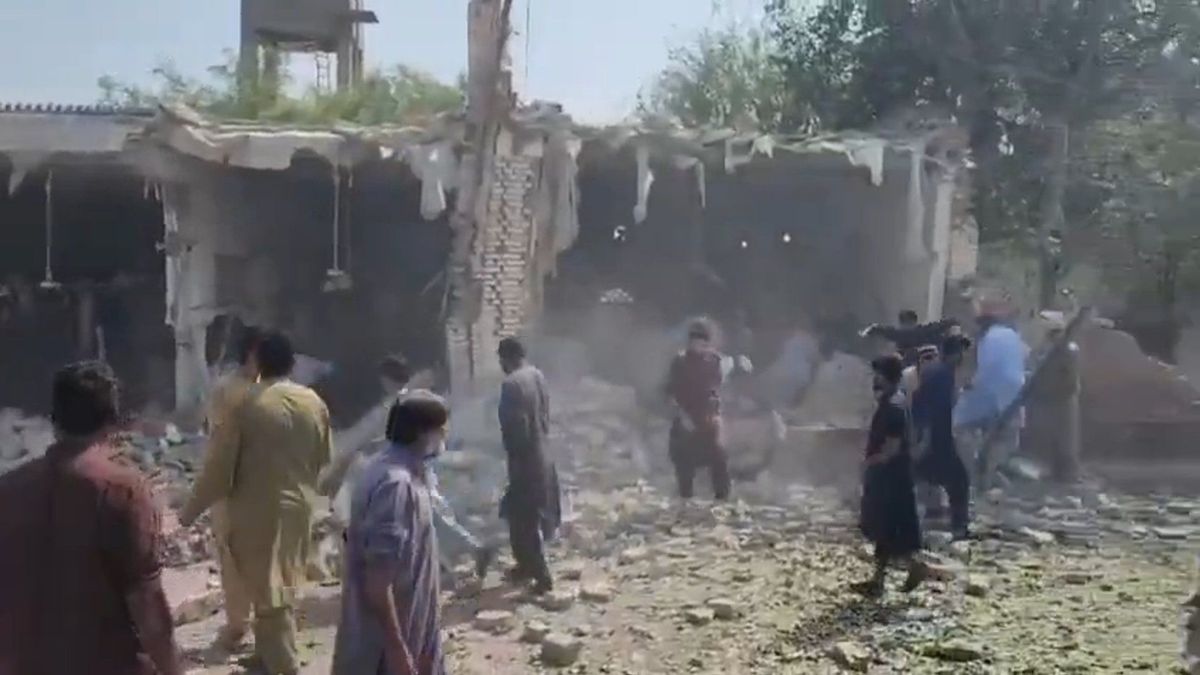
On September 18, 2026, a devastating and coordinated attack struck a mosque located within a police complex in northwest Pakistan. The assault began with an explosives-laden vehicle ramming the complex's gate and detonating, followed by a period of gunfire and a second suicide blast. This multi-pronged attack resulted in multiple fatalities, primarily targeting law enforcement personnel and civilians present for prayer.
This incident is a stark reminder of Pakistan's enduring struggle against militant groups, particularly those entrenched in its porous northwest border regions. The power dynamic at play involves the Pakistani state's continuous efforts to assert its authority against non-state actors who skillfully exploit local grievances, tribal loyalties, and cross-border sanctuaries, often finding refuge in Afghanistan. The deliberate targeting of both a police complex and a mosque simultaneously is a calculated tactic: it aims to undermine the state's capacity for security (police) while sowing fear and division within the populace by desecrating a religious space, maximizing both psychological impact and casualties. The state's primary incentive is its own survival and the maintenance of internal security, which frequently translates into military operations that, at times, risk alienating local communities. Conversely, the militants seek to destabilize the state, challenge its legitimacy, and impose their own ideological order, often drawing support from complex internal and external networks. The broader 'alliance math' is intricate, encompassing Pakistan's volatile relationship with the interim Afghan government, the persistent threat posed by groups like the Tehrik-i-Taliban Pakistan (TTP), and regional geopolitical rivalries, such as those with India. The long, porous border and the historical ties between militant factions and local communities significantly complicate any effective counter-terrorism strategy.
The immediate and profound human cost of such an attack is borne by the victims and their families – police officers, their relatives residing within the complex, and the ordinary civilians attending prayers. These are often individuals from already marginalized areas, caught in a protracted conflict not of their making. Beyond the immediate fatalities, the assault inflicts deep psychological trauma on survivors and the wider community, eroding trust in the very state institutions designed to protect them and fostering an pervasive environment of fear and insecurity. Economically, such acts of violence deter investment, disrupt daily life, and strain already limited public resources, diverting crucial funds from development initiatives towards security expenditures. The region, already grappling with poverty and underdevelopment, sees its prospects further diminished. For the families of fallen officers, the loss of their primary breadwinners often plunges them into deeper cycles of vulnerability and hardship.
Governments, both within Pakistan and internationally, typically frame such incidents primarily as isolated acts of terrorism demanding robust security responses. What is consistently downplayed or entirely omitted is the complex tapestry of *root causes* fueling the insurgency: the intricate interplay of socio-economic grievances, historical injustices, the political marginalization of specific ethnic groups, and the blowback from decades of regional and global geopolitical interventions. Official statements rarely delve into the specific intelligence failures or border management lapses that enable such sophisticated and coordinated attacks to occur. There is also a pervasive tendency to externalize blame, often solely pointing fingers at Afghanistan, without adequately acknowledging internal factors or the Pakistani state's own strategic missteps and inconsistent policies in dealing with militant groups over many years. Furthermore, the long-term impact of military operations on civilian populations, including widespread displacement and collateral damage, is frequently underreported, inadvertently creating a cycle of resentment that militant recruiters are quick to exploit. The dominant narrative tends to focus on the 'enemy' rather than the underlying conditions that create and sustain them.
Moving forward, observers should closely monitor the Pakistani state's immediate response to this attack: will it be predominantly military-focused, leading to intensified operations in the northwest, or will there be any discernible shift towards a more comprehensive strategy that integrates socio-economic and political solutions? Pay attention to the rhetoric emanating from Islamabad concerning its relationship with the interim Afghan government; any escalation in cross-border blame games could further destabilize an already volatile region. Internally, the attack's impact on Pakistan's political stability will be crucial, as such incidents are often leveraged by opposition factions to criticize the incumbent government's security credentials. Finally, the resilience and reactions of the local population in the northwest will be paramount. Their sustained support for or opposition to state policies will ultimately determine the long-term trajectory of this enduring conflict.
Source referenced: ALJAZEERA
This brief was synthesized by our Editorial Engine and reviewed by The Ground Narrative team.