TRENDING

Sunday, 1 November 2026
----------------------
21 Jumada Al-Awwal 1448 AH
The Trump administration’s rapid succession of trade, arms and technology pacts with competing Gulf states is reshaping power balances. Yet the human cost and hidden strategic contradictions remain largely invisible to the public.
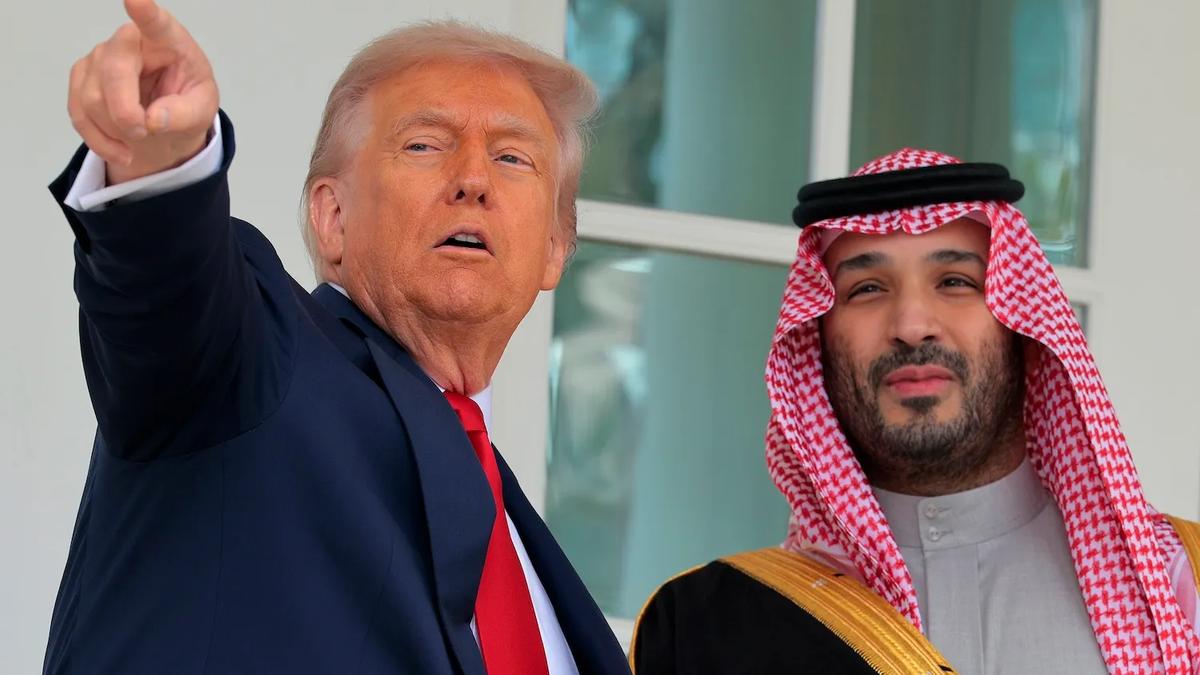
In the past few months the United States has sealed a cascade of high‑profile agreements across the Middle East: a trade pact with Jordan, advanced AI chip licences for the United Arab Emirates, a lifted sanctions regime for Syria, a pending F‑35 sale to Saudi Arabia, a massive arms package for Israel, and a civil nuclear cooperation deal with the Saudi kingdom. Each deal was announced as a win for American industry and a step toward regional stability, but the signatories are also long‑standing rivals.
Washington’s current approach treats every bilateral contract as an isolated transaction that benefits U.S. corporations. The Trump administration’s rhetoric frames these deals as a way to keep allies financially dependent on American technology and defense exports. For regional leaders, signing with the United States is a way to showcase legitimacy, attract foreign investment, and outpace competitors for prestige.
The United States remains the primary security guarantor for Israel, Saudi Arabia, UAE, and Turkey. By supplying cutting‑edge weapons to all of them, Washington inadvertently erodes the qualitative edge that has underpinned its own strategic leverage. When Israel and Turkey field comparable air forces, the risk of a direct clash over Syrian territory rises, forcing Washington to choose sides after it has already armed both.
The AI‑chip agreements illustrate a classic case of duplication. The UAE’s Stargate campus and Saudi Arabia’s HUMAIN project both rely on Nvidia hardware, yet they operate under separate bilateral terms. This creates parallel supply chains that are difficult for Washington to monitor and could lead to competitive leakage of sensitive algorithms.
Unlike China or India, which have built extensive commercial footprints without acting as security guarantors, the United States couples commercial deals with defense commitments. This dual‑track strategy means that any escalation between partner states could drag U.S. forces and budgets into a conflict that was originally meant to be a profit‑making exercise.
The influx of advanced weaponry raises the probability of high‑intensity conflict, which would disproportionately affect civilians in contested zones such as Syria, the Gaza Strip, and the Lebanese border. Urban populations face the danger of collateral damage from precision‑guided munitions that, while technically accurate, are often deployed in densely populated areas.
While American firms stand to win lucrative contracts, local labor markets in the Gulf experience volatility. The race to attract AI hubs fuels a talent drain from public universities to private tech parks, leaving public services under‑resourced. In Jordan, the new trade deal promises growth, yet small‑scale farmers fear competition from subsidized imports that could depress prices.
Large‑scale infrastructure tied to the deals—such as desalination plants and rail corridors—require massive energy inputs. If powered by fossil‑fuel projects, they will exacerbate air pollution and water scarcity, hitting low‑income neighborhoods hardest.
U.S. officials repeatedly claim that “bilateral deals are the strategy,” suggesting that managing partner rivalries is not Washington’s responsibility. This framing obscures the fact that the United States is the common denominator in competing security architectures, a point rarely highlighted in diplomatic briefings.
The surge in contracts for F‑35 jets, AI chips and nuclear technology aligns with lobbying efforts by defense contractors and semiconductor giants. Their influence on policy formulation is seldom disclosed, yet it shapes which deals receive priority.
The newly created Economic Diplomacy Action Group and the planned outbound‑investment screening are mentioned as safeguards, but there is little public detail on how they will evaluate cross‑partner effects. Without a transparent, inter‑agency review, the United States risks approving deals that undermine its own regional objectives.
- Congressional scrutiny: As the F‑35 and nuclear agreements await Senate approval, lawmakers may demand a holistic impact assessment that forces the administration to reconcile competing interests.
- AI supply‑chain coordination: The evolution of the Pax Silica coalition could become a venue for the United States to impose common standards, limiting technology leakage between rival Gulf states.
- Regional de‑confliction mechanisms: Any move to tie future arms sales to concrete de‑confliction steps—especially between Israel and Turkey over Syria—will be a litmus test for Washington’s willingness to prioritize stability over profit.
- Public backlash: Grassroots movements in the Gulf and in the United States, especially those concerned with civilian casualties and environmental degradation, may pressure governments to reconsider the pace and scope of these deals.
- China’s counter‑offers: Beijing continues to expand its Belt and Road footprint. If it can present a security‑neutral alternative to U.S. arms and AI packages, Washington’s leverage could erode further.
Monitoring these dynamics will reveal whether the United States can recalibrate its dealmaking to avoid fueling the very rivalries it claims to contain.
The administration argues that selling advanced weapons to multiple partners sustains American industry and keeps allies dependent on U.S. security guarantees, even though it can intensify regional competition.
Parallel AI stacks increase the chance of technology leakage, make supply‑chain monitoring harder for Washington, and could spark a tech‑driven arms race that undermines regional stability.
Congress can demand a comprehensive review of how these agreements intersect with other U.S. commitments, potentially tying approvals to de‑confliction measures or broader policy coherence.
Source referenced: FOREIGNPOLICY
This brief was synthesized by our Editorial Engine and reviewed by The Ground Narrative team.


