TRENDING

Sunday, 1 November 2026
----------------------
21 Jumada Al-Awwal 1448 AH
China's Kunming Biodiversity Fund recently approved $4.5 million for nine new conservation projects, marking a significant step in Beijing's growing role in global environmental governance. This initiative, positioned as the first by a developing country for others, carries profound implications for international aid dynamics and soft power.
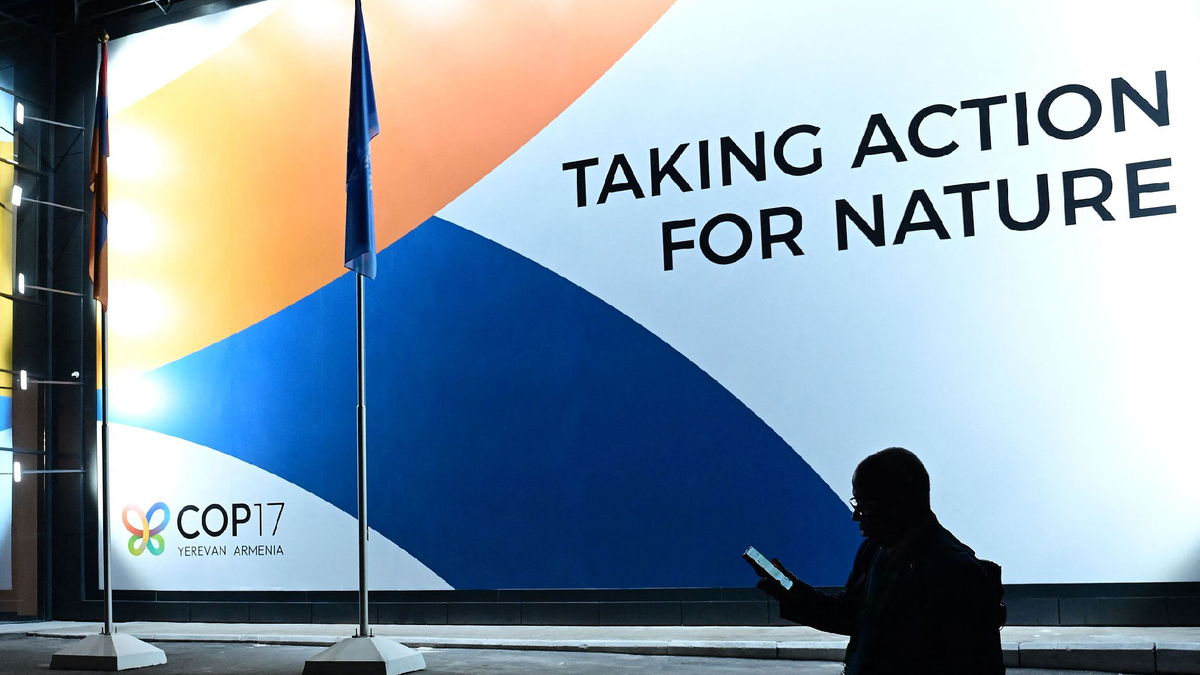
The Kunming Biodiversity Fund (KBF), a global conservation initiative backed by China, recently announced the approval of its latest round of projects. Roughly $4.5 million has been allocated to nine new conservation efforts spanning Armenia, Bangladesh, Benin, Cameroon, Cuba, Montenegro, North Macedonia, Somalia, and Vietnam. This move, revealed during the 17th meeting of the Conference of the Parties to the UN Convention on Biological Diversity (CBD) in Yerevan, Armenia, underscores Beijing's commitment to global environmental issues. Launched in May 2024 with an initial Chinese contribution of 400 million yuan (approximately $60 million), the KBF positions itself as the first global biodiversity fund established by a developing country for other developing nations, aiming to pool resources to bridge critical financing gaps in conservation. UN officials, including the executive secretary of the CBD Secretariat and the head of the UN Environment Programme, have lauded the fund as an "agile instrument" providing much-needed finance, aligning with global biodiversity frameworks and 2030 targets.
The establishment and expansion of the Kunming Biodiversity Fund by China represent a calculated and multi-layered assertion of power, subtly but effectively challenging the established norms of international development and environmental aid. By framing the KBF as the first fund of its kind initiated by a "developing country for other developing countries," Beijing strategically positions itself as a peer and partner to nations in the Global South, rather than a traditional, often historically burdened, Western donor. This narrative resonates deeply, fostering goodwill and diplomatic leverage without the perceived colonial baggage that sometimes accompanies aid from developed nations.
At its core, the KBF is a potent instrument of soft power. For decades, Western nations and institutions like the Global Environment Facility (GEF) and the World Bank have largely dictated the terms and priorities of global environmental funding. China's initiative creates an alternative, demonstrating its growing capacity and willingness to lead on critical global issues. This move is not merely philanthropic; it's about shaping global governance, setting norms, and projecting an image of responsible global leadership, especially in areas like climate change and biodiversity where China has historically faced scrutiny for its own industrial impact. The fund's emphasis on multilateralism and transparency, as stated by Vice Minister of Ecology and Environment Dong Baotong, further burnishes this image, even as the practicalities of its governance remain to be fully observed.
The choice of recipient nations is also telling. Countries like Cuba and Somalia, which may have complex relationships with traditional Western donors or limited access to conventional funding streams, find the KBF an attractive and accessible option. This diversification of aid sources is crucial for these nations, reducing their dependency on any single power bloc and allowing them greater autonomy in their development choices. The KBF offers a pathway to address urgent environmental needs without necessarily adhering to the conditionalities often imposed by Western lenders, which can sometimes be seen as infringing on national sovereignty. This flexibility, described by Astrid Schomaker of the CBD Secretariat as an "agile instrument," is a significant draw for developing countries seeking rapid and unencumbered support.
Furthermore, the KBF can be seen as strategically aligning with China's broader foreign policy objectives, particularly the Belt and Road Initiative (BRI). While the fund directly addresses biodiversity, its projects could potentially complement or mitigate the environmental impacts of BRI infrastructure development, offering a "green" veneer to China's expansive global economic footprint. By investing in the environmental health of partner nations, Beijing can deepen diplomatic ties, secure future access to resources, and enhance its overall influence in strategically important regions, all while building a reputation as a champion of global environmental stewardship. The relatively modest initial funding, while significant for specific projects, serves as a powerful symbol of intent, signaling China's long-term commitment to a new model of global engagement.
While biodiversity conservation is undeniably crucial for the planet's health, the implementation of such projects, even with the best intentions, can carry significant human costs, particularly for the local communities living closest to the ecosystems being protected. The Kunming Biodiversity Fund's projects, like many conservation initiatives worldwide, must navigate the delicate balance between ecological preservation and human livelihoods.
Many of the recipient nations, such as Bangladesh, Benin, and Somalia, are characterized by high levels of rural poverty where communities directly depend on natural resources for their sustenance, income, and cultural practices. Conservation efforts, if not designed with robust participatory mechanisms, can inadvertently lead to restricted access to traditional lands, fishing grounds, or forest resources. This can result in economic hardship, food insecurity, and even forced displacement for vulnerable populations. The "conservation models that can be copied and scaled up" touted by the KBF must be rigorously vetted to ensure they are not top-down approaches that disregard the intricate relationships between people and their environments. Without genuine engagement with indigenous communities and local populations, projects risk alienating the very people whose cooperation is essential for long-term ecological success.
The promise of the KBF to operate "openly and transparently" is vital, but its practical application for local communities remains a key concern. Who decides which projects are funded and how they are implemented? Are there clear mechanisms for local communities to voice concerns, seek redress for grievances, or participate in the planning and monitoring stages? A lack of transparent governance at the project level can lead to elite capture, where benefits accrue to powerful local actors rather than the intended beneficiaries or the environment itself. The human cost here is a loss of agency and the potential for projects to exacerbate existing inequalities rather than alleviate them.
Beyond the direct impacts of specific projects, the overarching human cost is the continued, disproportionate burden of global biodiversity loss on the world's most vulnerable. While the KBF's $4.5 million for nine projects is a welcome injection of funds, it remains a fraction of the estimated trillions of dollars needed annually to halt and reverse biodiversity decline. The communities in Armenia, Cameroon, or Vietnam that rely on healthy ecosystems for clean water, fertile soil, and climate resilience will continue to suffer the consequences of inadequate global action. The fund, while symbolically significant, cannot single-handedly avert the widespread human suffering that will result from continued ecological degradation. The human cost, in this broader sense, is the ongoing vulnerability of millions to environmental collapse, a burden that the powerful often acknowledge but rarely fully mitigate.
The official narrative surrounding the Kunming Biodiversity Fund emphasizes China's role as a responsible global actor, a developing country helping its peers, and a champion of multilateralism. However, beneath this commendable surface lies a more complex geopolitical reality, where strategic positioning, historical narratives, and the sheer scale of the global environmental challenge are often downplayed or omitted.
Perhaps the most significant untold story is the strategic deployment of the "developing country" label by China. While technically accurate by some metrics, China's economic might, technological prowess, and global industrial footprint place it in a unique category, far removed from the typical developing nation. By establishing the KBF as the first fund of its kind from a "developing country for other developing countries," Beijing skillfully sidesteps the expectations and responsibilities often placed on major global powers, while simultaneously projecting an image of solidarity with the Global South. This framing allows China to lead without necessarily accepting the same level of accountability or financial contributions expected from, say, the United States or the European Union. It's a powerful rhetorical tool that enhances its diplomatic leverage and undermines traditional Western-centric aid models.
This initiative is not solely about saving species; it's a critical component of China's broader green diplomacy and its ongoing competition for global influence. For decades, environmental aid has been a domain largely dominated by Western nations, often tied to specific governance models or economic reforms. The KBF offers an alternative, potentially with fewer perceived ideological strings, allowing China to cultivate deeper relationships and expand its influence in regions where Western engagement might be viewed with skepticism or historical resentment. It's a strategic investment in diplomatic capital, securing goodwill and potentially future political alignment in international forums. The praise from UN officials, while genuine in its appreciation for new funding, also serves to legitimize China's growing role on the global stage, further cementing its position as a key player in global governance.
The scale of the KBF's funding, while welcome, is often subtly downplayed in relation to the immense global challenge. $4.5 million for nine projects, against an initial $60 million contribution, is a mere fraction of the estimated trillions of dollars required annually to meet global biodiversity targets. While the fund is praised for being "agile," its actual impact on the *global* biodiversity crisis will remain limited without a massive increase in contributions, ideally from other nations. This highlights a persistent gap in global environmental financing that China is strategically filling, gaining credit where others have fallen short. Furthermore, while China champions international conservation, its own rapid industrialization has led to significant domestic environmental degradation, including extensive habitat loss and pollution. The KBF helps project an image of global environmental stewardship, potentially diverting attention from these internal challenges and the environmental footprint of its own global supply chains and infrastructure projects.
Finally, the narrative often omits the potential reciprocal benefits for China. While presented as altruistic aid, these conservation projects can indirectly serve China's long-term economic and strategic interests. By fostering stability and environmental health in partner nations, China can secure more reliable supply chains for resources, open new markets for its goods and services, and enhance the sustainability of its own global investments, including the Belt and Road Initiative. The KBF is not merely philanthropy; it is a calculated investment in China's global standing, its narrative as a responsible global actor, and its long-term geopolitical objectives.
As the Kunming Biodiversity Fund continues to disburse its resources and expand its reach, several key areas warrant close observation to understand its true impact and the evolving dynamics of global power.
First, monitor the scaling and diversification of contributions. Will the KBF attract significant financial commitments from other nations, particularly developed economies, or will it remain predominantly a Chinese initiative? The extent to which it becomes a truly multilateral fund, rather than a primarily bilateral one with a multilateral facade, will be critical to its long-term legitimacy and effectiveness. If other nations do contribute, observe the political conditions or strategic alignments that accompany their involvement.
Second, pay close attention to the on-the-ground outcomes and transparency of the approved projects. Are these initiatives genuinely empowering local communities, respecting indigenous rights, and achieving measurable, sustainable conservation results? Scrutiny of the fund's governance structure, project selection criteria, and independent evaluation mechanisms will be crucial. Look for reports from local NGOs and independent environmental watchdogs, not just official statements, to gauge the real human and ecological impact.
Third, observe the alignment and integration of KBF projects with the Belt and Road Initiative (BRI). Will conservation efforts be strategically located to mitigate the environmental impacts of BRI infrastructure, or will they serve as a "green veneer" for broader economic expansion? Any explicit or implicit linkages between biodiversity funding and Chinese investment projects could reveal deeper strategic objectives beyond pure conservation.
Finally, watch the response from traditional Western donors and international financial institutions. Will they increase their own biodiversity funding to compete with or complement the KBF? Will there be attempts to partner with China on these initiatives, or will the fund be framed as a challenge to their long-standing influence in global environmental governance? The reactions from these established players will indicate how they perceive China's growing leadership in this crucial domain and could signal a broader recalibration of international environmental diplomacy. The future of global environmental aid may well be defined by this evolving interplay of power and purpose.
The Kunming Biodiversity Fund (KBF) is a global conservation fund initiated by China in May 2024. It aims to support biodiversity protection projects in developing countries, with China contributing an initial $60 million and calling for further global contributions.
The latest round of KBF funding, totaling $4.5 million, has been approved for nine projects in Armenia, Bangladesh, Benin, Cameroon, Cuba, Montenegro, North Macedonia, Somalia, and Vietnam, among other developing nations.
The KBF enhances China's soft power and diplomatic influence by positioning it as a leader in global environmental governance and a partner to the Global South. It offers an alternative to traditional Western-dominated aid, strategically aligning with China's broader foreign policy objectives and potentially challenging existing aid structures.
Editor's Note: Analysis focuses on interpreting China's actions within a broader geopolitical context, emphasizing the 'developing country' framing as a key element of its power strategy.
Source referenced: CGTN
This brief was synthesized by our Editorial Engine and reviewed by The Ground Narrative team.


