TRENDING

Thursday, 17 September 2026
----------------------
6 Rabi' Al-Thani 1448 AH
Turkey's government has launched a nationwide crackdown on LGBTQ+ activists and organizations, framing it as a defense of traditional family values. This move, however, reveals deeper political maneuvers aimed at consolidating power and silencing critical voices amidst economic challenges.
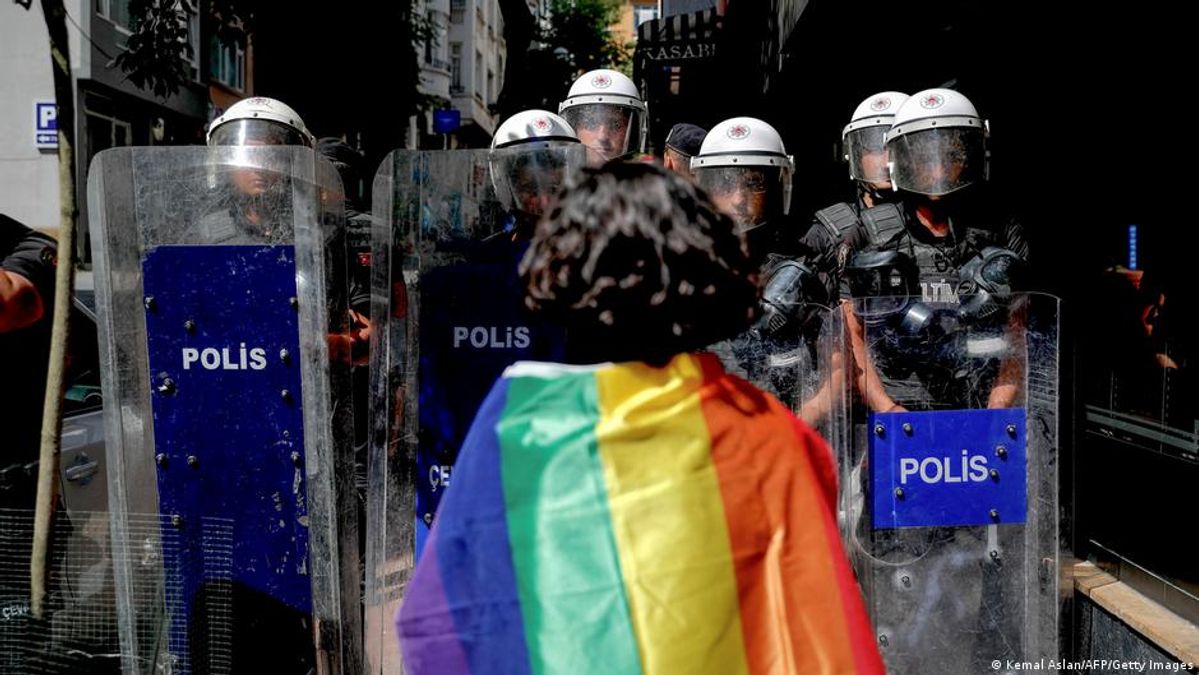
Over the past weekend, Turkish authorities launched a series of raids targeting LGBTQ+ activists and organizations across Istanbul, Ankara, and Izmir. These operations led to multiple arrests and the blocking of over a hundred social media accounts and websites, including those of human rights groups and independent media. President Recep Tayyip Erdogan's government justified the actions as part of a newly announced "Decade of Family and Population" scheme, ostensibly aimed at reversing declining birth rates and bolstering conservative family structures. The crackdown has drawn swift and sharp condemnation from domestic rights groups, medical associations, political opposition, and the European Union.
At its core, this crackdown is a strategic maneuver by the ruling Justice and Development Party (AKP) and President Erdogan to consolidate power and rally their conservative base. Facing persistent economic challenges, including high inflation, a housing crisis, and unemployment, the government is adept at redirecting public attention towards culturally charged issues. By framing LGBTQ+ advocacy as a threat to "traditional family values" and "national security," the AKP seeks to activate a powerful ideological fault line within Turkish society. This tactic allows the government to present itself as the guardian of moral order, appealing to religious and conservative voters while deflecting scrutiny from its economic performance. The "Decade of Family and Population" scheme provides a convenient, state-backed narrative to legitimize what critics describe as an authoritarian push against civil liberties. Internationally, this move further strains Turkey's already complex relationship with the European Union, yet the government likely calculates that the domestic political gains outweigh the diplomatic costs, especially given the stalled nature of Turkey's EU accession process.
The immediate human cost of this campaign falls squarely on Turkey's LGBTQ+ community. Individuals face arbitrary arrests, harassment, and the chilling effect of digital censorship, which stifles their ability to organize, advocate, and simply exist in public spaces. The blocking of social media accounts and websites effectively erases their digital presence and restricts access to information and community support. Beyond the LGBTQ+ community, the crackdown sends a clear message to all civil society organizations, women's rights groups, and opposition voices: dissent will not be tolerated. The actions erode fundamental freedoms of assembly, speech, and privacy, creating an environment of fear that discourages any form of critical engagement with the government. This shrinking space for civil society ultimately weakens democratic institutions and stifles the vibrant public discourse necessary for a healthy society, impacting every citizen, regardless of their identity.
The government's narrative, centered on protecting families and national security from "obscene content and LGBTQ+ propaganda," serves as a convenient diversion from the real challenges facing Turkish families. As critics point out, the true factors undermining family stability in Turkey are rampant poverty, an acute housing crisis, widespread unemployment, and the pervasive issue of male violence against women. These are the concrete issues that create uncertainty and hardship for millions, yet they are largely downplayed or omitted from the official discourse. Instead, the government opts to scapegoat a marginalized community, attempting to criminalize its existence without enacting new laws. This approach allows authorities to use vague charges and broad interpretations of existing regulations to justify arrests and censorship, effectively bypassing legislative scrutiny and consolidating executive power under the guise of moral protection. The declining birth rate, cited as a core concern, is far more likely linked to these socio-economic pressures and changing societal norms than to the advocacy of LGBTQ+ rights.
Moving forward, observers should watch for the sustained impact on Turkey's civil society and the resilience of human rights defenders. The government's actions signal a deepening commitment to authoritarian tactics, and it will be crucial to see how domestic opposition and international bodies respond to this escalating repression. Further protests from women's rights groups and other civil society actors are likely, testing the limits of state tolerance. The crackdown will undoubtedly further complicate Turkey's relationship with Western allies and the EU, potentially leading to increased diplomatic pressure or sanctions, though the immediate impact on Erdogan's domestic standing may be minimal. The upcoming local elections will also serve as a critical barometer, indicating whether this strategy of cultural polarization successfully mobilizes the conservative base or alienates a broader segment of the electorate. The long-term trajectory of civil liberties in Turkey hinges on the interplay between state power and the persistent, if increasingly challenged, voices of dissent within the country.
Source referenced: DW
This brief was synthesized by our Editorial Engine and reviewed by The Ground Narrative team.


