TRENDING

Monday, 19 October 2026
----------------------
8 Jumada Al-Awwal 1448 AH
Keir Starmer has officially resigned as the UK Prime Minister, paving the way for Andy Burnham to assume leadership of the Labour Party and the country. This transition marks a significant moment for British domestic and international policy, occurring at a critical juncture in global affairs.
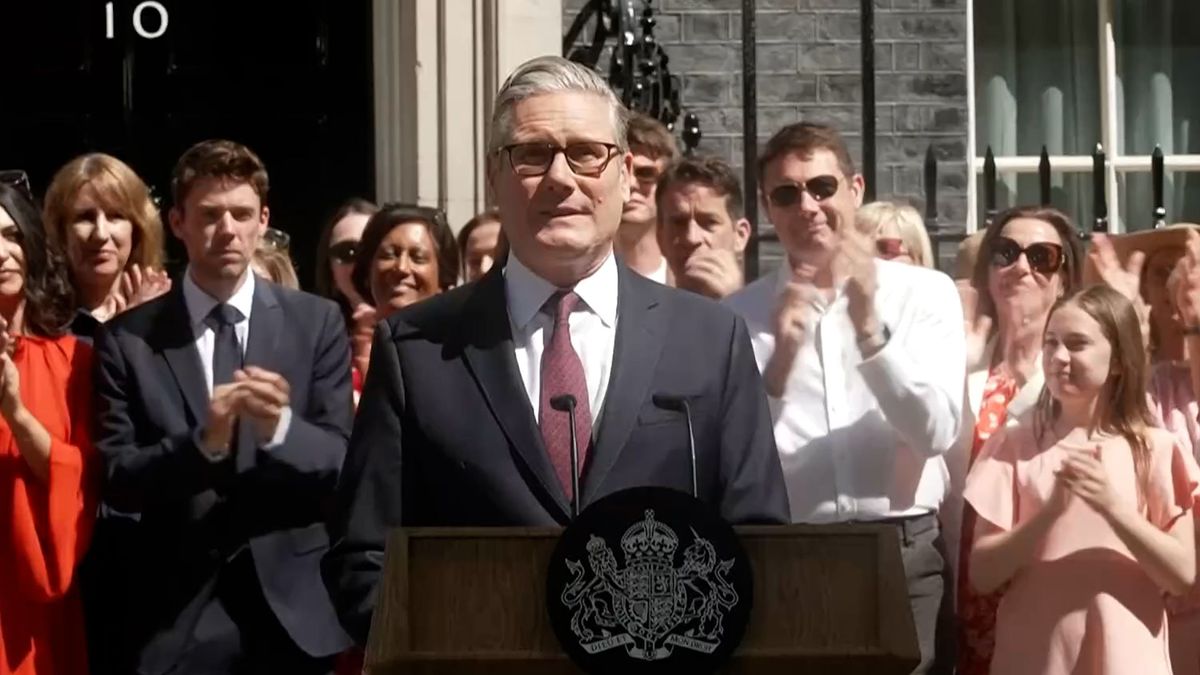
On July 20, 2026, Keir Starmer formally stepped down as the Prime Minister of the United Kingdom, delivering a final address in London where he stated his 'work is done.' This planned transition sees Andy Burnham, the newly appointed leader of the ruling Labour Party, assume the premiership. The change in leadership, while occurring within the same governing party, carries significant implications for both the UK's domestic trajectory and its standing on the international stage.
Starmer's departure, after a period in office, signals a deliberate shift within the Labour Party's leadership, though the specific motivations beyond his public statement remain internal to the party's strategic planning. Such transitions, even when anticipated, often precede or reflect evolving policy priorities and a desire for renewed political momentum. The peaceful and orderly transfer of power underscores the stability of the UK's democratic institutions, a crucial factor in its global image.
Andy Burnham's ascension to Prime Minister is expected to bring a fresh perspective to the UK's domestic agenda. While adhering to the broader Labour Party platform, a new leader often re-prioritizes specific policy areas, potentially influencing economic strategy, social welfare reforms, and regional development initiatives. Burnham's past political roles and public statements will offer clues to his immediate focus, which could range from addressing cost-of-living challenges to accelerating green energy transitions or reforming public services.
Economically, the UK faces ongoing challenges related to post-Brexit trade dynamics, inflation management, and productivity growth. A new Prime Minister will inherit these complex issues, and any adjustments to fiscal policy, regulatory frameworks, or investment strategies could have ripple effects on the UK's economic performance and its attractiveness to international investors. The stability of the British economy is intrinsically linked to its geopolitical influence, making domestic policy shifts a matter of international observation.
The change in leadership in a G7 nation and permanent member of the UN Security Council inevitably draws global attention. The UK's foreign policy, defense posture, and diplomatic engagements are critical components of the international order. Andy Burnham's leadership will be scrutinized for its potential impact on several key areas:
* Transatlantic Alliance: The relationship with the United States remains a cornerstone of UK foreign policy. Burnham's approach to this alliance, particularly concerning security cooperation, intelligence sharing, and trade, will be closely watched. Any perceived shift in emphasis could subtly alter the dynamics of the broader Western alliance.
* European Relations: Post-Brexit relations with the European Union continue to be a complex and evolving challenge. A new Prime Minister might seek to recalibrate the UK's engagement with the EU, potentially exploring avenues for closer cooperation on issues such as security, climate change, and research, while navigating existing trade agreements and Northern Ireland Protocol arrangements. The tone and substance of this relationship are vital for European stability and economic integration.
* Global Security and Conflicts: The UK plays an active role in international security, including its support for Ukraine, its involvement in NATO, and its contributions to global peacekeeping efforts. Burnham's administration will need to articulate its stance on ongoing conflicts, emerging security threats, and the UK's defense spending commitments. Continuity or divergence in these areas will shape the UK's credibility and influence as a global security actor.
* Indo-Pacific Strategy: The UK's 'tilt' towards the Indo-Pacific region, aimed at strengthening economic and security ties with countries like India, Japan, and Australia, is a significant strategic initiative. A new leader will determine the pace and scope of this engagement, which is part of a broader Western effort to balance rising geopolitical competition in the region.
Keir Starmer's departure and Andy Burnham's assumption of the premiership mark a new chapter for the United Kingdom. While the transition itself was orderly and within the framework of democratic processes, the implications for the UK's domestic agenda and its role in a volatile international landscape are substantial. Global allies and adversaries alike will be observing closely to discern the strategic direction of the new administration, particularly concerning its economic policies, diplomatic priorities, and commitment to international security. The leadership change underscores the dynamic nature of modern politics, where even internal party shifts can resonate across the global stage, influencing alliances, trade, and the broader balance of power.
Source referenced: ALJAZEERA
This brief was synthesized by our Editorial Engine and reviewed by The Ground Narrative team.