TRENDING

Friday, 16 October 2026
----------------------
5 Jumada Al-Awwal 1448 AH
President Trump's recent assertion of a potential U.S.-Iran deal to 'end the war' signals a significant, albeit unconfirmed, diplomatic overture. The lack of specific details and Iran's official stance leaves the scope and viability of such an agreement uncertain, yet it carries profound geopolitical implications for the Middle East and global stability.
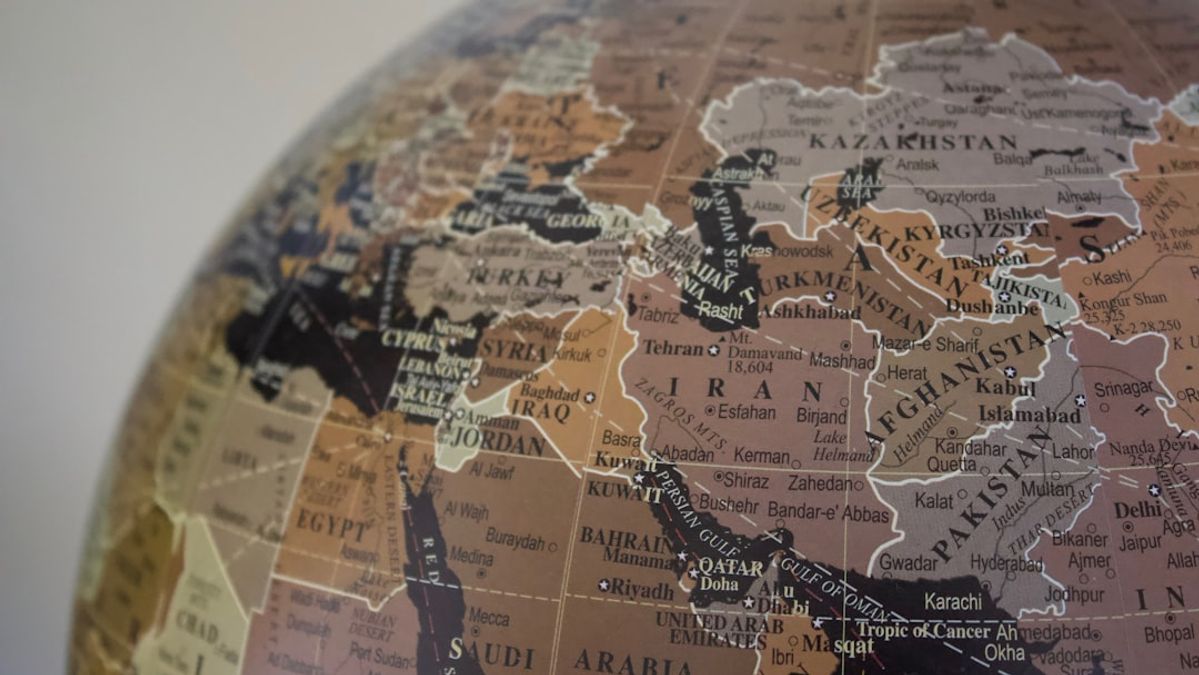
On Saturday, May 24, 2026, U.S. President Trump announced via social media that the United States and Iran were nearing a deal aimed at "ending the war." This statement, while lacking specific details regarding the nature or scope of the purported agreement, immediately drew international attention given the long-standing and often volatile adversarial relationship between Washington and Tehran. The ambiguity surrounding the announcement, particularly the absence of a clear position from Iran, underscores the delicate and complex nature of any potential rapprochement.
The phrase "ending the war" likely refers not to a conventional armed conflict, but rather to the decades-long state of undeclared hostilities, characterized by economic sanctions, proxy conflicts across the Middle East, and persistent tensions over Iran's nuclear program. The U.S. withdrew from the Joint Comprehensive Plan of Action (JCPOA) in 2018 under the Trump administration, re-imposing stringent sanctions that have severely impacted Iran's economy. This move escalated tensions, leading to a series of incidents including attacks on oil tankers, drone shoot-downs, and cyber warfare, bringing the two nations to the brink of direct confrontation on multiple occasions. Any deal would therefore represent a significant departure from this trajectory, potentially signaling a shift towards de-escalation and a re-evaluation of strategic priorities by both sides.
From the U.S. perspective, a deal could serve several strategic objectives. It might aim to stabilize the Middle East, reduce the burden of military deployments, and potentially free up diplomatic resources for other global challenges. Domestically, a foreign policy achievement of this magnitude could also carry political benefits. However, the lack of details makes it difficult to ascertain whether the proposed deal focuses on nuclear constraints, regional behavior, or a broader normalization of relations. The term "ending the war" suggests a comprehensive approach, but the specifics remain critical.
For Iran, the primary motivation for engaging in such talks would undoubtedly be the prospect of sanctions relief. The U.S. sanctions have crippled Iran's oil exports and financial sector, leading to significant economic hardship and internal discontent. A deal could offer a pathway to economic recovery and greater integration into the global economy. Furthermore, it could provide a degree of international legitimacy and security assurances, potentially reducing the perceived need for its controversial nuclear program and regional proxy network. However, Iran's leadership faces internal factions with differing views on engagement with the West, making any agreement contingent on broad domestic consensus.
The implications of a U.S.-Iran deal would reverberate across the Middle East and beyond. Regional rivals, particularly Saudi Arabia, the United Arab Emirates, and Israel, who view Iran as a primary security threat and destabilizing force, would scrutinize any agreement with intense concern. These nations have historically advocated for a tougher stance against Tehran and would likely seek assurances that their security interests are not compromised. A deal could force a re-evaluation of regional alliances and security architectures, potentially leading to new diplomatic alignments or, conversely, increased regional instability if not carefully managed.
Globally, a successful de-escalation between the U.S. and Iran could contribute to the stability of global energy markets, given Iran's significant oil and gas reserves. It could also set a precedent for resolving other protracted international disputes through diplomacy, reinforcing the role of negotiation over confrontation. Conversely, a failed or poorly conceived deal could exacerbate existing tensions, undermine diplomatic credibility, and embolden hardliners on both sides.
The path to any comprehensive agreement is fraught with challenges. The absence of specific details from President Trump's announcement and the lack of an official Iranian response create significant uncertainty. Key questions remain: What are the core components of this potential deal? How would it address Iran's nuclear program, its ballistic missile development, and its regional activities? What mechanisms would be in place for verification and enforcement? And critically, how would such an agreement be sustained across different administrations in both countries?
Ultimately, while President Trump's statement opens a potential window for diplomatic engagement, the journey towards a lasting resolution of U.S.-Iran tensions remains complex and uncertain. The global community will be closely watching for further details and Iran's official position, as the implications for regional stability and international relations are profound.
Source referenced: NPR
This brief was synthesized by our Editorial Engine and reviewed by The Ground Narrative team.