TRENDING

Monday, 5 October 2026
----------------------
24 Rabi' Al-Thani 1448 AH
Turkey's democratic institutions are under increasing pressure from President Erdogan's government, marked by the imprisonment of political opponents and judicial interference in opposition parties. Despite these developments, key international actors, including the U.S., Canada, and European nations, have largely remained silent, prioritizing strategic interests over human rights concerns.
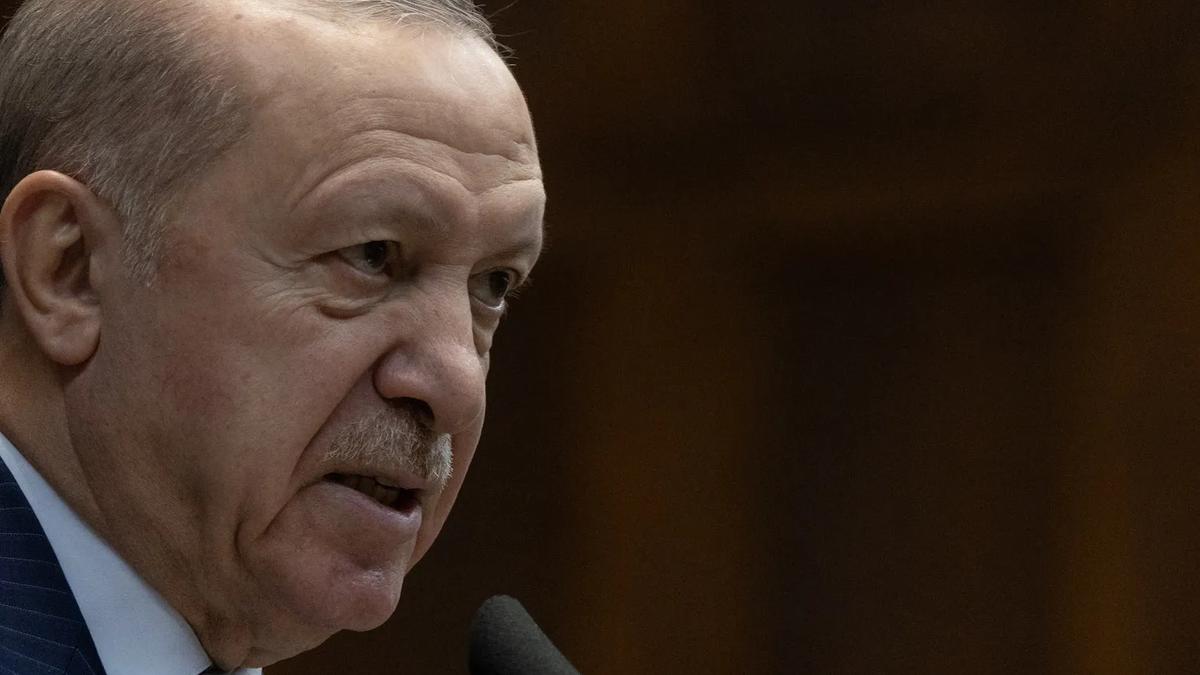
The article highlights a concerning trend in Turkey, where President Recep Tayyip Erdogan's government is systematically dismantling democratic institutions and suppressing political dissent, while key international actors, particularly in the United States, Canada, and Europe, remain largely silent. This silence, the analysis suggests, stems from a complex interplay of strategic interests, political expediency, and a perceived geopolitical necessity that often overrides stated commitments to human rights and democratic values.
Since the attempted coup in July 2016, the Turkish government, under President Erdogan and his Justice and Development Party (AKP), has intensified its crackdown on perceived opponents. Prominent cases underscore this trend: Osman Kavala, a businessman and philanthropist, has been imprisoned for over 3,165 days on what are widely considered fabricated charges related to the 2016 coup attempt. Similarly, Ekrem Imamoglu, the popular mayor of Istanbul and a significant political rival to Erdogan, has been incarcerated for 470 days, ostensibly for insulting a prosecutor, corruption, and espionage, but widely believed to be for his political influence.
Beyond these high-profile cases, the article points to a broader pattern of repression. In May 2026, a Turkish court nullified the internal elections of the main opposition Republican People’s Party (CHP), a move Human Rights Watch condemned as a “deeply damaging blow to the rule of law, democracy and human rights.” Instead of ordering a fresh vote, the court reinstated a previous, less effective leader, effectively crippling the opposition. This judicial interference, coupled with the harassment of families, seizure of property, and imprisonment of thousands of political opponents, illustrates a justice system increasingly politicized and used as a tool for consolidating power. Supporters of the Turkish government often frame these actions as legitimate legal processes, a common tactic employed by authoritarian regimes to legitimize repression.
The response from the United States, a long-standing NATO ally, has been characterized by a transactional approach and selective engagement with human rights concerns. During his first term, former U.S. President Donald Trump only intervened in Turkey's human rights record when it served his political interests, notably securing the release of American Pastor Andrew Brunson, whose detention resonated with his evangelical base. However, in a hypothetical second term (as implied by the 2026 publication date), the article suggests a further deterioration, with the Trump administration reportedly appointing an ambassador sympathetic to Ankara's narratives and pursuing military cooperation, such as readmitting Turkey to the F-35 program and selling jet engines for its domestic fighter aircraft, despite Turkey's acquisition of Russian S-400 air defense systems and congressional prohibitions.
This approach highlights a broader dilemma in Washington. While many members of Congress express concern for human rights globally, their vocal criticism often appears selective, focusing intensely on countries like China, Saudi Arabia, the UAE, Cuba, North Korea, and Israel, while largely overlooking Turkey's transgressions. A congressional staffer noted the overwhelming focus on Israeli Prime Minister Benjamin Netanyahu, indicating a prioritization of other geopolitical issues. Even a bipartisan body like the Tom Lantos Human Rights Commission, which held a hearing on Turkey, saw minimal attendance, underscoring a lack of sustained political will to challenge Ankara's domestic policies. This selective outrage, the article argues, undermines the credibility of U.S. human rights advocacy.
Other international actors, including Canada and European nations, also exhibit a similar disconnect between stated values and practical diplomacy. Canadian Prime Minister Mark Carney, in a January 2026 speech at the World Economic Forum in Davos, passionately advocated for a new global order built on values like human rights and sustainable development. Yet, just six months later, Canada and Turkey initiated exploratory negotiations for a free trade deal, effectively sidelining human rights concerns in favor of economic interests.
European countries, too, have largely remained silent on Erdogan's domestic policies. Their rationale, as presented in the article, is rooted in geopolitical pragmatism. Following post-Cold War disarmament, facing an unreliable United States, and confronting the threat posed by Russia, European nations perceive Turkey as an indispensable component of their defense strategy and NATO's eastern flank. This strategic imperative, particularly ahead of a NATO summit, leads them to prioritize security cooperation over public criticism of Ankara's human rights record. Erdogan, understanding this dynamic, likely interprets their silence as acquiescence, further emboldening his authoritarian trajectory.
The international community's muted response to Turkey's democratic backsliding carries significant geopolitical implications. Firstly, it undermines the credibility of Western nations as champions of democracy and human rights, creating a perception of hypocrisy that can be exploited by authoritarian regimes globally. If key allies are not held to account, it weakens the moral authority to criticize adversaries.
Secondly, Turkey's continued drift away from democratic norms poses a challenge to NATO cohesion. While Turkey's strategic location and military capabilities remain vital for the alliance, its internal political trajectory and its independent foreign policy decisions, such as the S-400 purchase, create internal friction and raise questions about shared values.
Finally, this strategic silence risks normalizing authoritarian practices within a crucial regional power. By prioritizing short-term security or economic gains over long-term democratic principles, the West may inadvertently contribute to the further entrenchment of an autocratic system in Turkey, with potential ramifications for regional stability and the balance of power in the Eastern Mediterranean and the Middle East. The article concludes that if international leaders are unwilling to genuinely challenge Erdogan's actions, their future pronouncements on human rights will lack conviction and impact.
Source referenced: FOREIGNPOLICY
This brief was synthesized by our Editorial Engine and reviewed by The Ground Narrative team.


