TRENDING

Monday, 5 October 2026
----------------------
24 Rabi' Al-Thani 1448 AH
A new US executive order seeks to reduce recommended childhood vaccinations, sparking a clash between political will and global scientific consensus. This move could reshape public health and expose children to preventable diseases.
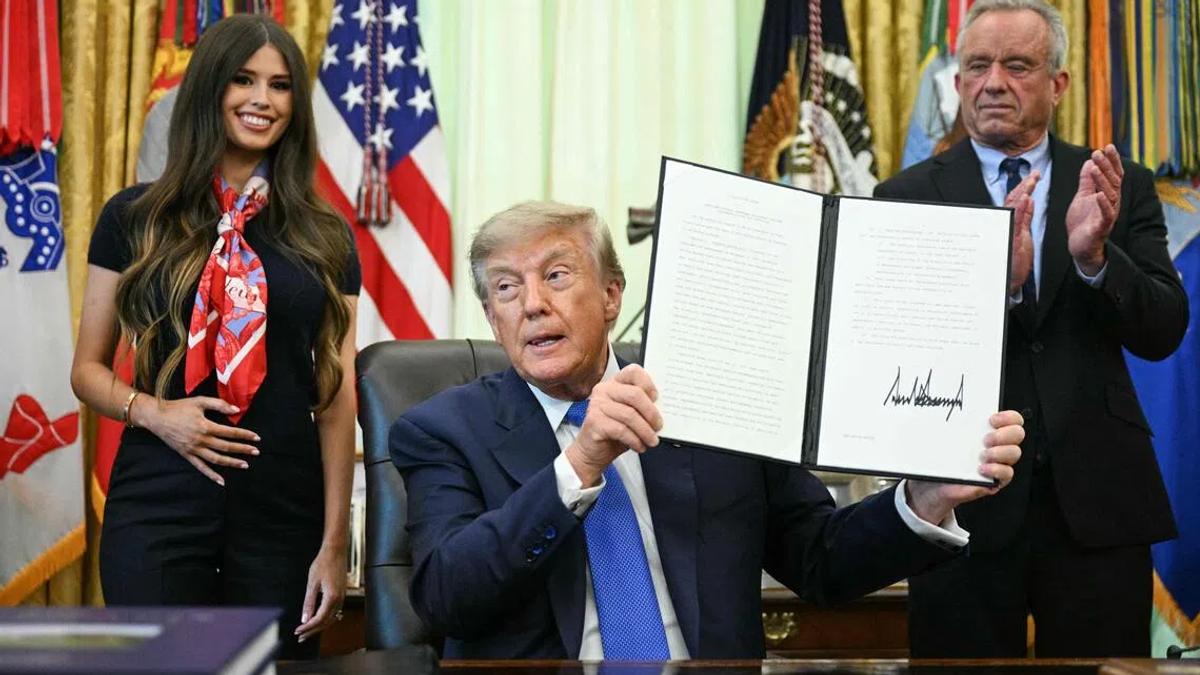
US President Donald Trump has signed an executive order aimed at significantly reducing the number of recommended childhood vaccinations, proposing a schedule of just 11 immunizations. The order also suggests separating the combined measles, mumps, and rubella (MMR) vaccine into three individual shots. This move, framed as providing “gold-standard” protection and aligning the US with other developed nations, immediately drew sharp criticism from the World Health Organization (WHO) and a broad consensus of medical experts and vaccine manufacturers globally.
This executive order represents a direct assertion of executive power into a domain traditionally governed by scientific consensus and public health expertise. President Trump's directive, heavily influenced by US Health Secretary Robert F. Kennedy Jr.'s long-standing skepticism towards vaccine safety, caters to a specific political base that distrusts established medical institutions and scientific recommendations. The comparison to other developed countries, while sounding reasonable on the surface, is a political framing device. These nations often have different epidemiological profiles, population densities, and healthcare access systems, meaning a blanket reduction in the US could have disproportionate effects. The WHO, as the global authority on public health, finds its advisory power challenged, forced to reiterate the decades of research underpinning current immunization schedules. For vaccine manufacturers and medical associations, the order threatens to undermine the very foundation of preventative medicine, creating a direct conflict between political ideology and evidence-based practice.
The most immediate and profound human cost of this order falls squarely on children and their families. Reducing the number of recommended vaccinations, or fragmenting combined shots like MMR, directly increases the vulnerability of young populations to preventable, often serious, diseases. Parents face increased confusion regarding vaccination schedules, potentially leading to delays or missed immunizations due to the logistical burden of multiple clinic visits. Beyond individual families, communities bear the collective risk of diminished herd immunity. As vaccination rates decline, the likelihood of outbreaks of diseases like measles, mumps, and rubella rises, threatening not only the unvaccinated but also those who cannot be vaccinated (infants, immunocompromised individuals) and straining public health resources. The economic cost of treating preventable diseases, coupled with the societal disruption of outbreaks, would ripple through the healthcare system and broader economy.
What is largely downplayed or omitted in official statements supporting this order is the specific epidemiological context of the United States and the erosion of trust in public health institutions. The US, with its diverse population, varying access to healthcare, and specific disease prevalence patterns, cannot simply adopt another country's schedule without careful scientific review. The executive order's justification sidesteps the detailed analysis of disease burden, vaccine efficacy, and optimal timing that informs the current US schedule. More critically, this move risks further politicizing public health, deepening existing societal divisions around science, and undermining the credibility of institutions like the Centers for Disease Control and Prevention (CDC) and the WHO. This isn't merely a policy adjustment; it's a significant ideological intervention that could set a dangerous precedent for future science-based policy decisions, encouraging the public to question expert consensus based on political directives rather than evidence.
Readers should watch for several key developments. Firstly, legal challenges to the executive order are highly probable, as medical and public health organizations will likely contest its scientific basis and potential harm. Secondly, the response of individual US states will be crucial; while federal policy sets recommendations, states often have significant autonomy in setting their own public health mandates. Any divergence could create a patchwork of vaccination policies across the country. Thirdly, observe public health outcomes in the coming months and years. Any noticeable increase in outbreaks of preventable diseases would serve as a stark, real-world consequence of the order. Finally, the international reaction beyond the WHO, particularly from other developed nations whose schedules are being referenced, will indicate the global perception of this US policy shift and its potential impact on global health cooperation and norms.
Source referenced: STRAITSTIMES
This brief was synthesized by our Editorial Engine and reviewed by The Ground Narrative team.


