TRENDING

Monday, 5 October 2026
----------------------
24 Rabi' Al-Thani 1448 AH
US President Trump's decision to scale back joint military exercises with South Korea has sparked concerns about the region's stability, while North Korea continues to expand its nuclear capabilities. The move underscores Trump's willingness to challenge longstanding military alliances and his desire to improve relations with North Korean leader Kim Jong Un.
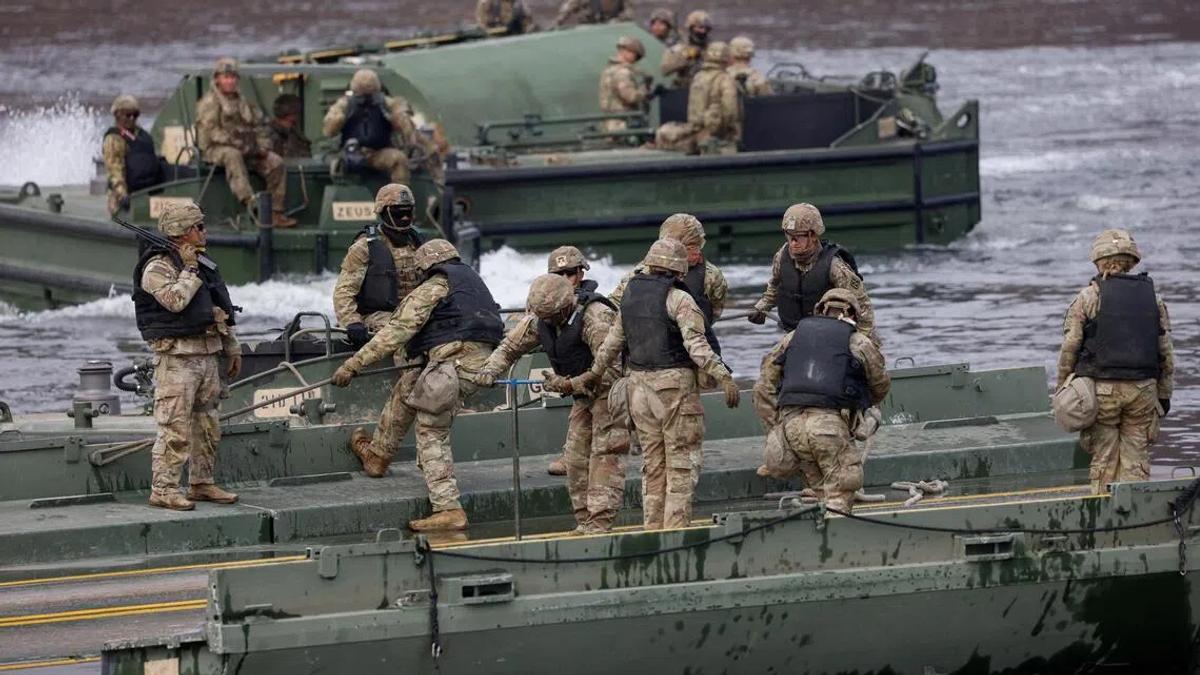
US President Trump announced a substantial reduction in joint military exercises with South Korea, citing high costs and a desire not to provoke North Korea. The annual 'Ulchi Freedom Shield' exercise, which started on August 17, will continue as scheduled but with a reduced scope. The exercise involves 18,000 troops and focuses on modern threats like drones and cyber attacks.
Trump's decision to scale back the exercises is a calculated move to improve relations with North Korean leader Kim Jong Un, with whom he has a 'very good relationship.' The US has a long-standing military alliance with South Korea, with approximately 28,500 troops stationed in the country to bolster its defenses against North Korea. However, Trump has been critical of the alliance, arguing that the US bears a disproportionate share of the costs. By reducing the exercises, Trump aims to demonstrate his commitment to diplomacy and avoid provoking North Korea, which has expanded its nuclear capabilities and strengthened ties with Russia.
The reduction in military exercises may have significant implications for the people of South Korea, who have lived under the threat of North Korean aggression for decades. The exercises are designed to steel South Korean and US forces for defense against a nuclear-armed North Korea, and any reduction in their scope may erode the confidence of the South Korean people in their military's ability to protect them. Furthermore, the move may embolden North Korea to pursue more aggressive actions, potentially destabilizing the region and putting the lives of millions of people at risk.
What Trump and other powerful actors are downplaying is the potential consequences of reducing the military exercises. By scaling back the drills, the US may be creating a power vacuum that could be exploited by North Korea or other regional actors. Additionally, the move may undermine the confidence of other US allies in the region, who may question the reliability of the US as a security partner. The US and South Korean governments are also omitting the fact that the exercises are not just about deterring North Korea but also about maintaining the readiness and interoperability of their forces, which is critical for regional stability.
Readers should watch for the response of North Korea to the reduced military exercises. If North Korea perceives the move as a sign of weakness, it may pursue more aggressive actions, such as missile tests or cyber attacks. Additionally, the reaction of other regional actors, such as China and Japan, will be crucial in determining the implications of the reduced exercises. The US and South Korean governments should also be transparent about the scope and nature of the reduced exercises to avoid creating uncertainty and mistrust among their allies and the public.
Editor's Note: The analysis is based on publicly available information and may not reflect the full complexity of the situation.
Source referenced: STRAITSTIMES
This brief was synthesized by our Editorial Engine and reviewed by The Ground Narrative team.


