TRENDING

Saturday, 17 October 2026
----------------------
6 Jumada Al-Awwal 1448 AH
US President Donald Trump's announcement of a prime-time address to the nation on Thursday, amidst escalating tensions with Iran, has sparked concerns about a potential military conflict. We analyze the strategic motivations behind Trump's move and its implications for regional stability.
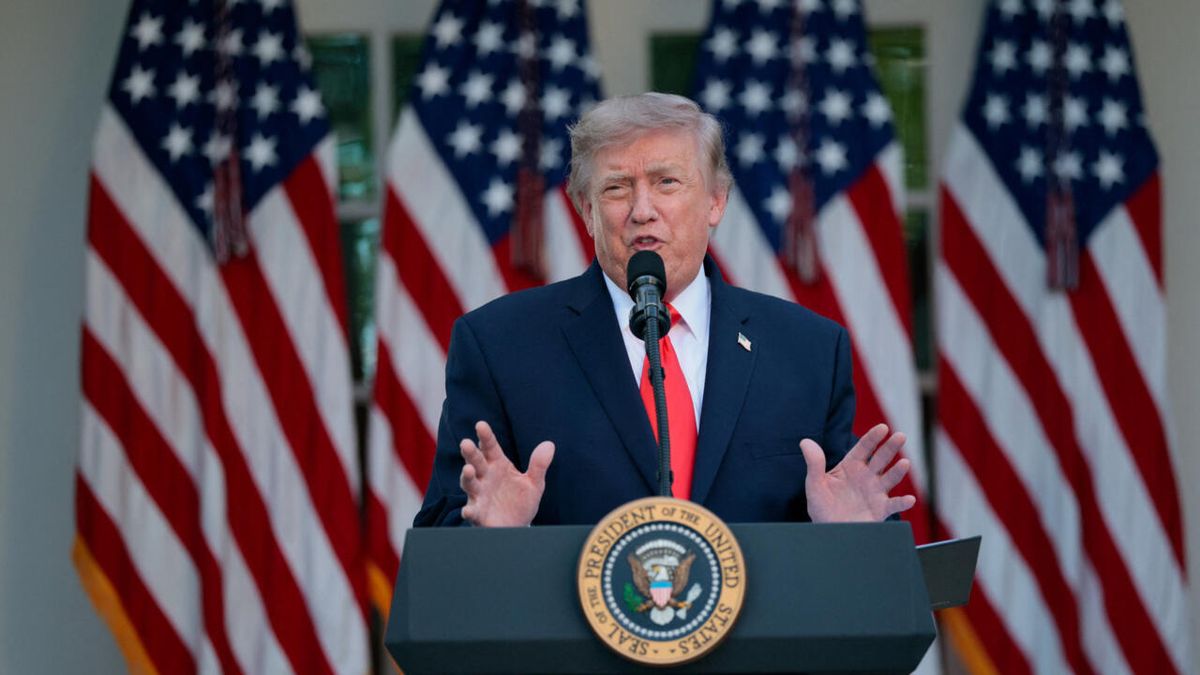
US President Donald Trump's decision to reimpose a naval blockade on Iran and impose a 20% fee on ships transiting the Strait of Hormuz has sent shockwaves through the international community. The announcement comes on the heels of a major flare-up of hostilities with Iran, with Trump's last major televised address to the nation on April 1, justifying the Iran war, still fresh in the minds of the public.
Trump's move can be seen as a calculated attempt to reassert American influence in the region, particularly in the face of growing Iranian assertiveness. The reimposition of the naval blockade and the imposition of a fee on ships transiting the Strait of Hormuz are likely aimed at crippling Iran's economy and limiting its ability to export oil. This, in turn, would undermine Iran's ability to fund its military and proxy forces, thereby reducing its regional influence.
The US-Iran conflict has its roots in the 1979 Iranian Revolution, which saw the overthrow of the US-backed Shah and the establishment of an Islamic republic. Since then, the two countries have been locked in a cycle of hostility, with the US imposing economic sanctions and Iran developing its nuclear program. The current tensions are a direct result of Trump's withdrawal from the Joint Comprehensive Plan of Action (JCPOA) in 2018, which led to a significant escalation of hostilities.
The implications of Trump's move are far-reaching, with potential consequences for regional stability. A military conflict with Iran could draw in other regional players, including Saudi Arabia, the UAE, and Israel, and could have a devastating impact on global oil markets. The imposition of a naval blockade and a fee on ships transiting the Strait of Hormuz could also have a significant impact on global trade, particularly for countries that rely heavily on oil imports.
The future consequences of Trump's move are uncertain, but one thing is clear: the situation is highly volatile. A military conflict with Iran could have far-reaching consequences, including a significant escalation of hostilities in the region and a potential humanitarian crisis. The imposition of a naval blockade and a fee on ships transiting the Strait of Hormuz could also have a significant impact on global trade and the economy.
Trump's announcement of a prime-time address to the nation on Thursday, amidst escalating tensions with Iran, has sparked concerns about a potential military conflict. While the strategic motivations behind Trump's move are unclear, one thing is certain: the situation is highly volatile and requires careful consideration. The international community must remain vigilant and work towards de-escalating tensions and finding a peaceful resolution to the conflict.
Editor's Note: The analysis is based on publicly available information and may not reflect the full range of strategic motivations and implications behind Trump's move.
Source referenced: FRANCE24
This brief was synthesized by our Editorial Engine and reviewed by The Ground Narrative team.