TRENDING

Thursday, 15 October 2026
----------------------
4 Jumada Al-Awwal 1448 AH
US President Donald Trump's deal with Iran could spell trouble for Israeli Prime Minister Benjamin Netanyahu, who needs Trump's support to cling to power ahead of a key election.
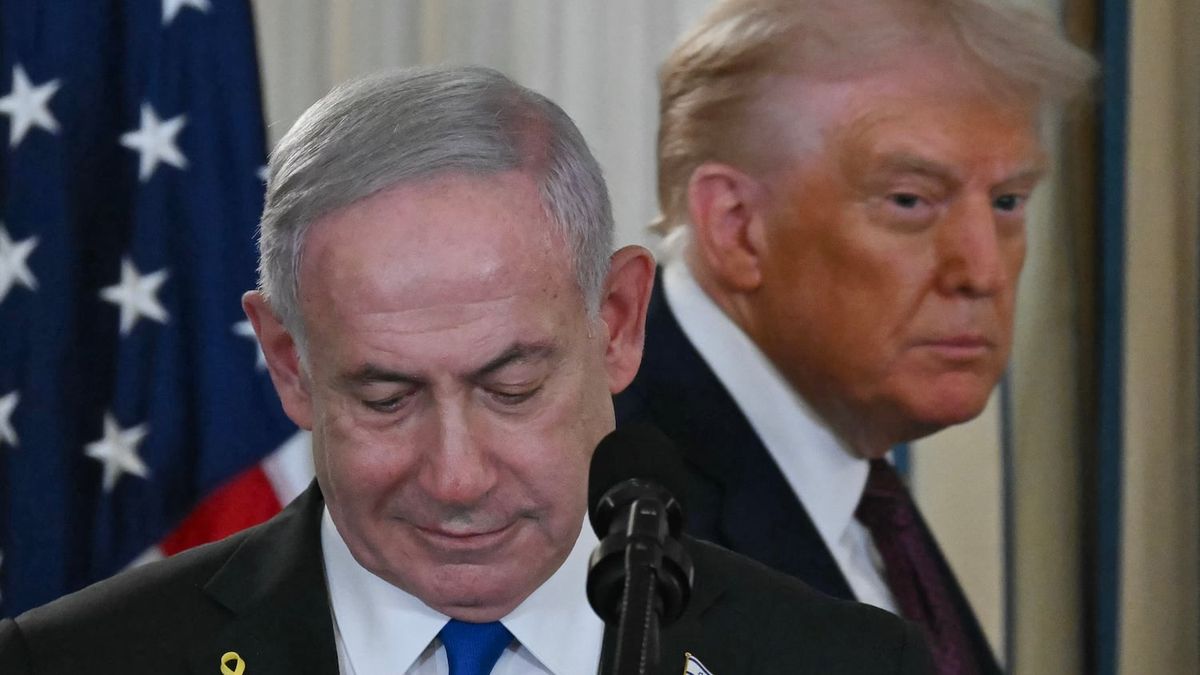
US President Donald Trump's recent comments on Iran have sent shockwaves through the Middle East, particularly in Israel. Trump's statement that Netanyahu "will do whatever I want him to do" on Iran has sparked concerns that the Israeli leader may be beholden to the US president's whims.
Trump's approach to diplomacy is well-documented. He has a history of using threats and bullying tactics to get what he wants from both adversaries and allies. While this approach has yielded some successes, it has also led to failures, such as his inability to pressure Iran into accepting US terms for a deal.
Netanyahu's vulnerabilities are well-known. He has struggled to crush Hezbollah, Hamas, and now Iran, and his inability to do so has made him increasingly reliant on Trump's support. Trump's recognition of Jerusalem as Israel's capital, the move of the US Embassy to Jerusalem, and continued military support have created the image that Netanyahu is an indispensable and unique manager of a strong US-Israeli bond.
The US-Iran negotiations are moving towards an endgame on a memorandum of understanding. Based on what we know, the approach that the administration is adopting will be seen by Netanyahu and his domestic opponents as a lose-lose. The Iranian regime will remain in place, harder-line than its predecessor, and no conditions for regime change will have been laid.
The situation in Lebanon is also likely to end badly for Netanyahu. Hezbollah has not complied with the cease-fire, is not disarming, and is recovering faster and with more capacity than Israel imagined. The Lebanese government is showing more backbone, especially its willingness to meet directly with Israel under Washington's auspices, but it lacks the will and capacity to forcibly disarm Hezbollah.
Trump's leverage over Netanyahu is real, especially as Netanyahu needs Trump's support to cling to power. Trump's recent call to Netanyahu to halt Israeli strikes in the Beirut area is an indication of what may come if Iran and the US reach a deal. If the memorandum of understanding comes to fruition and Iran makes it contingent on a real cease-fire in Lebanon, Trump will not hesitate to force Netanyahu to stand down.
Trump's bullying, threats, and leverage have yielded mixed results. He has not yet produced an Iran deal, he does not have an answer to the future of the highly enriched uranium buried under Iranian rubble, he has given Iran the gift of leverage in the Strait of Hormuz, and his Board of Peace in Gaza has failed thus far to get Hamas to disarm. Pressure is mounting daily in the West Bank, though surprisingly, this does not seem to worry Trump or his peace negotiators.
The situation is complex, and it is difficult to predict what will happen next. However, one thing is clear: Trump's deal with Iran could spell trouble for Netanyahu. The Israeli leader needs Trump's support to cling to power, and if Trump decides to pressure Israel, Netanyahu may be forced to comply. The consequences of this could be far-reaching, with implications for the Middle East and beyond.
Editor's Note: The analysis is based on current events and may be subject to change as new information becomes available.
Source referenced: FOREIGNPOLICY
This brief was synthesized by our Editorial Engine and reviewed by The Ground Narrative team.