TRENDING

Thursday, 15 October 2026
----------------------
4 Jumada Al-Awwal 1448 AH
US President Donald Trump's foreign policy, characterized by a pursuit of quick and decisive victories, has reportedly entered a phase of protracted stalemates across key international conflicts in Iran, Ukraine, and Gaza. This analysis explores the strategic implications of these impasses, highlighting the complexities of global realities against a backdrop of ambitious presidential objectives.
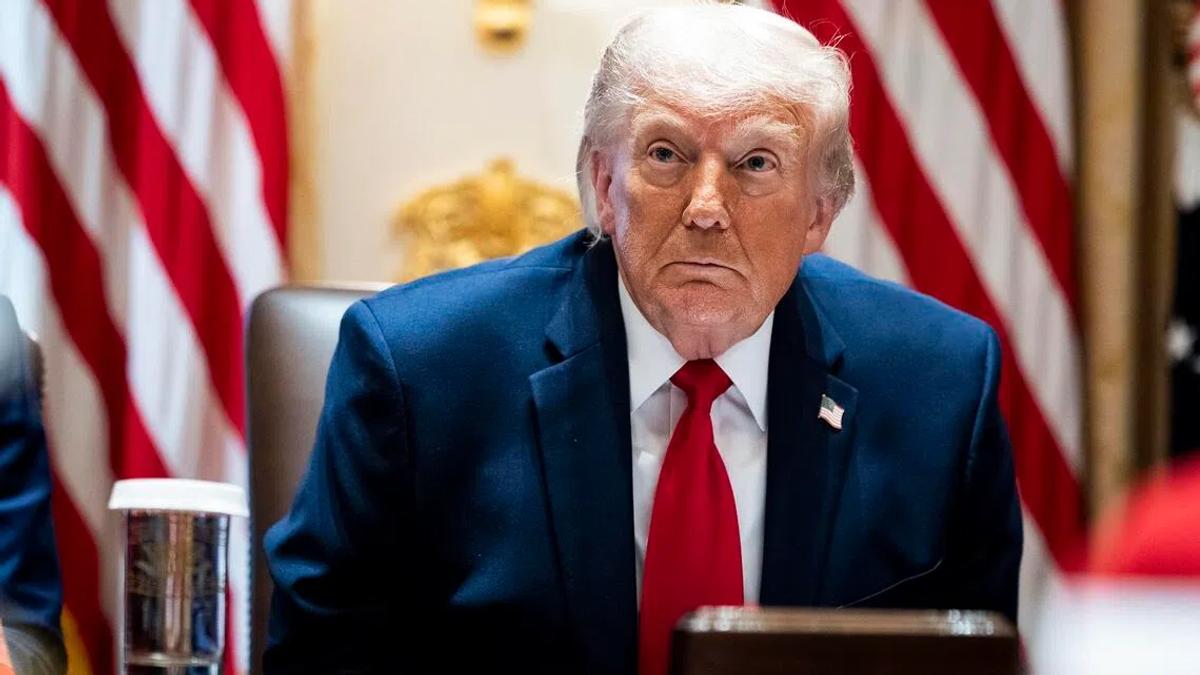
United States President Donald Trump's approach to international affairs, often marked by a preference for swift and conclusive military or diplomatic resolutions, appears to have encountered significant friction, leading to prolonged stalemates in several critical global hotspots. This phase, emerging nearly a year into his current term, challenges the administration's initial successes and underscores the inherent complexities of geopolitical engagement. The current landscape in Iran, Ukraine, and the Gaza Strip reveals the limitations of a strategy focused on rapid outcomes when confronted with deeply entrenched regional dynamics and the resilience of various state and non-state actors.
Following a period of intense military action in early 2026, which saw the US target Iranian nuclear sites, President Trump declared a ceasefire on April 7, 2026. This cessation of combat operations was conditioned on the "COMPLETE, IMMEDIATE, and SAFE OPENING of the Strait of Hormuz." While commerce has reportedly resumed, albeit under a memorandum of understanding still in negotiation, the core issues of Iran's nuclear and missile programs remain unresolved. These programs are now subject to further negotiations, which the US administration insists will be "time limited," likely to 60 days. However, experts on Iran anticipate Tehran will leverage the US's reluctance to re-engage in combat, which is unpopular domestically, to prolong these discussions for months or even years, mirroring past diplomatic strategies. This situation highlights a fundamental challenge: while military strikes can degrade capabilities, they often fail to compel political capitulation or fundamentally alter strategic objectives, leaving the broader problem of Iran's regional posture unaddressed.
The conflict in Ukraine, now in its fifth year, stands as another stark example of a protracted international challenge that has defied quick resolution. President Trump had famously vowed to end the war within 24 hours of taking office. However, sixteen months into his presidency, the conflict persists, with Secretary of State Marco Rubio expressing fatigue over "endless negotiations." Russia, for its part, has reportedly conveyed its desire for a stable, formal diplomatic process, complete with working groups and regular meetings, and has notably requested the appointment of a US ambassador to Moscow, a position vacant for nearly a year. Meanwhile, Ukraine has demonstrated increased capabilities, with long-range drones and missiles striking deep into Russian territory, targeting critical energy sites and weapons production facilities. This empowerment of Ukrainian forces, coupled with significant Russian casualties (estimated at nearly half a million), complicates any immediate peace prospects and suggests a deepening quagmire that neither side appears ready to decisively conclude through negotiation or military means.
In the Gaza Strip, President Trump's efforts to broker a lasting peace following the October 7, 2023, terror attack have also encountered significant obstacles. While a truce was successfully negotiated, leading to the release of all living hostages, the subsequent phases of the plan have largely stalled. Initial ambitions included the disarming of Hamas, the establishment of an international stabilization force, and a comprehensive rebuilding effort to transform Gaza. Eight months after the President's visit to Israel to celebrate the hostage release, Hamas remains armed, reconstruction efforts are minimal, and Palestinians continue to live in dire conditions amidst uncleared rubble. Furthermore, Israeli Prime Minister Benjamin Netanyahu recently announced an expansion of Israeli military control to approximately 70 percent of the enclave, and daily bombardments persist. The proposed new Palestinian administration and a US-backed "Board of Peace" intended to oversee rebuilding and investment have yet to materialize, indicating a profound failure in post-conflict stabilization and political transition.
The recurring theme across these interventions points to a potential disconnect between ambitious presidential objectives and the complex realities of international relations. Experts, such as Richard Fontaine of the Center for a New American Security, suggest that while the US excels at targeted military strikes, controlling political outcomes in nations like Iran, Russia, or within the Israeli-Palestinian conflict proves far more challenging. This perspective highlights a fundamental misunderstanding of American power's limitations in shaping internal political events and the necessity of sustained diplomatic engagement and follow-through, rather than relying solely on dramatic announcements or initial military successes. The stalemates underscore the resilience of local actors, the deep historical roots of these conflicts, and the difficulty of imposing external solutions without long-term commitment and nuanced understanding. These ongoing impasses risk prolonged regional instability, humanitarian crises, and a potential erosion of US influence if a more adaptive and sustained foreign policy approach is not adopted.
Source referenced: STRAITSTIMES
This brief was synthesized by our Editorial Engine and reviewed by The Ground Narrative team.


