TRENDING

Tuesday, 27 October 2026
----------------------
16 Jumada Al-Awwal 1448 AH
The International Criminal Court faces unprecedented challenges, but the fight for international justice continues, with new avenues emerging for accountability and a renewed commitment from middle powers.
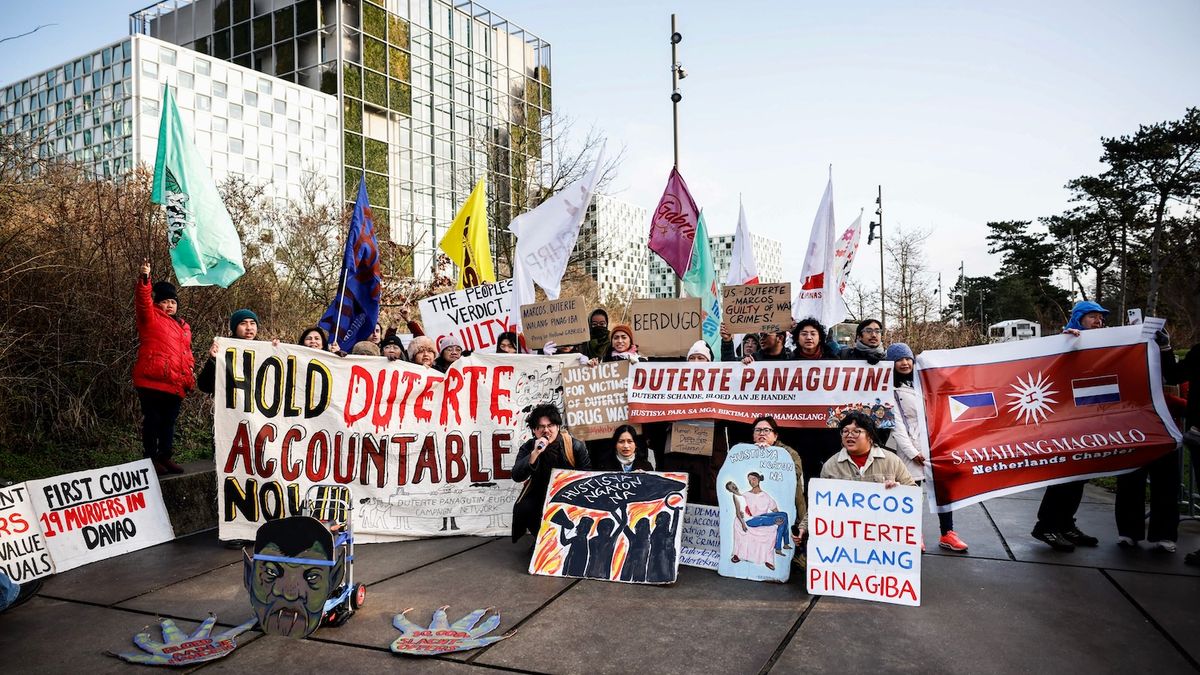
The International Criminal Court (ICC) is facing a deepening crisis, with former ICC prosecutor Fatou Bensouda warning of a "deep erosion of international justice" taking place. The court's chief prosecutor has been removed over sexual misconduct allegations, and many ICC judges and officials have been sanctioned by Russia and the United States. The ICC has long been criticized for doing too little too slowly, picking on the weak and giving a pass to the powerful.
The struggle for international justice dates back to the Nuremberg trials after World War II, where officials who committed grave crimes against civilians while in power were held accountable. The Argentine example in the 1980s, where a newly elected civilian government documented and prosecuted military commanders for human rights abuses, inspired similar efforts in Latin America and beyond.
In 1998, 148 governments met in Rome to establish the ICC, with 120 governments supporting the treaty and 21 abstaining. The United States, China, and Russia ultimately opposed the treaty. The ICC seeks accountability for the most serious crimes, but its effectiveness has been hindered by disinformation, polarization, and repeated vetoes by permanent members of the Security Council.
Despite the challenges facing the ICC, the movement for international justice has made significant progress in recent years. Governments have turned to the International Court of Justice (ICJ) to address international crimes, with cases pending against Myanmar, Syria, and Israel. The ICJ has expanded the opportunity for more litigation, invoking the principle of erga omnes partes to hold that any state party to the Genocide Convention may institute court proceedings against another state party.
The push for accountability is not limited to the ICC. Regional jurisdictions and domestic prosecutions are increasingly being used to hold perpetrators of international crimes accountable. Courts in Austria, France, Germany, the Netherlands, and Sweden have charged and/or convicted Assad regime and allied perpetrators of crimes in Syria. Authorities at the domestic level are expanding efforts to prosecute and try perpetrators of international crimes.
The struggle for international justice is far from over. Despite the challenges facing the ICC, new avenues for accountability are emerging, and middle powers are renewing their commitment to the rule of law. The fight for international justice continues, and it is essential to defend the ICC while exploring new ways to hold the powerful accountable for their crimes.
Editor's Note: While the ICC faces significant challenges, new avenues for accountability are emerging, and middle powers are renewing their commitment to the rule of law.
Source referenced: FOREIGNPOLICY
This brief was synthesized by our Editorial Engine and reviewed by The Ground Narrative team.