TRENDING

Tuesday, 20 October 2026
----------------------
9 Jumada Al-Awwal 1448 AH
The attempted monetization of the Strait of Hormuz by Iran, implicitly endorsed by the United States, may signal the end of the principle of freedom of navigation, a core interest of U.S. foreign policy. This development has far-reaching implications for the global commons, including the seas, space, and the Arctic.
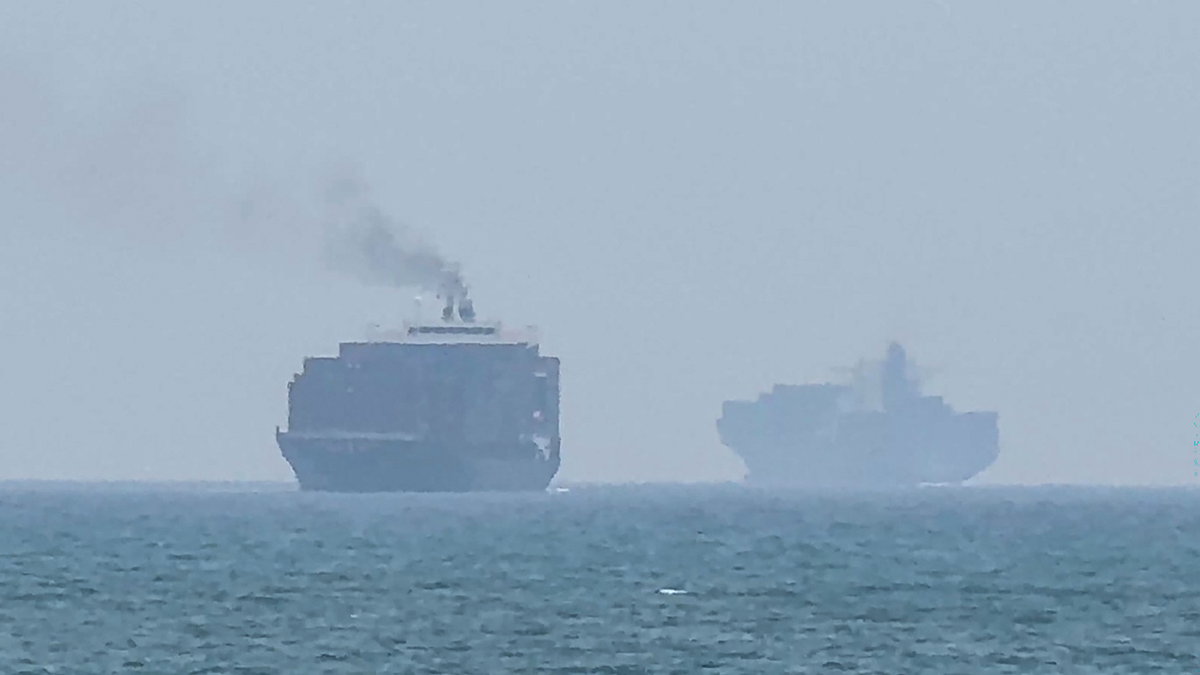
The Strait of Hormuz, a critical waterway connecting the Persian Gulf to the Gulf of Oman, has long been a symbol of the principle of freedom of navigation. This principle, enshrined in the U.N. Convention on the Law of the Sea, has been a cornerstone of U.S. foreign policy since the early 19th century. However, the recent attempts by Iran to monetize the strait, implicitly endorsed by the United States, may signal the end of this era.
The Memorandum of Understanding (MOU) between the United States and Iran, signed in October 2023, is a prime example of a flawed peace agreement. The document's imprecise language and ambiguous provisions have created a power vacuum, allowing Iran to assert its claims to control the strait. The MOU's failure to codify the principle of freedom of navigation has emboldened Iran to pursue its own interests, threatening the stability of the region.
The attempted monetization of the Strait of Hormuz is not an isolated incident. It is part of a broader trend of zero-sum strategic competition, where nations are increasingly prioritizing their own interests over the principles of international law. This trend has far-reaching implications for the global commons, including the seas, space, and the Arctic.
The Strait of Hormuz is not the only choke point in the world. Other critical waterways, such as the Strait of Malacca and the Bab el-Mandeb, are also vulnerable to similar attempts at monetization. The implications of this trend are dire, as it threatens to undermine the principle of freedom of navigation and create a new era of choke points.
The global commons is not limited to the seas. Space is also becoming increasingly contested, with nations competing for resources and territory. The lack of international law and rules governing space activities has created a power vacuum, allowing private companies to pursue their own interests without regard for the principles of international law.
The Arctic is another critical region where the global commons is at risk. The competition for resources and territory in the Arctic is heating up, with nations such as the United States, China, and Russia vying for influence. The implications of this trend are far-reaching, as it threatens to undermine the principles of international law and create a new era of competition in the Arctic.
The attempted monetization of the Strait of Hormuz by Iran, implicitly endorsed by the United States, is a symptom of a broader trend of zero-sum strategic competition. This trend threatens to undermine the principles of international law and create a new era of choke points, competition, and conflict in the global commons. It is imperative that nations prioritize the principles of international law and work towards a more cooperative and peaceful resolution of conflicts in the global commons.
1. The United States and other nations should prioritize the principle of freedom of navigation and work towards a more cooperative and peaceful resolution of conflicts in the global commons.
2. The international community should establish clear rules and regulations governing the use of space and the Arctic.
3. Nations should prioritize diplomacy and cooperation over competition and conflict in the global commons.
4. The global community should work towards a more equitable and sustainable distribution of resources and territory in the global commons.
Editor's Note: The analysis is based on publicly available information and may not reflect the full range of perspectives and opinions on the issue.
Source referenced: FOREIGNPOLICY
This brief was synthesized by our Editorial Engine and reviewed by The Ground Narrative team.


