TRENDING

Sunday, 20 September 2026
----------------------
9 Rabi' Al-Thani 1448 AH
A recent high-level discussion between the EU and Israel highlights Europe's complex position on Gaza recovery, balancing humanitarian aid with internal political divisions and Israel's security demands.
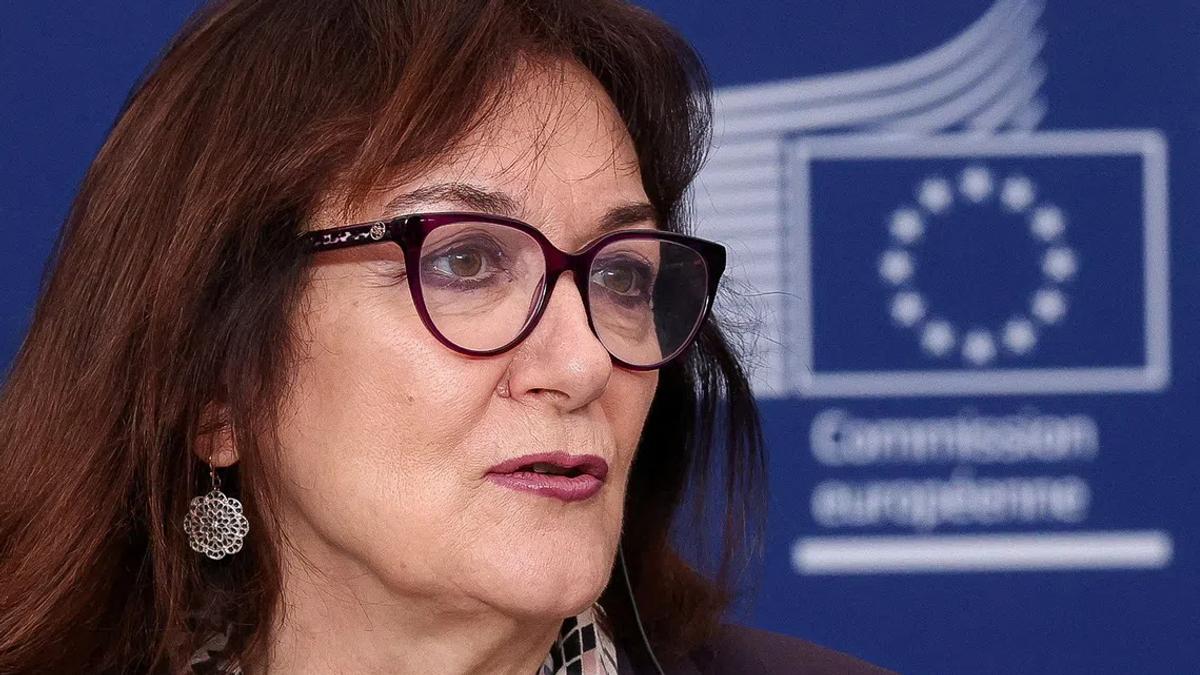
European Commissioner for the Mediterranean, Dubravka Suica, recently engaged in discussions with Israeli Foreign Minister Gideon Saar, focusing on the European Union's relationship with Israel, regional stability, and the urgent need for Gaza's early recovery. This exchange follows the EU's launch of an initiative to fund Gaza's reconstruction, aiming to restore essential services and infrastructure. The conversation also touched upon the necessity of a 'reformed and functioning Palestinian Authority,' a recurring condition in international discourse surrounding the Palestinian territories.
The EU's engagement with Israel is a delicate balancing act, revealing the structural forces that often paralyze its foreign policy. On one hand, the EU, as a significant economic and political bloc, seeks to project influence and uphold international law, evidenced by its criticisms of Israel's conduct in Gaza and West Bank settlement expansion. On the other, its 27 member states hold diverse views, ranging from staunch support for Israel to strong condemnation of its actions. This internal division significantly dilutes the EU's collective leverage, allowing Israel to navigate diplomatic pressures with a degree of strategic confidence. Israel, in turn, frames its actions through the lens of security and self-defense, often pushing back against criticism, as demonstrated by Foreign Minister Saar's previous severing of contact with the EU's foreign policy chief over perceived comparisons to apartheid. The EU's focus on 'early recovery' and a 'reformed PA' allows it to address the symptoms of conflict through aid, while implicitly shifting the burden of political reform onto the Palestinian side, rather than directly challenging the underlying power structures of occupation and blockade.
The primary human cost of these high-level diplomatic exchanges falls squarely on the shoulders of the Palestinian population in Gaza and the West Bank. For Gazans, 'early recovery' means living amidst the rubble of conflict, dependent on external aid for basic necessities like water, electricity, and shelter. Their lives are dictated by the pace of international funding and the political will of distant actors. In the West Bank, the continued expansion of Israeli settlements, widely deemed illegal under international law, directly impacts Palestinian communities through land confiscation, displacement, and the fragmentation of their territory, making the prospect of a viable independent state increasingly remote. The European taxpayer also bears a cost, funding recovery efforts that, without a fundamental political resolution, risk becoming a recurring expense for managing a perpetually unstable situation.
What is conspicuously downplayed or omitted in official statements is the fundamental political deadlock that underpins the need for 'early recovery' in the first place. The EU's emphasis on humanitarian aid and a 'reformed Palestinian Authority' sidesteps the core issues of occupation, blockade, and the right to self-determination. By focusing on *how* to rebuild Gaza, rather than *why* it was destroyed and *how to prevent future destruction*, powerful actors avoid confronting the political mechanisms that perpetuate the cycle of violence and devastation. The division within the EU itself is also often glossed over; while publicly presenting a united front for aid, the deep disagreements among member states prevent the bloc from adopting a truly impactful, unified stance that could exert meaningful pressure on Israel to alter policies like settlement expansion or the Gaza blockade. This allows the status quo, however unsustainable, to persist.
Observers should closely watch several key indicators. Firstly, the actual progress and impact of the EU's early recovery projects in Gaza will reveal whether aid translates into genuine, sustainable improvement for the population or merely serves as a temporary stopgap. Secondly, the internal dynamics within the EU regarding its Israel policy will be crucial. Will the divisions deepen, further weakening its diplomatic posture, or will a more unified approach emerge? Thirdly, the rhetoric and actions surrounding the 'reformed Palestinian Authority' will be important. Will this reform be genuinely empowering for Palestinians, or will it primarily serve external security interests? Finally, any shifts in Israel's settlement policy or its approach to the Gaza blockade will be critical, as these are the underlying structural issues that determine the long-term viability of peace and the human cost on the ground.
Source referenced: STRAITSTIMES
This brief was synthesized by our Editorial Engine and reviewed by The Ground Narrative team.


