TRENDING

Wednesday, 4 November 2026
----------------------
24 Jumada Al-Awwal 1448 AH
Beijing is quietly steering a diplomatic path that leaves President Trump without the naval backup he hoped for. Meanwhile, ordinary people in Saudi Arabia, Yemen and Iran bear the brunt of a conflict that powers in Washington and Beijing treat as a bargaining chip.
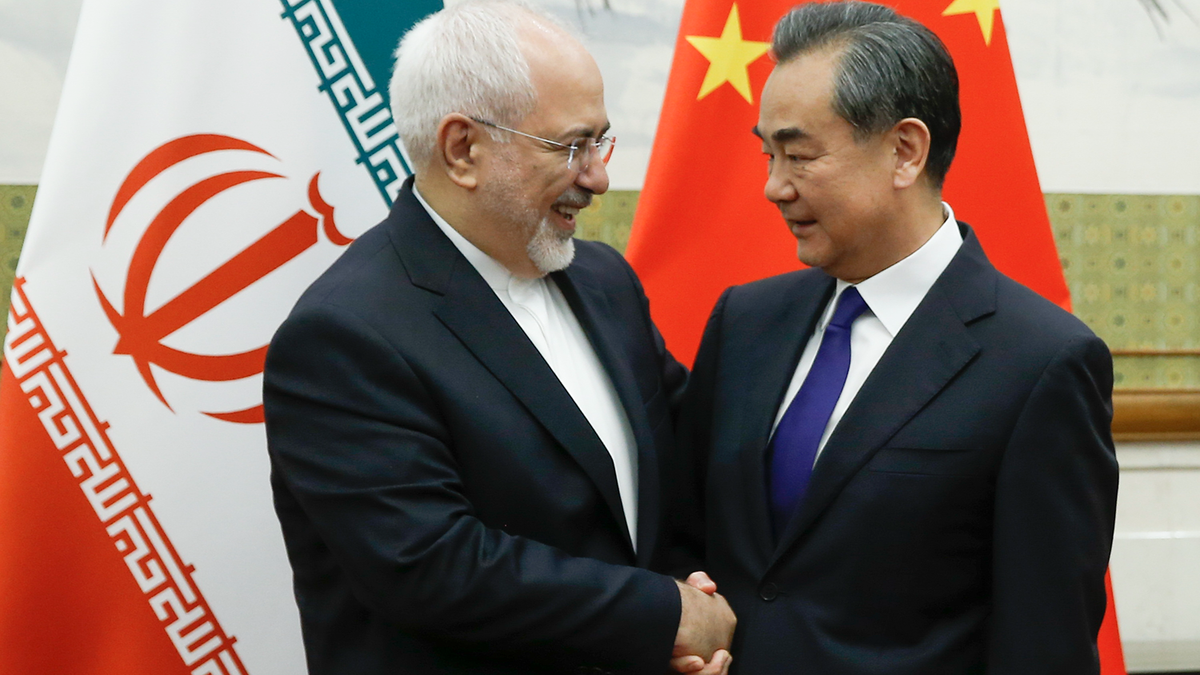
In early October 2026, Houthi missiles struck Riyadh’s main international airport, killing 13 and injuring dozens. Within hours, Iranian Foreign Minister Abbas Araghchi offered to mediate between Tehran‑backed Houthis and Saudi Arabia. Chinese state media amplified the proposal, while China declined President Donald Trump's earlier request to dispatch warships to protect Gulf shipping lanes. The episode highlights Beijing’s selective engagement in a war that the United States is struggling to contain.
China’s approach blends long‑term strategic ambition with short‑term economic pragmatism. Historically, Beijing has advocated for a Middle East that can secure its own waterways, a stance first codified in a 1981 Chinese scholarly paper that urged strengthening Iran’s Gulf position to curb U.S. oil access. During the 1980‑88 Iran‑Iraq war, senior Chinese officials repeatedly called for the withdrawal of American forces, and later protested the U.S. intervention in Kuwait in 1990. These positions laid the groundwork for today’s “regional self‑reliance” narrative, now formalised in the Global Security Initiative.
At the same time, China’s energy mix has shifted. While petroleum still fuels 18 % of its primary energy consumption, coal accounts for roughly half, and domestic production has risen despite falling usage. The country’s recent discovery of 225 new oil and gas fields (2021‑2025) cushions it against short‑term oil price spikes. Consequently, Beijing can afford to let the Gulf’s oil market wobble without jeopardising its own energy security, and even welcomes modest price gains that ease deflationary pressures at home.
For the United States, the war represents a test of credibility. President Trump has repeatedly framed the conflict as a failure of American resolve, demanding Chinese naval support to demonstrate a united front. Yet the U.S. Navy has already scaled back its presence in the Strait of Hormuz, and congressional appetite for a new Gulf deployment is low. The lack of leverage over China—which faces little direct pressure from Washington on its Iran policy—means the Trump administration cannot compel Beijing to act as a proxy.
Finally, diplomatic leverage matters. Beijing uses its relationship with Tehran as a bargaining chip in broader U.S.–China negotiations, recalling the 1997 cessation of Chinese nuclear cooperation with Iran that coincided with improved U.S.–China ties ahead of China’s WTO accession. By positioning itself as a neutral mediator, China hopes to win goodwill from Gulf monarchies that are increasingly frustrated by Iran’s war capabilities, potentially opening future arms‑sale markets that have so far excluded Chinese weapons.
The airport attack disrupted travel for millions, halted tourism revenue, and forced families to navigate a shattered transport network. Hospital wards in Riyadh reported a surge in trauma cases, stretching already‑stretched medical staff.
Houthi rockets, supplied in part by Iranian logistics networks, have intensified strikes on civilian infrastructure in Yemen. Power outages, contaminated water supplies and food shortages have pushed an already fragile humanitarian situation toward famine.
Sanctions‑driven economic strain in Iran has been exacerbated by the war’s indirect effects on oil exports. Factory workers in Ahvaz and Tehran face reduced wages, while families grapple with inflation in basic goods.
Oil‑exporting Gulf states depend on uninterrupted shipping through the Strait of Hormuz. Even brief closures trigger price spikes that ripple through global markets, raising living costs for ordinary citizens across the region and beyond.
Chinese officials publicly champion a “multipolar world” where regional powers shoulder security responsibilities. What they omit is the calculated patience behind that rhetoric. By avoiding direct confrontation with the United States, Beijing preserves its strategic flexibility while quietly expanding diplomatic influence in Tehran and, by extension, the broader Gulf.
Another hidden layer is the domestic narrative in China. State media’s focus on Iran’s mediation offer serves to portray Beijing as a peace‑builder, diverting attention from its own contentious actions in the South China Sea and its growing footprint in Africa and Latin America. This image‑crafting helps the Chinese Communist Party maintain internal legitimacy amid economic headwinds.
Finally, the U.S. administration’s public insistence on Chinese naval support masks a deeper inability to mobilise its own forces. By framing the lack of Chinese assistance as a diplomatic failure, the Trump administration sidesteps scrutiny over its own strategic fatigue in the Gulf, a point that critics in Washington and abroad are quick to highlight.
- Naval Deployments: Monitor any shift in U.S. Navy ship movements through the Strait of Hormuz. A sudden increase could signal a renewed American commitment, while continued withdrawal would reinforce Beijing’s diplomatic leverage.
- Chinese Arms Outreach: Watch for announcements from Chinese defense firms targeting Gulf customers. Even low‑key sales of drones or surveillance equipment would indicate a deepening security relationship.
- Iran‑Saudi Negotiations: Track the language of any cease‑fire talks mediated by Tehran. Concessions that favour Iranian strategic depth could embolden Beijing’s vision of a Gulf less dependent on U.S. guarantees.
- Energy Prices: Keep an eye on global oil benchmarks. A sustained price rise could pressure the United States to reconsider its Gulf posture, while a drop may embolden Beijing to maintain its current level of engagement.
- Domestic Chinese Discourse: Analyze Chinese state media for shifts in tone regarding the Middle East. A move from neutral mediation to overt support for Iran would signal a recalibration of Beijing’s long‑term regional strategy.
By connecting these dots, ordinary readers can see how a single diplomatic decision—China’s refusal to send ships—reverberates through global power structures, while ordinary people on the ground bear the real consequences.
Beijing balances long‑term goals of a self‑reliant Gulf with short‑term economic stability, and it lacks direct pressure from the United States to intervene on Iran’s behalf.
Civilians face airport closures, disrupted medical services, food shortages in Yemen, wage cuts in Iran, and higher living costs across Gulf economies due to oil price volatility.
Source referenced: FOREIGNPOLICY
This brief was synthesized by our Editorial Engine and reviewed by The Ground Narrative team.