TRENDING

Wednesday, 4 November 2026
----------------------
24 Jumada Al-Awwal 1448 AH
The Justice Department has widened its probe into Alaska’s 2026 Senate contest, targeting lawyers and candidates over a disputed “sham” candidacy. The move reveals deep political calculations and puts ordinary Alaskans at the center of a national power struggle.
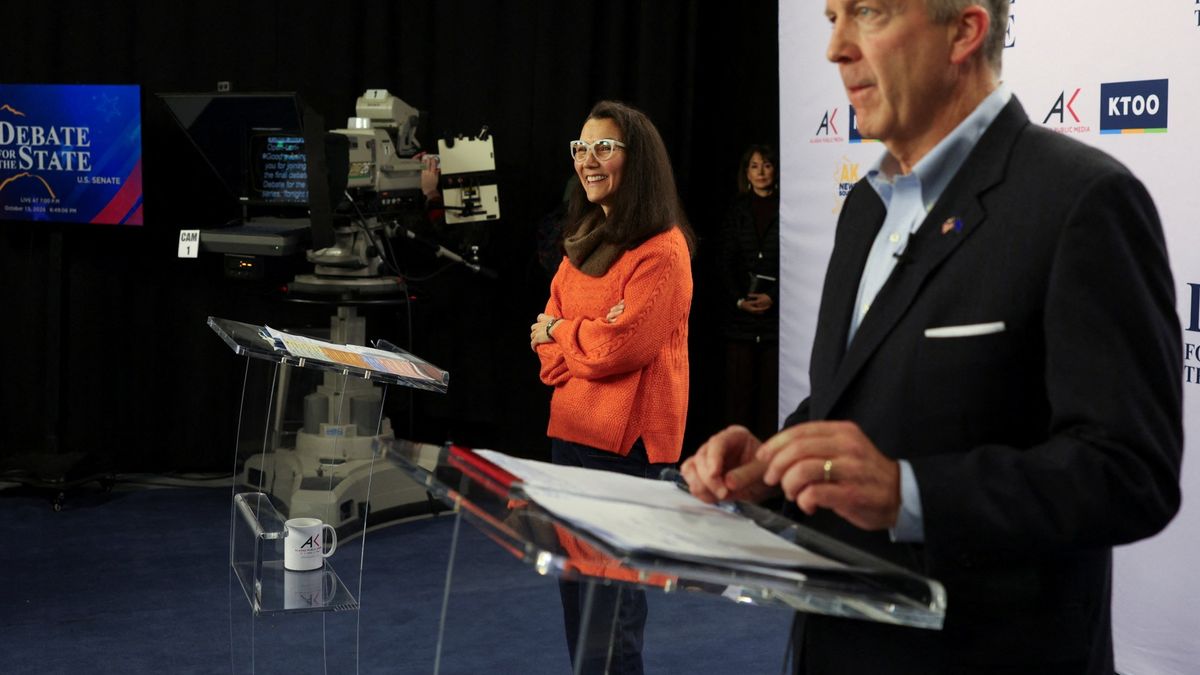
The Department of Justice announced on Tuesday that it is expanding a criminal investigation into the 2026 Alaska Senate election. Federal prosecutors sent "target" letters to more than a hundred individuals, including high‑profile Democratic attorney Marc Elias, warning that they could face indictment. The probe centers on allegations that the Democratic Party fielded a nominal candidate named Dan Sullivan to confuse voters and tip the race in favor of incumbent Republican Dan Sullivan.
The Alaska contest is a microcosm of a broader battle for control of the U.S. Senate, where a single seat can determine which party holds the majority. Donald Trump’s administration has a vested interest in preserving a Republican‑leaning chamber, as it provides legislative cover for executive initiatives and a platform for future electoral bids. By framing the election as a case of deliberate voter deception, the DOJ creates a narrative that justifies aggressive legal action while signaling to party operatives that electoral manipulation will be met with federal scrutiny.
The use of "target" letters is a strategic lever. Unlike a public indictment, a target letter quietly alerts recipients that prosecutors have gathered enough evidence to consider charges, prompting pre‑emptive legal defenses and, crucially, public statements that can sway opinion. For a high‑profile lawyer like Marc Elias, the letter serves both as a warning and a media hook, forcing the Democratic establishment to defend its legitimacy on the campaign trail.
Beyond the immediate legal pressure, the investigation taps into the political survival calculus of Alaska’s electorate. The state’s unique blend of libertarian‑leaning voters, Indigenous communities, and a resource‑dependent economy makes it a battleground where national parties invest heavily. A Senate seat that flips could alter committee assignments, affect federal funding for oil and gas projects, and shift the balance on contentious issues such as climate policy and Arctic security. The DOJ’s involvement thus amplifies the stakes for both parties, turning a regional race into a national theater of power.
Alaskan voters, especially those in remote villages, face the practical challenge of distinguishing between two candidates sharing the same name on a paper ballot. In a state where many communities rely on limited polling stations and where literacy rates vary, the risk of accidental mis‑vote is high. Confusion erodes confidence in the electoral process, potentially discouraging turnout in future elections.
The investigation has forced campaign staff on both sides to divert resources from voter outreach to legal defense. Small‑scale political operatives, many of whom are recent graduates or part‑time workers, now confront the prospect of criminal charges, legal fees, and reputational damage. Local journalists covering the race also find themselves under pressure to balance reporting on the alleged fraud with the risk of being labeled partisan by federal authorities.
Alaska’s Indigenous populations, who historically experience lower voter participation due to logistical barriers, are disproportionately affected. The controversy fuels skepticism toward federal institutions that have a mixed record on tribal sovereignty. If the DOJ proceeds with indictments, it could deepen mistrust and hinder collaborative governance on issues like land rights and resource extraction.
While the Justice Department frames the probe as a neutral enforcement of election law, critics point out the timing—issued on Election Day and under a president known for politicizing federal agencies. The expansion of the investigation after a failed attempt to block certification suggests a shift from procedural challenge to punitive action, raising questions about the department’s autonomy from the executive branch.
Public statements from the Trump administration emphasize a “sham candidate,” yet they omit discussion of how national party operatives may have coordinated messaging, fundraising, and voter outreach that amplified the confusion. The focus on a single alleged fraudster distracts from the systemic incentives that encourage parties to field multiple candidates, a practice that can be leveraged for strategic gain in close races.
Mainstream coverage has largely echoed the administration’s narrative, highlighting the “sham” angle without probing deeper into the legal standards for ballot manipulation. By presenting the issue as a binary case of fraud versus innocence, the media sidesteps the broader conversation about election integrity, ballot design, and the adequacy of safeguards in sparsely populated jurisdictions.
The next weeks will reveal whether the DOJ moves from target letters to formal charges, a step that could trigger a cascade of appeals and potentially delay Senate seating. Observers should monitor court filings for evidence of political directives, as well as statements from the Federal Election Commission regarding ballot design reforms. The outcome of the Alaska race will also be a bellwether for the 2028 election cycle, indicating how far the current administration is willing to push legal mechanisms to secure partisan advantage. Finally, watch for grassroots responses from Alaskan voters and Indigenous groups, whose mobilization could reshape future campaign strategies in the state.
Prosecutors say they have evidence linking the attorney to a scheme that placed a nominal candidate to confuse voters. Critics argue the timing and political context suggest a broader strategy to pressure the opposing party.
If voters mistake the sham candidate for the incumbent, votes could be split or miscast, potentially handing the seat to the rival party. In a close race, even a small number of mis‑votes can swing the result.
Editor's Note: Analysis based on publicly available reports and standard political risk assessment.
Source referenced: ALJAZEERA
This brief was synthesized by our Editorial Engine and reviewed by The Ground Narrative team.