TRENDING

Monday, 5 October 2026
----------------------
24 Rabi' Al-Thani 1448 AH
Nigel Farage's self-triggered by-election victory in Clacton reveals more about public disillusionment than political strength, as a satirical candidate secured a significant vote share. This event highlights the growing chasm between traditional governance and a public increasingly skeptical of established power.
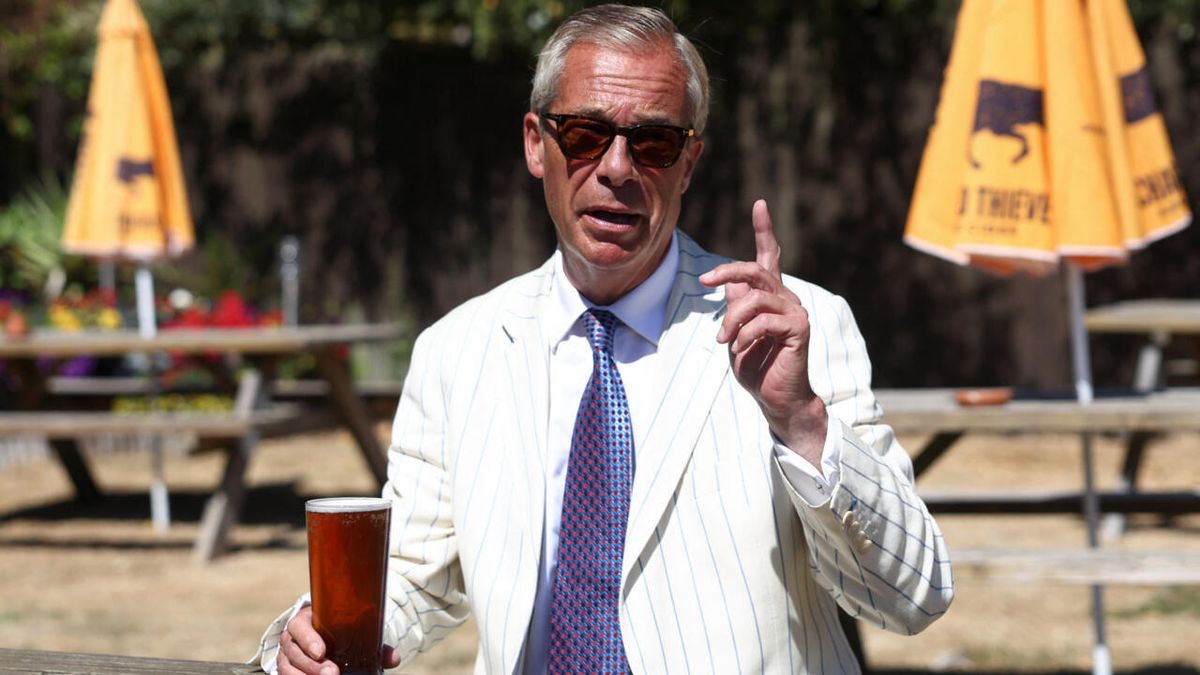
Nigel Farage, leader of the anti-immigrant Reform UK party, successfully regained his parliamentary seat in the seaside town of Clacton, UK. This by-election was controversially triggered by Farage's own resignation, a move he framed as seeking a fresh mandate against an 'establishment' bent on discrediting him over allegations of undeclared financial gifts. With major parties withdrawing their candidates, the contest saw Farage secure 62.8% of the vote against his primary challenger, the satirical figure Count Binface, who garnered a notable 26.7%.
Farage's decision to force a by-election was a calculated power play designed to re-legitimize his position and deflect from the ongoing parliamentary investigation into a £5 million gift from a cryptocurrency billionaire. By framing the contest as 'the people versus the establishment,' he sought to transform a personal accountability issue into a broader political crusade. This tactic, while securing his seat, also exposed the fragility of traditional political norms. The withdrawal of mainstream parties, intended to highlight the stunt, inadvertently amplified Farage's narrative by creating a vacuum that a protest vote could fill. The significant support for Count Binface, a comedian in a rubbish bin costume, underscores a deep-seated public frustration with the perceived theatricality and self-interest of contemporary politics. It signals a segment of the electorate willing to use their vote not to endorse a policy, but to register a profound dissatisfaction with the available choices and the integrity of the process itself. Meanwhile, the governing Labour Party, under Prime Minister Andy Burnham, appears to be consolidating its position, benefiting from a 'bounce' in ratings that suggests a shift in the broader political landscape, potentially leaving Reform UK to compete for a fragmented right-wing vote.
The most immediate human cost of this political maneuver falls on the voters of Clacton and, by extension, the broader British public. A by-election, triggered by a politician's personal circumstances rather than a genuine need for representation, diverts significant public funds and political attention. More critically, it further erodes public trust in democratic institutions. When a serious parliamentary contest devolves into what many perceive as a 'waste of time and money,' and a satirical candidate becomes the main alternative, it fosters a sense of cynicism and disengagement. This atmosphere makes it harder for citizens to believe their votes truly matter in shaping substantive policy or holding power accountable. The focus shifts from the real-world issues affecting communities—like economic stability, public services, or immigration policy—to the performance art of political survival, leaving the actual human consequences of governance decisions unaddressed or overshadowed.
What is often downplayed or omitted in the official narratives surrounding such events is the systemic normalization of performative politics. Farage's by-election was not merely a unique stunt but a symptom of a broader trend where political figures increasingly leverage media attention, personal narratives, and direct appeals to a disaffected base to circumvent traditional accountability mechanisms. Governments and political establishments, while publicly decrying such tactics, often struggle to counter them effectively, sometimes even inadvertently validating them through their reactions. The 'establishment's' decision to pull out of the race, for instance, while intended to expose Farage's self-serving motives, could also be interpreted by some as a failure to engage directly with the public's frustrations, thereby reinforcing the 'people versus elites' narrative that Farage champions. This dynamic chips away at the foundational principles of parliamentary democracy, where serious debate and institutional oversight are meant to prevail over personality-driven theatrics.
Readers should closely monitor several key developments. Firstly, the outcome of the parliamentary investigation into Farage's undeclared financial gifts will be critical. If found in breach of rules, he could face suspension, potentially triggering *another* by-election where major parties might field candidates, offering a more traditional contest. Secondly, observe Reform UK's ability to maintain its momentum in the face of a resurgent Labour Party and competition from other right-wing factions like the Conservatives and Restore Britain. The by-election, while a personal victory for Farage, showed signs of slowing Reform's national appeal. Finally, watch for the broader impact on UK political culture. Will this event further entrench the appeal of populist, anti-establishment figures, or will it serve as a wake-up call for mainstream parties to re-engage with a disillusioned electorate on substantive issues? The next national election, expected in three years, will be the ultimate test of these shifting power dynamics.
Source referenced: FRANCE24
This brief was synthesized by our Editorial Engine and reviewed by The Ground Narrative team.