TRENDING

Friday, 2 October 2026
----------------------
21 Rabi' Al-Thani 1448 AH
China's embassy in Japan has sparked a diplomatic row by stating that Taiwan is not a country and has no 'national dignity'. The move has significant implications for the region's delicate balance of power. As tensions escalate, ordinary citizens on both sides of the strait are caught in the middle, facing an uncertain future.
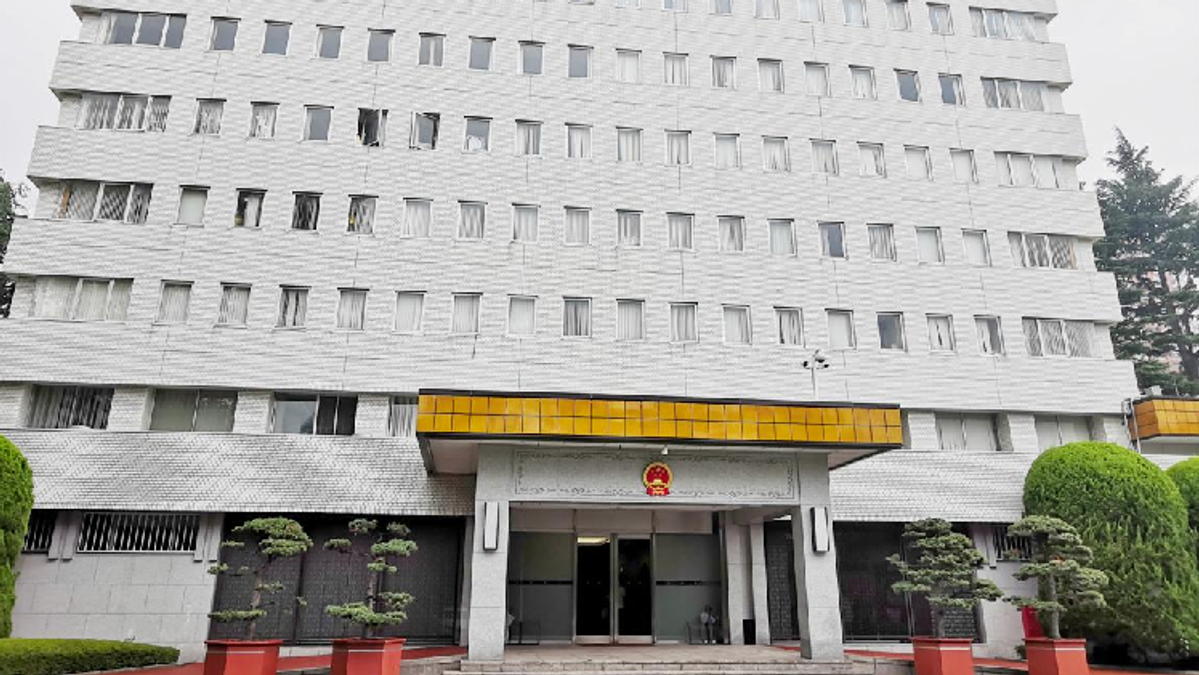
China's embassy in Japan has ignited a diplomatic firestorm by asserting that Taiwan is not a sovereign nation and therefore lacks 'national dignity'. This statement was made in response to complaints from Taiwanese officials who felt their 'national dignity' was being deliberately downgraded at an atomic bombing memorial ceremony in Japan. The Chinese embassy spokesperson reiterated that there is only one China, and Taiwan is an inalienable part of its territory.
The statement by China's embassy in Japan reflects the complex power dynamics at play in the region. China's 'One China' policy has been a cornerstone of its foreign policy for decades, with the government in Beijing considering Taiwan a renegade province that must eventually be reunited with the mainland. The United States, on the other hand, has a long-standing commitment to Taiwan's defense, as outlined in the Taiwan Relations Act. This has created a delicate balance of power in the region, with both China and the US vying for influence. The recent statement by China's embassy in Japan is a clear attempt to assert its dominance and undermine Taiwan's claims to sovereignty.
The people of Taiwan are the ones who bear the human cost of this diplomatic row. As tensions between China and Taiwan escalate, the island's residents face an uncertain future. The threat of military action by China is ever-present, and the economic consequences of being cut off from the mainland could be severe. The Taiwanese people are also subject to a barrage of propaganda from both sides, making it difficult for them to discern fact from fiction. The international community's recognition of Taiwan as a sovereign state is also crucial for the island's residents, as it affects their ability to participate in global organizations and forge diplomatic relationships with other countries.
What China is downplaying is the fact that its 'One China' policy is not universally accepted. While the Chinese government claims that Taiwan is an inalienable part of its territory, the reality on the ground is more complex. Taiwan has its own government, economy, and military, and its residents have a distinct identity that is separate from mainland China. The international community's recognition of Taiwan as a sovereign state is also a sensitive topic, with many countries walking a fine line between maintaining diplomatic relations with China and supporting Taiwan's right to self-determination. The Chinese government's attempts to suppress Taiwan's 'national dignity' are also a reflection of its own insecurities about the legitimacy of its rule.
As the situation continues to unfold, readers should watch for any signs of escalation between China and Taiwan. The US will also play a crucial role in the region, and its response to China's statement will be closely monitored. The international community's reaction will also be important, as it will determine the extent to which Taiwan is recognized as a sovereign state. The Taiwanese people's response to the diplomatic row will also be significant, as they will be the ones most affected by any escalation of tensions. As the situation continues to evolve, one thing is certain: the fate of Taiwan will have far-reaching implications for the region and the world.
Editor's Note: The situation is rapidly evolving, and the analysis is based on current information available.
Source referenced: CGTN
This brief was synthesized by our Editorial Engine and reviewed by The Ground Narrative team.