TRENDING

Tuesday, 6 October 2026
----------------------
25 Rabi' Al-Thani 1448 AH
A diplomatic flare-up between South Korea and Ukraine over two North Korean prisoners of war threatens alliance cohesion and exposes hidden pressures on both capitals. The episode underscores how distant wars can turn ordinary captives into bargaining chips for great‑power politics.
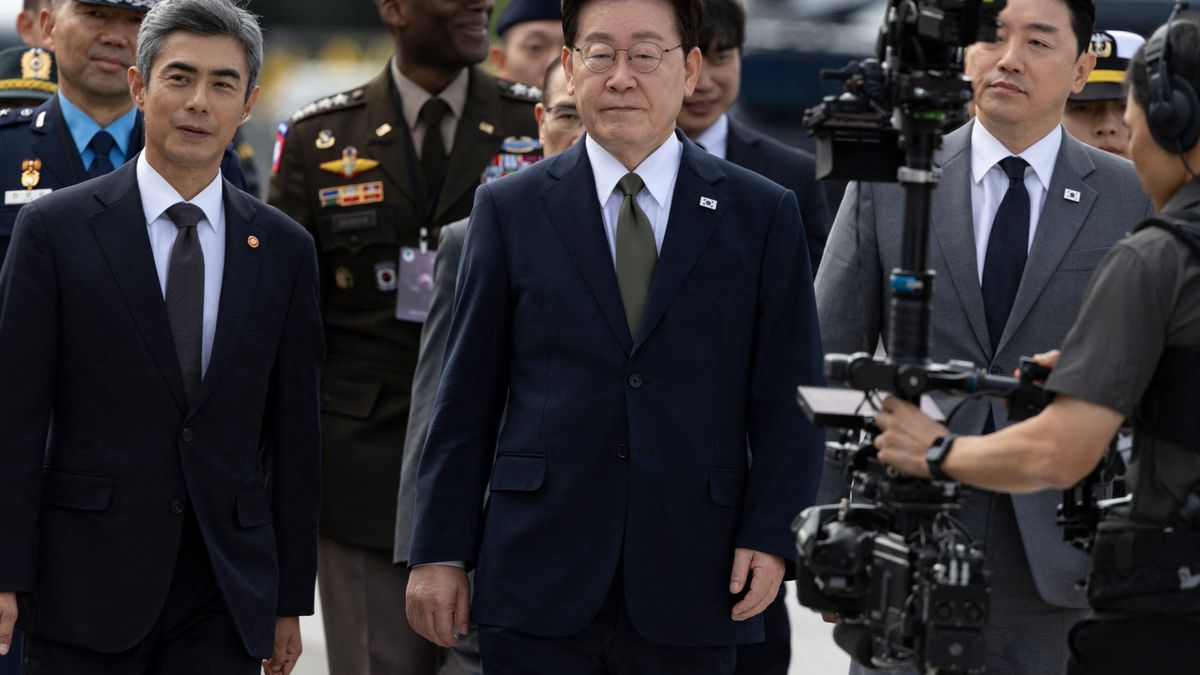
South Korean President Lee Jae Myung publicly rebuked Ukrainian President Volodymyr Zelenskyy after the latter announced at the United Nations that Kyiv had transferred two North Korean soldiers, captured fighting for Russia in the Kursk region, to Seoul. Lee framed the disclosure as a breach of honor and demanded an apology, while Ukraine’s foreign minister described the episode as a "diplomatic misunderstanding" and insisted no secrecy pact existed. The disagreement has quickly moved from a verbal spat to a broader diplomatic row, pitting two US‑aligned states with sizable militaries against each other and raising questions about the stability of the anti‑Russia coalition.
Both South Korea and Ukraine rely heavily on United States security guarantees, yet each faces distinct pressures that shape their foreign‑policy calculations. For Kyiv, showcasing the ability to extract combatants from Russia’s ranks serves a dual purpose: it signals continued relevance on the global stage and provides a tangible proof of Russia’s reliance on foreign fighters, a narrative useful in securing further aid. For Seoul, the public handling of North Korean prisoners touches a raw nerve tied to the peninsula’s security dilemma; any perception that the South is willing to negotiate or trade with the North can be weaponized by Pyongyang and its allies.
The transfer of the two captives was not a routine repatriation. Ukrainian officials had reportedly discussed the move with Seoul through “various channels,” yet the lack of a clear confidentiality agreement suggests either miscommunication or a deliberate gamble by Kyiv to force a public acknowledgment. By naming the transfer, Zelenskyy leveraged the episode to highlight Russia’s reliance on foreign mercenaries, thereby reinforcing his call for sustained international pressure on Moscow.
President Lee’s reaction is also rooted in domestic politics. South Korean public opinion remains highly sensitive to any perceived concession to the North, especially after recent DMZ incidents and ongoing debates over mandatory military service. A strong, public rebuke allows Lee to demonstrate resolve to a constituency that views the North as an existential threat. Conversely, Zelenskyy’s remarks at the UN serve his home audience, reinforcing his image as a leader who can deliver concrete results against Russian aggression.
The two prisoners, captured far from home while fighting for Russia, are likely to be used by Pyongyang as propaganda tools, portraying them as heroic volunteers. Their families, already subject to the regime’s strict information controls, receive little to no news about their fate, deepening personal anguish and reinforcing the regime’s narrative of sacrifice.
Seoul’s decision to house the captives entails logistical costs—security, detention facilities, and legal processing—borne by the public budget. Moreover, the diplomatic fallout risks diverting diplomatic resources away from other pressing issues, such as North Korean missile tests, which have direct implications for civilian safety in the border regions.
Ukraine’s need to demonstrate tangible victories against Russia often translates into political capital that can be exchanged for military aid. However, the controversy may strain Kyiv’s relationships with other allies, potentially jeopardizing future assistance that directly supports Ukrainian soldiers and civilians defending their cities.
While both capitals publicly trade accusations, the United States has largely stayed in the background, avoiding a direct statement. This silence may reflect a calculated choice to let the two allies manage the dispute internally, preserving the broader anti‑Russia coalition. Yet it also masks the extent to which Washington may be pressuring both sides behind closed doors to prevent a fracture that could be exploited by Russia or China.
Pyongyang benefits from the very existence of its citizens fighting abroad; each captured soldier can be portrayed as a martyr, bolstering internal legitimacy. By allowing the prisoners to be transferred to Seoul, North Korea may be testing South Korea’s willingness to engage on humanitarian grounds, potentially opening a channel for future negotiations that remain out of public view.
Zelenskyy’s public disclosure serves a domestic propaganda function, reinforcing the message that Ukraine is actively weakening Russia’s war machine. The omission of any mention of a secrecy pact suggests an intentional framing that casts Kyiv as the proactive actor, while downplaying the diplomatic risk of alienating a key partner.
Observers should monitor three developing fronts. First, any formal mediation effort by the United States or the European Union that seeks to de‑escalate the row and reaffirm alliance cohesion. Second, the reaction of North Korea—whether it will issue a statement, leverage the incident in its own diplomatic outreach, or use the prisoners for internal propaganda. Third, the impact on Ukraine’s broader diplomatic campaign at the United Nations, where the country continues to rally support against Russia; a prolonged dispute with Seoul could weaken Kyiv’s ability to present a united front.
In the coming weeks, statements from senior officials in Washington, Seoul, and Kyiv will reveal whether the disagreement remains a diplomatic footnote or escalates into a more substantive rift that could reshape the dynamics of the anti‑Russia coalition and the security calculus on the Korean Peninsula.
Ukraine used the announcement to highlight Russia's reliance on foreign fighters and to demonstrate tangible results in its fight, which helps secure continued international support.
If not managed, the row could create mistrust among the partners, giving Russia and China an opening to exploit the division and weaken the broader anti‑Russia coalition.
Editor's Note: Analysis based on publicly available statements and known alliance dynamics; some behind‑the‑scenes negotiations remain undisclosed.
Source referenced: ALJAZEERA
This brief was synthesized by our Editorial Engine and reviewed by The Ground Narrative team.