TRENDING

Tuesday, 6 October 2026
----------------------
25 Rabi' Al-Thani 1448 AH
The United States has sent a third carrier strike group toward Iran as the war enters its eighth month, giving President Trump a broader set of options before the midterms. While officials tout deterrence, the move deepens the human toll on both sides and reshapes regional power calculations.
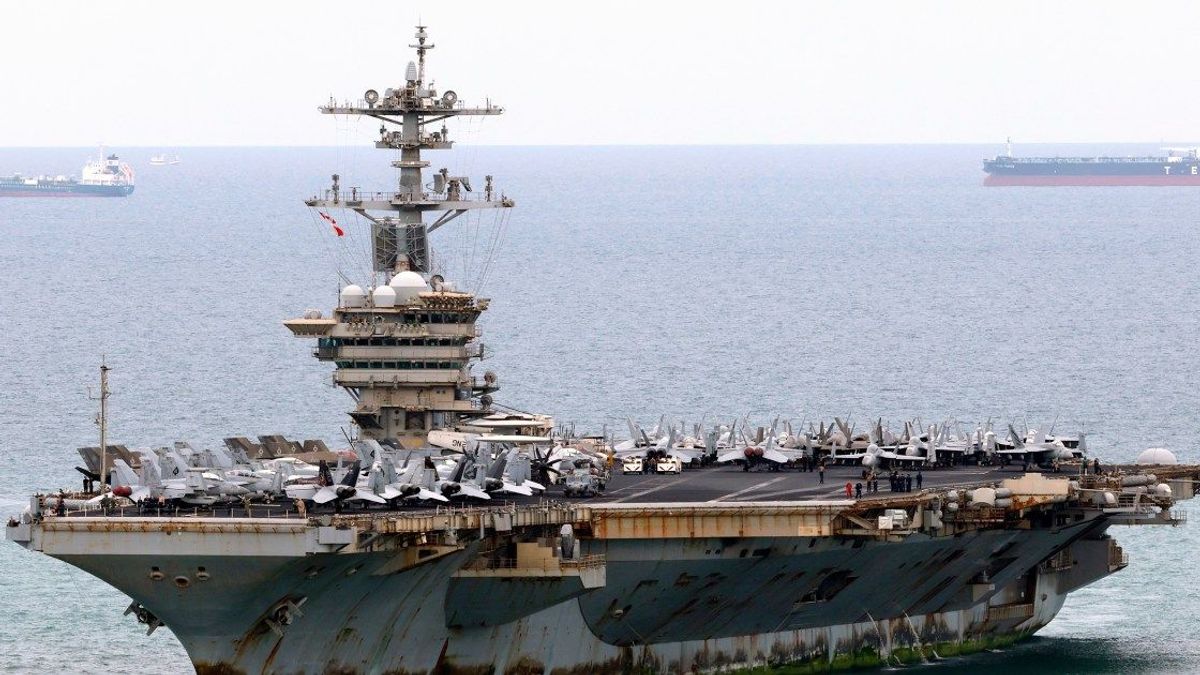
The United States announced the deployment of a third nuclear‑powered aircraft carrier, the USS Theodore Roosevelt, to the waters surrounding Iran. The carrier strike group left San Diego in early October, followed by the Makin Island Marine Expeditionary Force with over 2,000 Marines. By the end of November, three carriers and two amphibious groups will be positioned around Iran, a posture designed to keep military options “on the table” for President Donald Trump regardless of diplomatic progress.
The deployment reflects a convergence of political survival, military doctrine, and economic leverage. Domestically, Trump faces a waning approval rating; a visible show of force offers a tangible narrative of strength ahead of the November midterm elections. The Pentagon’s “ready to go” stance, reinforced by Defense Secretary Pete Hegseth, signals that the U.S. can rapidly transition from deterrence to kinetic action, a flexibility prized by hawkish elements in Congress and the defense industry.
Strategically, the concentration of naval power serves multiple purposes. First, it pressures Iran’s regional allies—Lebanon’s Hezbollah and Yemen’s Houthis—by threatening their maritime supply lines. Second, it underpins a new wave of sanctions targeting Iran’s rail and automotive sectors, aiming to squeeze the remaining revenue streams that fund Tehran’s war effort. The naval buildup also acts as a bargaining chip in the stalled nuclear talks, allowing the U.S. to claim leverage while keeping the option of escalation alive.
Internationally, the move tests alliance cohesion. European partners, wary of being drawn into a broader conflict, have expressed concern over the escalation, while Gulf states such as Saudi Arabia and the United Arab Emirates quietly welcome the added deterrent. The deployment therefore reshapes the regional balance, forcing neighboring powers to recalibrate their own security postures.
Iranian families are already feeling the strain of a war that has stretched into its eighth month. Food and medicine shortages have prompted long queues at pharmacies, and the threat of renewed naval blockades looms over merchants who depend on the Strait of Hormuz for export revenues. The prospect of additional U.S. strikes raises the risk of civilian casualties, especially in coastal cities where carrier‑borne missiles could be employed.
The deployment adds thousands of sailors and Marines to a theater that has seen multiple combat incidents. Extended tours increase the likelihood of combat injuries and mental‑health stressors for both the deployed personnel and their families back home. The financial burden of supporting these forces—fuel, maintenance, and personnel costs—ultimately falls on the American taxpayer, compounding domestic economic pressures.
Ports in the Gulf, particularly those in Oman and the United Arab Emirates, depend on the free flow of oil through the Strait of Hormuz. Heightened naval activity raises insurance premiums for shipping companies and can disrupt global energy markets, leading to higher fuel prices that disproportionately affect low‑income households worldwide.
While officials publicly frame the carrier deployment as a deterrent, internal memos reveal that the move is also a hedge against a potential diplomatic defeat. By maintaining a robust force posture, the U.S. can claim that any negotiated settlement was achieved under the pressure of overwhelming military presence, shielding Trump from criticism that he “caved” on Iran.
The surge in carrier‑related operations translates into lucrative contracts for shipbuilders, aircraft manufacturers, and logistics firms. Companies like Lockheed Martin and Boeing stand to profit from the deployment of F‑35 fighter jets and additional munitions, creating a feedback loop where corporate profit motives subtly influence policy decisions.
State‑aligned outlets in Iran emphasize the resilience of the Iranian people, downplaying the severity of sanctions, while mainstream U.S. media often focus on the “show of force” narrative without probing the long‑term humanitarian fallout. This selective coverage shapes public opinion, allowing policymakers to sidestep accountability for civilian suffering.
The next weeks will reveal whether diplomatic overtures—such as Iran’s seven‑day roadmap presented through Qatar—gain traction or are dismissed outright. Key indicators include any shift in the language of U.N. Security Council debates, movements of the carrier groups (whether they remain in the Persian Gulf or move closer to Iranian territorial waters), and the response of regional allies to the heightened U.S. presence. Observers should also monitor domestic political signals: a surge in Trump’s campaign rhetoric about “winning the war” could foreshadow a push for a limited strike before the midterms, while any sudden de‑escalation may signal back‑room negotiations that have yet to surface publicly.
The deployment aims to increase pressure on Iran, keep military options open for President Trump ahead of the midterms, and reinforce economic sanctions by demonstrating a credible threat of force.
Increased naval activity raises the chance of missile strikes on coastal areas, disrupts trade routes, and deepens shortages of food and medicine for Iranian civilians while also affecting global shipping costs.
A visible show of force can be portrayed as decisive leadership, bolstering Trump’s hard‑line image, but it also risks backlash if the conflict escalates, influencing voter sentiment on national security and foreign policy.
Editor's Note: Analysis based on publicly available statements and expert commentary; some internal deliberations remain undisclosed.
Source referenced: ALJAZEERA
This brief was synthesized by our Editorial Engine and reviewed by The Ground Narrative team.