TRENDING

Monday, 5 October 2026
----------------------
24 Rabi' Al-Thani 1448 AH
China's potential adoption of a maritime blockade strategy around Taiwan, drawing parallels to Iran's tactics in the Strait of Hormuz, presents a profound threat to global stability. This analysis explores the power dynamics behind such a move and its devastating economic and human costs, particularly for the world's critical semiconductor supply.
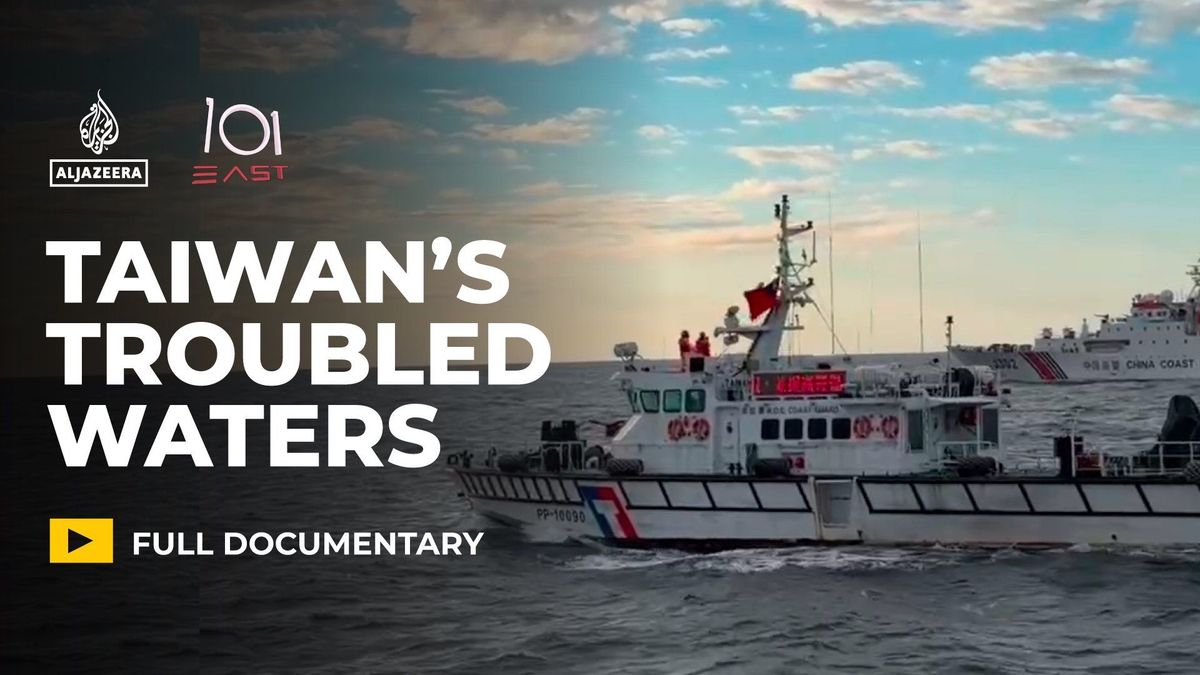
Recent intelligence suggests China is studying Iran's past threats to close the Strait of Hormuz, potentially adapting these tactics for a maritime blockade around Taiwan. This shift in strategic thinking moves beyond a direct invasion scenario, focusing instead on economically strangling the self-governed island. Taiwan, which Beijing claims as its territory, has long prepared for various forms of military action, but a sustained blockade presents a distinct challenge with far-reaching global consequences, particularly for the critical semiconductor industry.
China's consideration of a blockade strategy is a calculated move to achieve its long-standing goal of "reunification" with Taiwan, potentially without the immense human and material cost of a full-scale amphibious invasion. A blockade leverages Beijing's growing naval capabilities and its geographic proximity to Taiwan, transforming the Taiwan Strait into a potential choke point. This tactic aims to exploit Taiwan's reliance on sea lanes for essential imports and exports, including the high-value semiconductors that dominate global markets. For Beijing, a blockade offers a spectrum of pressure, from a "quarantine" to a full-blown siege, allowing for escalation control while testing international resolve. The parallel to Iran's Hormuz threats highlights a strategy of economic leverage and denial, aiming to force compliance through attrition rather than direct conquest. The US, as Taiwan's primary security guarantor, would face an agonizing choice: intervene militarily against a blockade, risking direct confrontation with a nuclear power, or allow Taiwan to be economically isolated, undermining its own credibility and global supply chains. The perceived distraction of the US by other global conflicts, such as the ongoing situation in Iran, further emboldens Beijing, suggesting a window of opportunity to act with reduced immediate US intervention.
The immediate human cost of a Taiwan blockade would fall squarely on Taiwan's 23 million residents. Beyond the immediate threat of military action, a blockade would plunge the island into severe economic hardship, disrupting food, energy, and medical supplies. Daily life would grind to a halt, leading to widespread shortages, inflation, and social unrest. Businesses, from small family enterprises to multinational tech giants, would face collapse, leading to mass unemployment. The psychological toll of living under siege, with constant uncertainty and the threat of escalation, would be immense. Furthermore, the global economy, heavily reliant on Taiwan's advanced semiconductor manufacturing, would experience unprecedented disruption. Industries from automotive to consumer electronics would face severe supply chain failures, leading to factory closures, job losses, and significant price increases worldwide. Ordinary consumers globally would pay the price through higher costs and reduced availability of essential goods, illustrating how a localized geopolitical maneuver can ripple through the lives of billions.
What is consistently downplayed by all major actors is the sheer scale of global economic devastation a Taiwan blockade would unleash, far beyond the immediate military implications. While governments discuss strategic deterrence and military readiness, the intricate, just-in-time nature of modern supply chains means even a partial, temporary disruption of Taiwan's semiconductor exports would trigger a cascading economic crisis. Neither Beijing nor Washington fully articulates the extent to which their strategic posturing risks collapsing the very foundations of the digital economy. Beijing frames its actions as internal matters of sovereignty, omitting the global economic dependency it seeks to exploit. Washington, while pledging support to Taiwan, often focuses on military aid and deterrence, understating the immense pressure a blockade would place on its own economy and the global financial system, potentially forcing a choice between economic ruin and military confrontation. The true vulnerability lies not just in Taiwan's military defenses, but in the world's collective economic fragility, a vulnerability that a blockade exploits with precision.
Readers should closely watch for any shifts in China's maritime activity around Taiwan, particularly any exercises that simulate interdiction or "quarantine" operations, rather than direct invasion drills. Pay attention to the language used by Chinese officials regarding "grey zone" tactics and economic coercion. On the US side, observe any changes in the frequency or nature of naval deployments in the Taiwan Strait, and how Washington articulates its response to non-invasion scenarios. Also, monitor global semiconductor supply chain resilience efforts; any significant moves by companies to diversify production outside Taiwan could signal an acknowledgment of this growing risk. Finally, the political stability within Taiwan itself, and the resolve of its leadership and population, will be crucial indicators of its ability to withstand prolonged pressure.
Source referenced: ALJAZEERA
This brief was synthesized by our Editorial Engine and reviewed by The Ground Narrative team.