TRENDING

Tuesday, 27 October 2026
----------------------
16 Jumada Al-Awwal 1448 AH
The ongoing conflict in Sudan has caused the world's largest humanitarian crisis, displacing over 13 million people and killing tens of thousands of civilians. The army's recent retaking of a key highway linking Khartoum to El-Obeid may weaken the paramilitary Rapid Support Forces (RSF), but hundreds of thousands of people remain at risk.
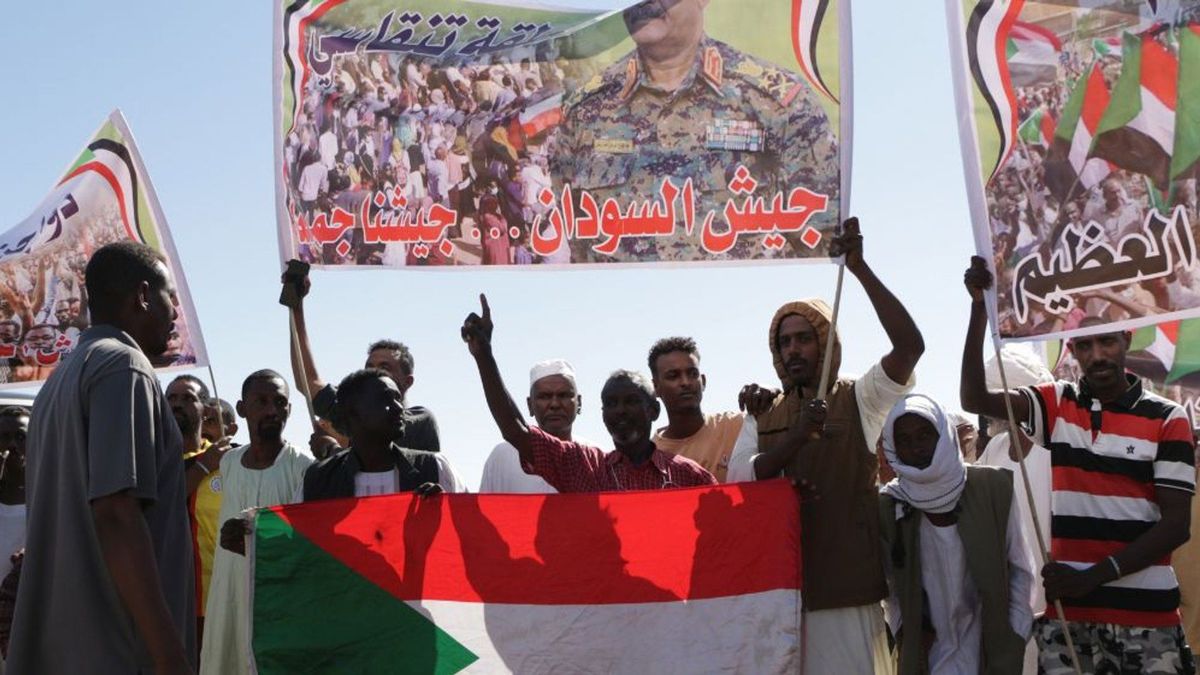
The ongoing conflict in Sudan has reached a critical juncture, with the army's recent retaking of a key highway linking Khartoum to El-Obeid potentially weakening the paramilitary Rapid Support Forces (RSF). However, this development has not brought an end to the humanitarian crisis, which has displaced over 13 million people and killed tens of thousands of civilians.
The conflict in Sudan is a complex and multifaceted issue, with roots dating back to the country's independence in 1956. The RSF, led by General Mohamed Hamdan Dagalo, has been accused of war crimes and other abuses, while the army has been criticized for its handling of the crisis. The conflict has also been fueled by regional and international interests, with Egypt, Saudi Arabia, and the United Arab Emirates (UAE) supporting the RSF, while the United States, the European Union, and the African Union have backed the army.
The conflict in Sudan has significant regional implications, with the country's strategic location making it a critical player in the Horn of Africa. The RSF's control of key infrastructure, including the Port of Suakin, has allowed them to maintain a strong grip on the region. However, the army's recent gains may weaken the RSF's position, potentially leading to a shift in the regional balance of power.
The future consequences of the conflict in Sudan are uncertain, but several scenarios are possible. If the army is able to maintain its gains, it may lead to a more stable and secure environment, allowing for the delivery of humanitarian aid and the rebuilding of infrastructure. However, if the RSF is able to regroup and launch a counterattack, the conflict could escalate further, leading to even greater humanitarian suffering.
The strategic motivations behind the conflict in Sudan are complex and multifaceted. The RSF's support from Egypt, Saudi Arabia, and the UAE is driven by a desire to maintain regional influence and counter the growing power of Turkey and Qatar. The army's support from the United States, the European Union, and the African Union is driven by a desire to promote stability and security in the region.
The conflict in Sudan is a complex and multifaceted issue, with significant regional implications and future consequences. The army's recent retaking of a key highway linking Khartoum to El-Obeid may weaken the RSF, but hundreds of thousands of people remain at risk. A lasting resolution to the conflict will require a sustained effort from regional and international actors to promote stability and security in the region.
Editor's Note: The analysis is based on available information and may be subject to change as new developments emerge.
Source referenced: ALJAZEERA
This brief was synthesized by our Editorial Engine and reviewed by The Ground Narrative team.