TRENDING

Thursday, 15 October 2026
----------------------
4 Jumada Al-Awwal 1448 AH
Global crude oil prices surged following the breakdown of a ceasefire between the United States and Iran, reigniting hostilities over control of the strategically vital Strait of Hormuz. This development signals a significant escalation in a critical energy chokepoint, with profound implications for global markets and regional stability.
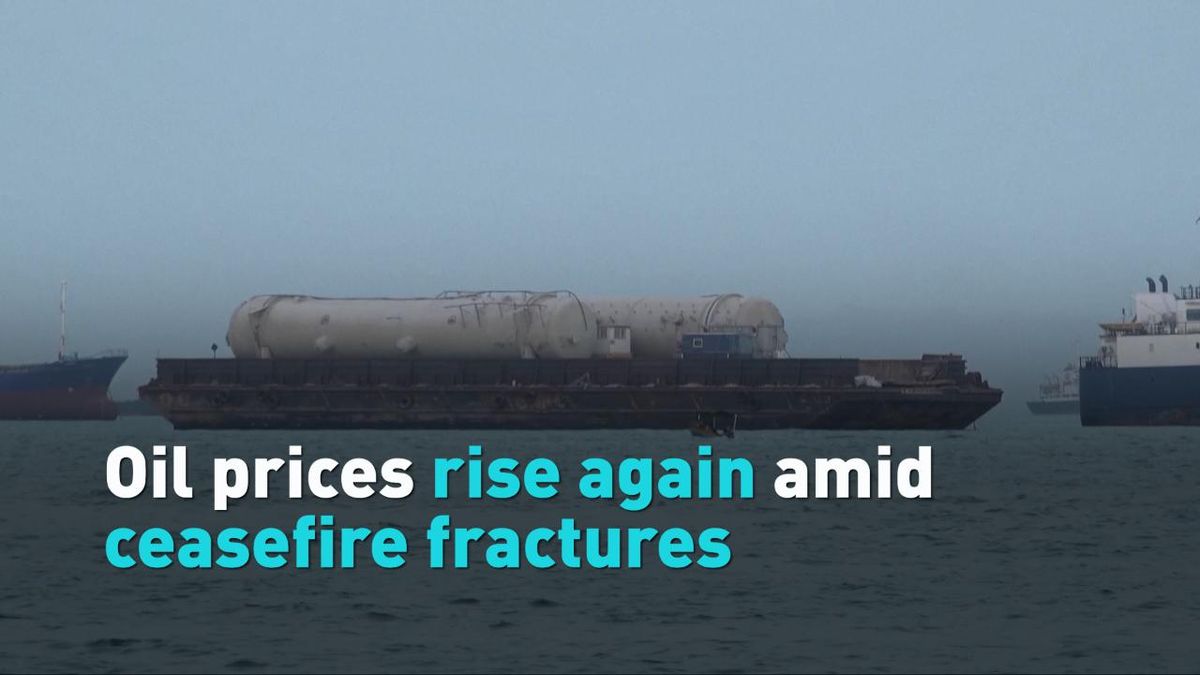
Global crude oil prices experienced a notable increase this Monday, July 14, 2026, a direct consequence of renewed hostilities between the United States and Iran. The escalation follows a declaration by U.S. President Trump last week, signaling the end of a previously established ceasefire. At the heart of this renewed confrontation is the Strait of Hormuz, a narrow waterway whose control is fiercely contested by both nations, underscoring its unparalleled strategic and economic importance.
The Strait of Hormuz, situated between the Persian Gulf and the Gulf of Oman, is one of the world's most critical maritime chokepoints. Approximately one-fifth of the world's total oil supply, along with a significant portion of liquefied natural gas (LNG), transits through this passage daily. Its closure or disruption would have catastrophic implications for global energy markets, international trade, and the world economy. For the United States, ensuring freedom of navigation through the Strait is a cornerstone of its foreign policy, vital for global energy security and the protection of its allies in the Gulf region. For Iran, the Strait represents a strategic asset, offering significant leverage in regional and international affairs, and a crucial element of its national defense posture.
The recent declaration by President Trump to end the ceasefire marks a significant shift from a period of relative de-escalation, plunging the U.S.-Iran relationship back into a state of heightened tension. While the specifics of the ceasefire's terms were not detailed, its termination suggests that underlying disputes, particularly concerning maritime control and regional influence, remained unresolved. The renewal of hostilities implies an increase in military posturing, naval presence, and potentially, a higher risk of maritime incidents in the Gulf waters. Such developments inherently raise the specter of miscalculation, which could quickly spiral into a broader conflict.
Historically, the relationship between the U.S. and Iran has been characterized by periods of intense rivalry, punctuated by diplomatic efforts and, at times, direct confrontation. Tensions around the Strait of Hormuz have frequently flared, often in response to geopolitical shifts, sanctions regimes, or perceived threats to national interests. Iran has, in the past, threatened to disrupt shipping in the Strait in response to economic pressures or military actions, highlighting its capacity to impact global energy flows. The current situation echoes these historical patterns, with both sides asserting their claims over the waterway's effective control.
The immediate economic impact of this escalation is evident in the rising global crude oil prices. Markets react swiftly to any perceived threat to oil supply, and the Strait of Hormuz is arguably the most sensitive point in the global energy infrastructure. Higher oil prices translate into increased costs for consumers and businesses worldwide, potentially fueling inflation, dampening economic growth, and creating instability in energy-dependent economies. This economic ripple effect extends far beyond the immediate region, affecting global supply chains and financial markets.
Beyond economics, the geopolitical implications are profound. The renewed U.S.-Iran confrontation places significant pressure on regional stability, particularly for Gulf Cooperation Council (GCC) states that rely heavily on the Strait for their oil exports. These nations often find themselves caught between the two powers, navigating complex security dilemmas. The situation also tests the resolve of international diplomacy and the capacity of global institutions to mediate disputes in critical strategic areas. The international community will be closely watching for any signs of de-escalation or, conversely, further military or economic actions that could exacerbate the crisis.
In conclusion, the fracturing of the U.S.-Iran ceasefire and the subsequent escalation of tensions over the Strait of Hormuz represent a critical geopolitical development. It not only underscores the enduring volatility of the Middle East but also highlights the intricate link between regional conflicts and global economic stability. The dispute over this vital waterway continues to be a barometer for broader U.S.-Iran relations and a significant determinant of the world's energy future.
Source referenced: CGTN
This brief was synthesized by our Editorial Engine and reviewed by The Ground Narrative team.


